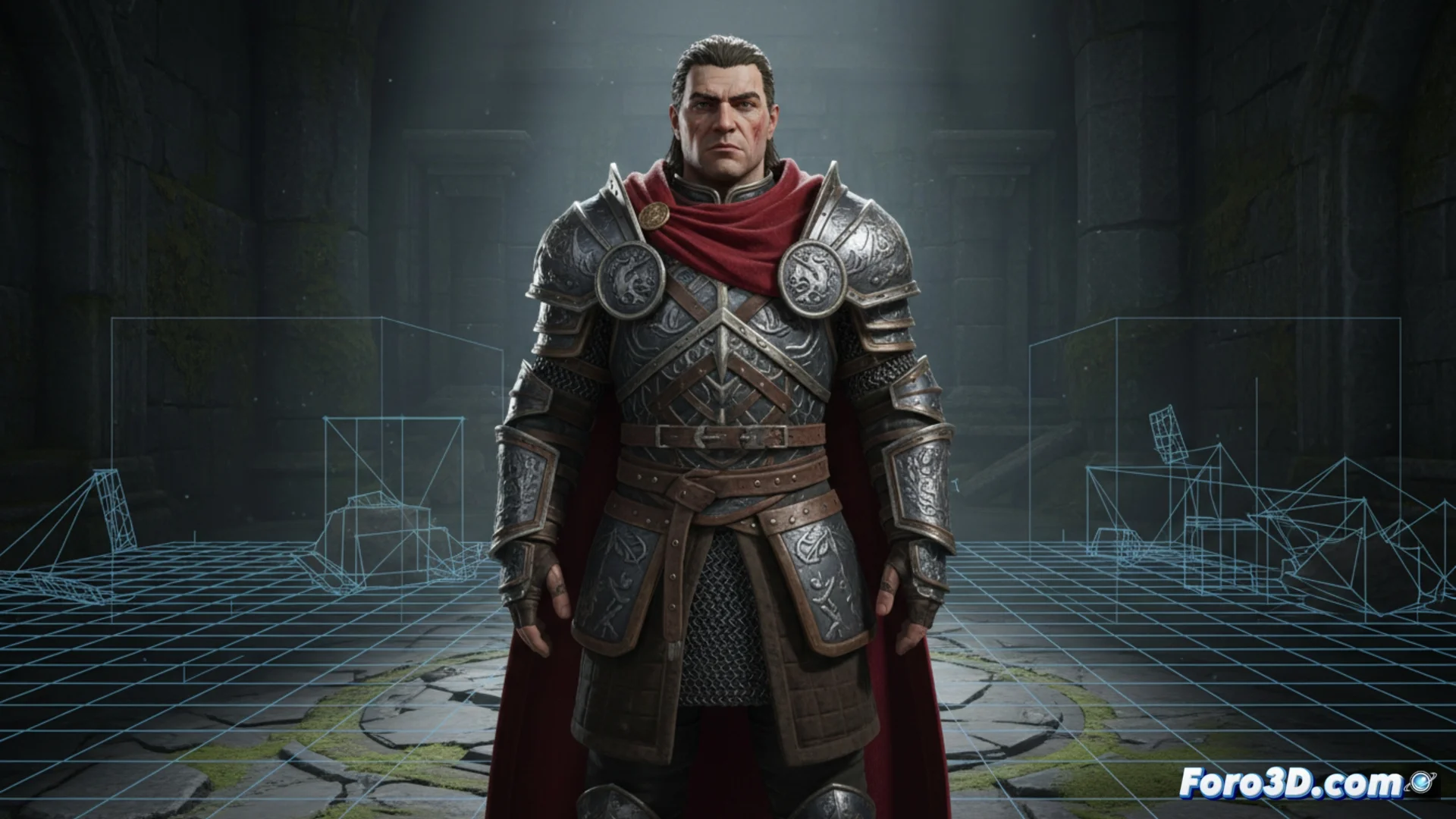
Baldur's Gate 3 Runs on Larian's Divinity 4.0 Engine
The acclaimed RPG Baldur's Gate 3 is built on Larian Studios' internal technology: the Divinity 4.0 Engine. This technical foundation is not new, but a deep evolution of the engine that powered the Divinity: Original Sin series. The team extensively adapted it to support the massive scale and complex systems demanded by this title, shaping it to the project's specific needs. 🎮
The Evolution of a Powerful Graphics Engine
To achieve the world of Baldur's Gate 3, Larian didn't start from scratch, but they did transform their main tool. The Divinity 4.0 Engine was extensively modified, allowing it to handle unprecedented interaction density and visual fidelity in the studio. This internal development provides total control over how each game element is rendered and behaves.
Key graphical features of the engine:- Implements physically based rendering (PBR) so materials look realistic and respond precisely to light.
- Employs a sophisticated volumetric lighting system that generates dense atmospheres and high-quality dynamic shadows.
- Creates character and environment models with a very high level of detail, building a visually rich and believable universe.
The Divinity 4.0 engine was the backbone that allowed scaling the complexity of Baldur's Gate 3 beyond what was planned.
Animation and Tools Behind the Production
The game's cinematic narrative relies heavily on its animations. Facial expressions and body movements are complex and essential for telling the story. To produce them, Larian likely used a development pipeline that integrates specialized software.
Possible tools in the workflow:- ZBrush for sculpting high-resolution character and creature models.
- Autodesk Maya or Blender for modeling, rigging, and animating 3D assets.
- Substance Painter for texturing and bringing surfaces to life with realistic details.
- Editing software like DaVinci Resolve for assembling and giving the final touch to cinematics.
Reflection on the Technological Choice
Although Larian's commitment to its own engine is clear, curiosity arises about whether they ever evaluated alternatives like Unreal Engine 5. Specifically, to test how its advanced physical interaction systems could handle iconic game elements, such as dynamics with barrels. However, the decision to optimize and expand their internal technology proved to be the right one to achieve the studio's unique vision. Mastery of their engine allowed them to create a title where every technical detail serves gameplay and immersion. 💡