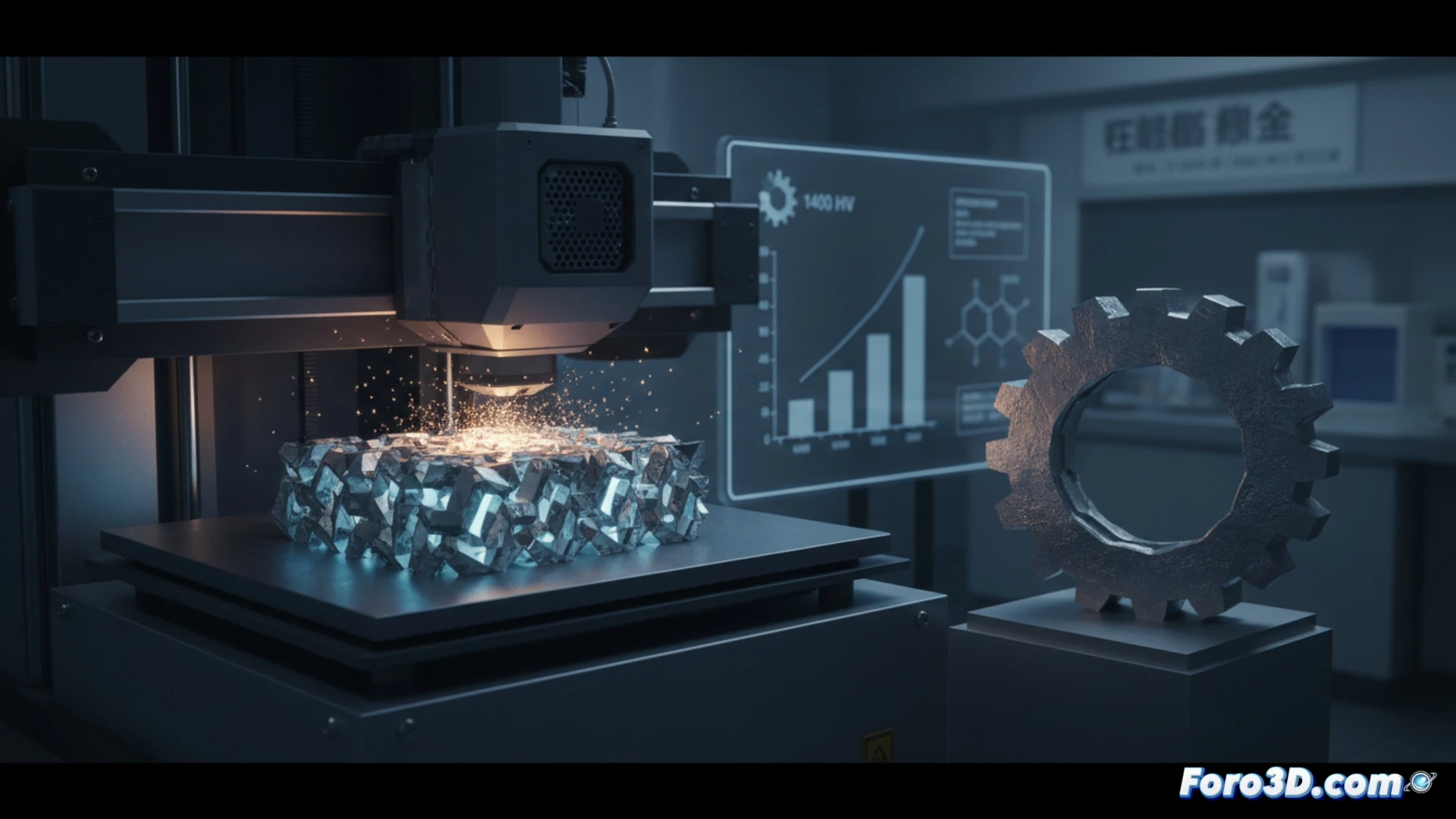
A team of engineers from the University of Hiroshima presents an advance in metal additive manufacturing. Their method allows the production of cobalt-tungsten cemented carbide, a material with a hardness superior to 1400 HV, which surpasses that of many steels. This achievement is based on an approach different from conventional metal 3D printing, prioritizing material integrity over complete fusion.
The Key Lies in Controlled Softening, Not Melting ⚙️
The innovation lies in avoiding the full melting of the metallic powder. Instead, the process heats the cobalt and tungsten elements only to a softening state. This allows effective bonding while preserving the original microstructure of the tungsten carbide, responsible for its high hardness. The result is a component with less porosity, greater strength, and fewer internal stresses, while also generating less waste and reduced energy consumption.
Will Your Next Wrench Be Printed and Survive the Apocalypse? 💪
With this development, it seems that the classic excuse of the tool broke on me will have its days numbered. We could be close to printing a wrench that challenges a stubborn nut and wins the battle, or a car component that lasts as long as the rumor that the classic model is going back into production. Maybe the future isn't flying cars, but 3D-printed screws that really withstand everything thrown at them.