Tom Burick, a former roboticist and now a teacher at a specialized educational center, has built a life-sized replica of the ENIAC, the first general-purpose electronic computer. His goal is to connect his neurodivergent students with the origins of technology through hands-on learning. The machine, with panels and lights that mimic the 1946 design, allows students to touch history and understand how computing has evolved to the present day.
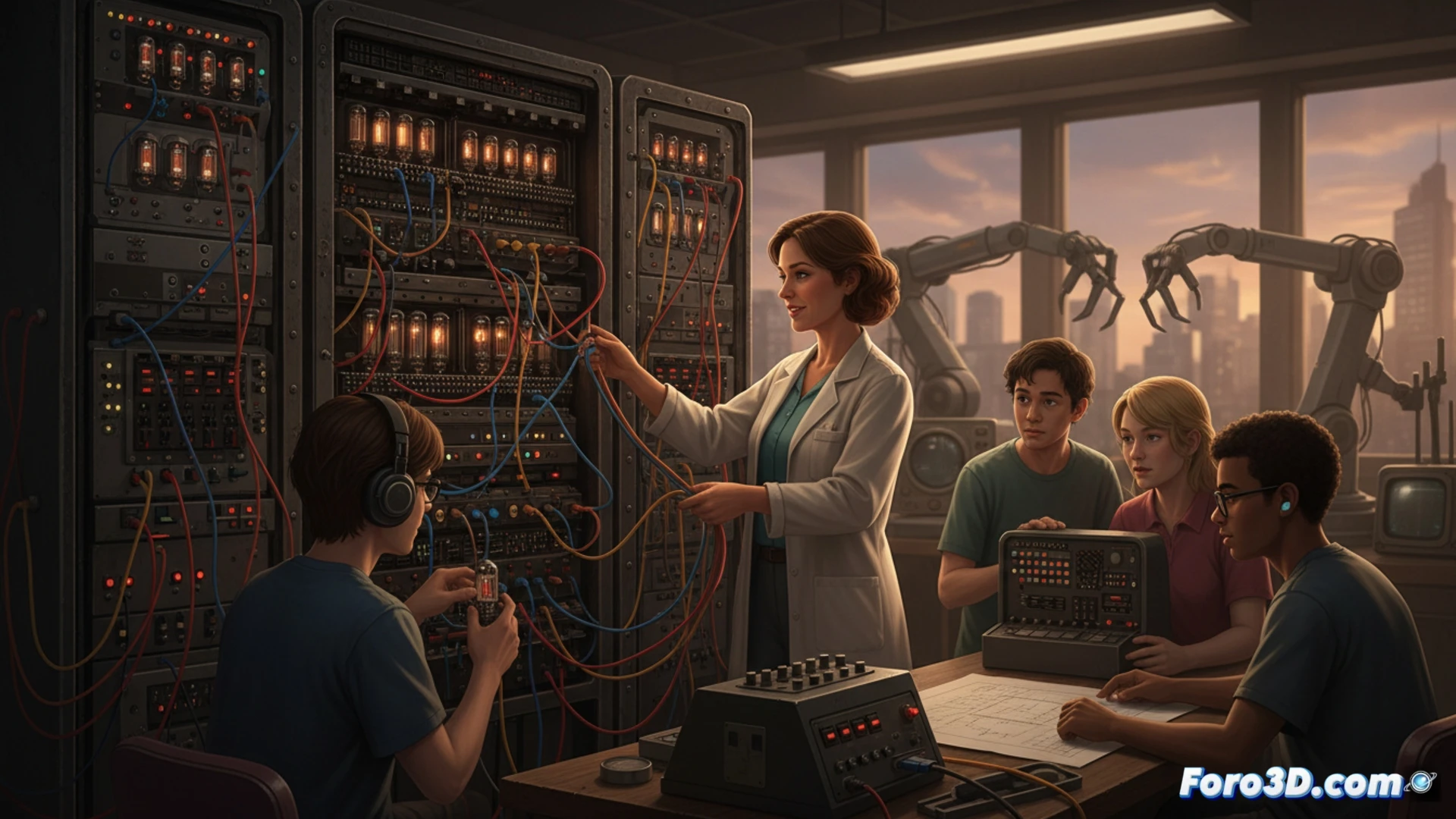
The replica that revives the circuits of 1946 💡
The replica includes 40 panels, each 2.4 meters high, and over 17,000 simulated vacuum tubes, faithfully recreating the original ENIAC architecture. Burick used modern components such as LEDs and microcontrollers to emulate the blinking lights and sounds of operations. Although it does not run real programs, the machine allows students to follow the data flow using switches and cables, offering a tactile experience that explains concepts like binary logic and vacuum tube memory.
The ENIAC that doesn't fit in the classroom, but fits in the hallway 🏗️
The replica occupies nearly 100 square meters, so Burick had to clear out a meeting room and part of the hallway. Students now joke that any math problem is solved faster if you shout at the machine. And while the original ENIAC consumed 150 kilowatts, this version uses only as much as a microwave, allowing students to heat up popcorn while studying the dawn of the digital age.