A German research team has created a material that could change tissue repair. By combining polymers, 3D printing, and collagen, they have achieved a substitute that behaves like real tissue, offering flexibility and resistance depending on the applied tension. The key lies in its wavy structure.
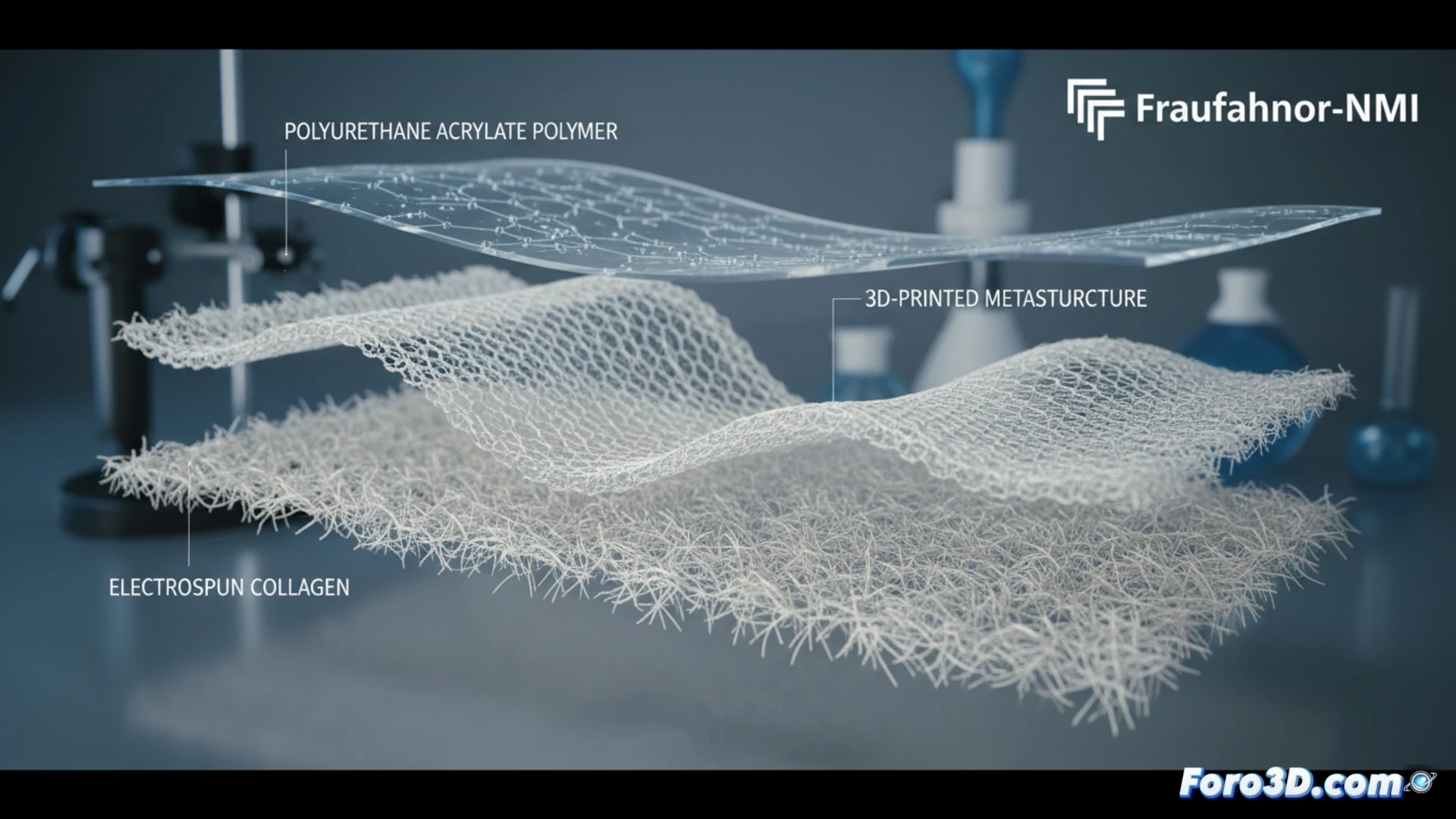
Three layers for non-linear mechanical behavior 🧬
The development, patented by the Fraunhofer Institute and NMI, integrates a polyurethane acrylate film, a 3D-printed wavy metastructure, and electrospun collagen. This combination replicates the natural pericardium. The wavy geometry allows the material to stretch easily at first, but become rigid under higher tension, mimicking the non-linear stress-strain response of biological tissue.
The tissue that stiffens when needed 💪
This substitute seems to have learned from humans: it is flexible when convenient and stiffens under pressure. Unlike certain colleagues who collapse at the first sign of stress, this material responds with rigidity. However, it is not yet known if it will also complain when it has to work overtime in the lab.