Nissan introduces a significant breakthrough in its third-generation Leaf: a 90% reduction in rare earth usage in its motor. This change addresses the global dependence on these materials, whose production is highly concentrated. For the user, it translates into a vehicle with a smaller resource footprint and potentially greater long-term price stability.
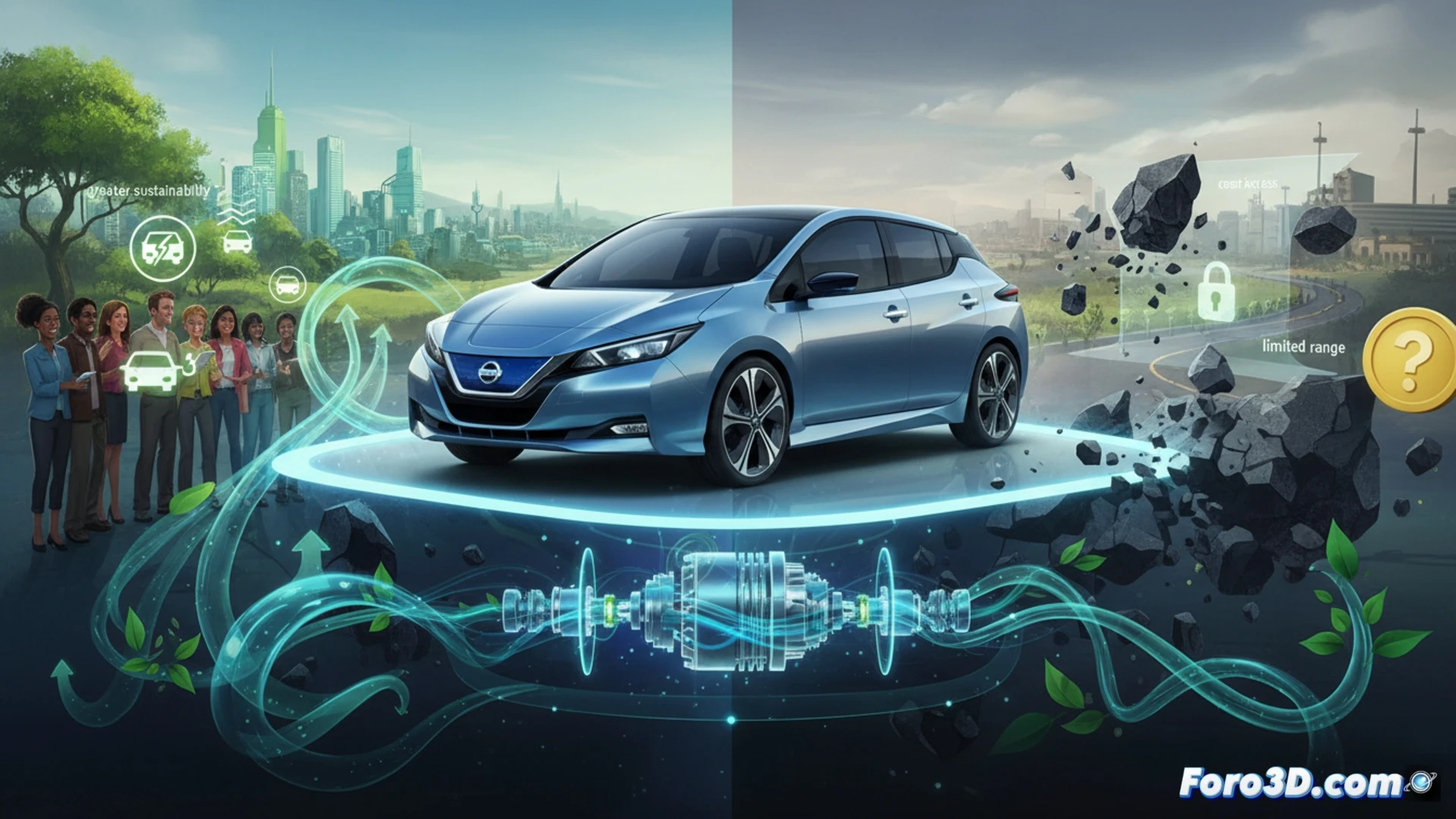
Innovation in the motor to reduce strategic dependence 🔋
The technical development focuses on the permanent magnet synchronous motor. Nissan's engineers have redesigned the rotor, reorganizing the magnet configuration and using an electromagnet compound. This allows for maintaining similar performance while drastically minimizing neodymium and dysprosium. The goal is clear: to mitigate the geopolitical and supply risk associated with these elements.
Fewer rare earths, but the same old doubts 🤔
It is commendable that the motor is more independent from China, but the car itself still has a complicated relationship with plugs. Its range, although sufficient for daily use, still invites planning trips with the precision of a space mission. And that entry price, although more stable, remains a brick wall for many. At least, if it becomes more expensive, it won't be due to a rare earth embargo.