The U.S. Naval Air Systems Command has signed a $31 million contract with Colibrium Additive, a subsidiary of GE Aerospace. The goal is to certify 3D-printed metal components for military aircraft. Six process-material combinations will be evaluated, aiming to overcome the bottleneck of fatigue in complex geometries.
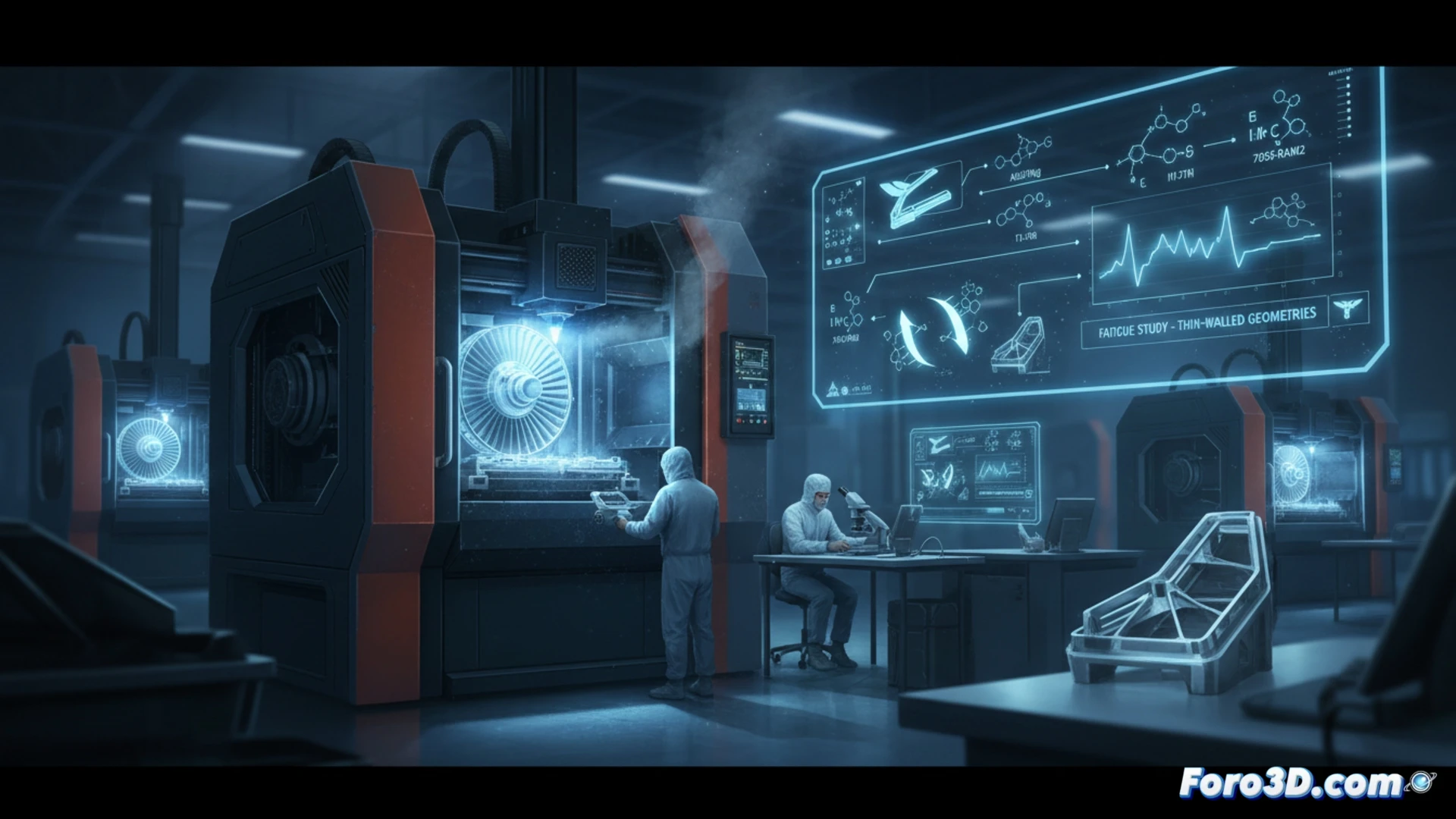
Critical alloys and fatigue in thin walls under the microscope 🛩️
The program focuses on materials such as AlSi7Mg, IN718, 17-4PH, and 7050-RAM2. The main challenge is certifying thin-walled parts, where material fatigue is unpredictable. NAVAIR seeks reliable data to approve their use in flight-critical applications. Each process-material combination will be validated through rigorous testing, a necessary step to integrate additive manufacturing into the fleet.
Fatigue is not just a sleep problem for engineers 😅
It turns out that 3D-printed thin walls have the same resistance as a politician giving a clear answer: they fatigue quickly and without warning. For $31 million, NAVAIR expects GE to teach these parts to hold up without breaking at the most inopportune moment. At least, if they fail, they will know exactly why.