NASA has successfully ignited the world's most powerful electric plasma rocket engine, a design that directly draws from concepts from the 1960s. The prototype, tested in February 2026, runs on metallic lithium vapor and achieved a power output of 120 kilowatts, surpassing all previous agency records.
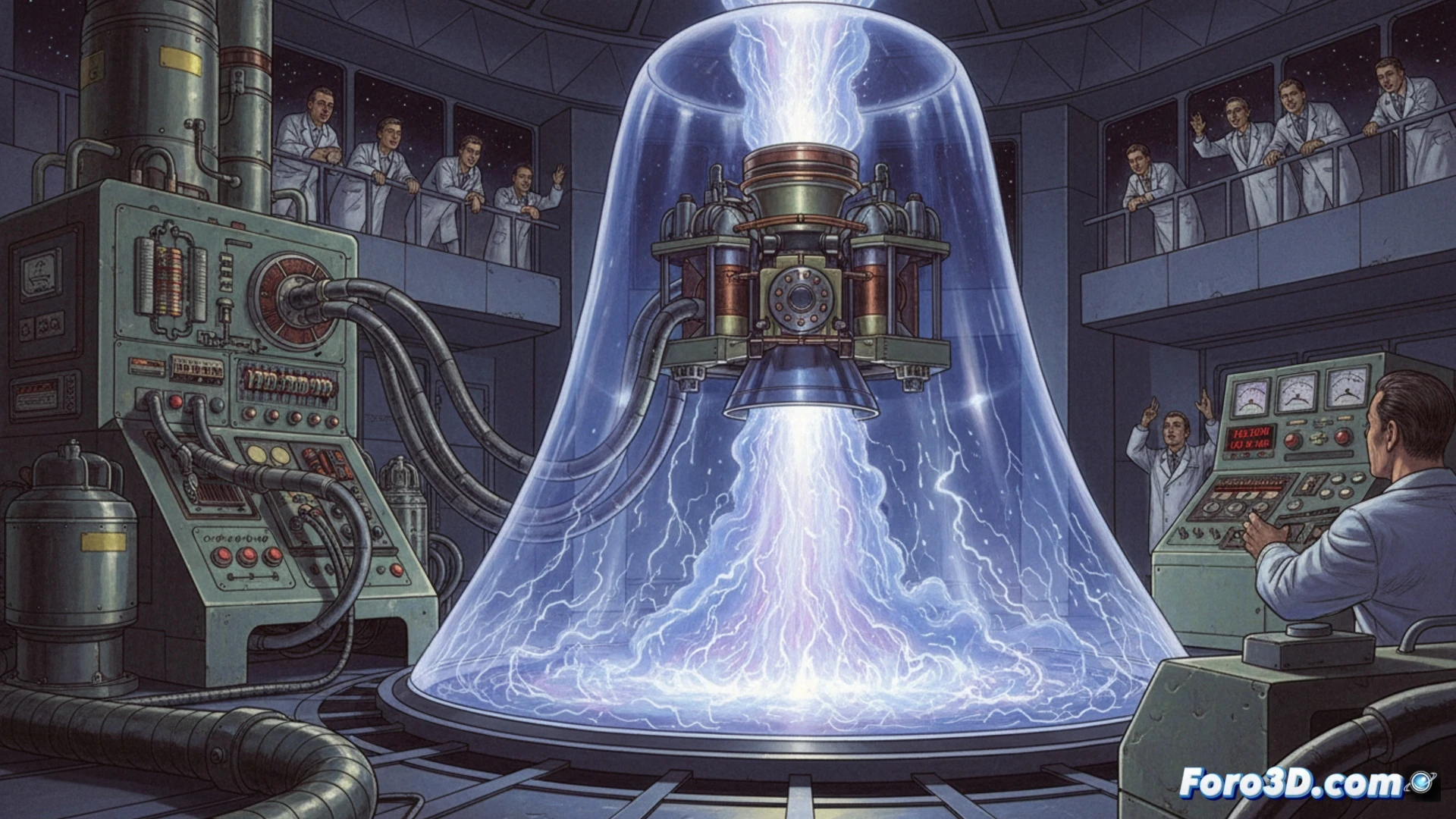
MPD Technology: Lithium Vapor and 120 kW of Thrust 🚀
The magnetoplasmadynamic (MPD) engine accelerates ionized gas using electric and magnetic fields, generating a specific impulse far superior to conventional ion thrusters. By using vaporized lithium, electrode erosion issues are avoided. The test validated its ability to operate at high power for extended periods, an essential requirement for crewed missions to Mars and beyond.
Lithium to Reach Mars (and for Anxiety, Too) 😅
NASA has managed to make the engine run on lithium, the same metal we use to calm anxiety. If the trip to Mars gets prolonged, astronauts can justify their nervousness by blaming the engine. Of course, no one has confirmed whether the lithium in the tank will also be used for the crew's energy smoothies.