NASA has set December 2028 for the first interplanetary journey using nuclear-electric propulsion to Mars. The project uses the Space Reactor-1 (SR-1) Freedom, a modified closed Brayton system that replaces combustion with nuclear fission to generate heat. This heat expands a gas that drives a turbine and produces electricity, powering electric motors that activate 48 hours after liftoff and operate throughout the year-long voyage.
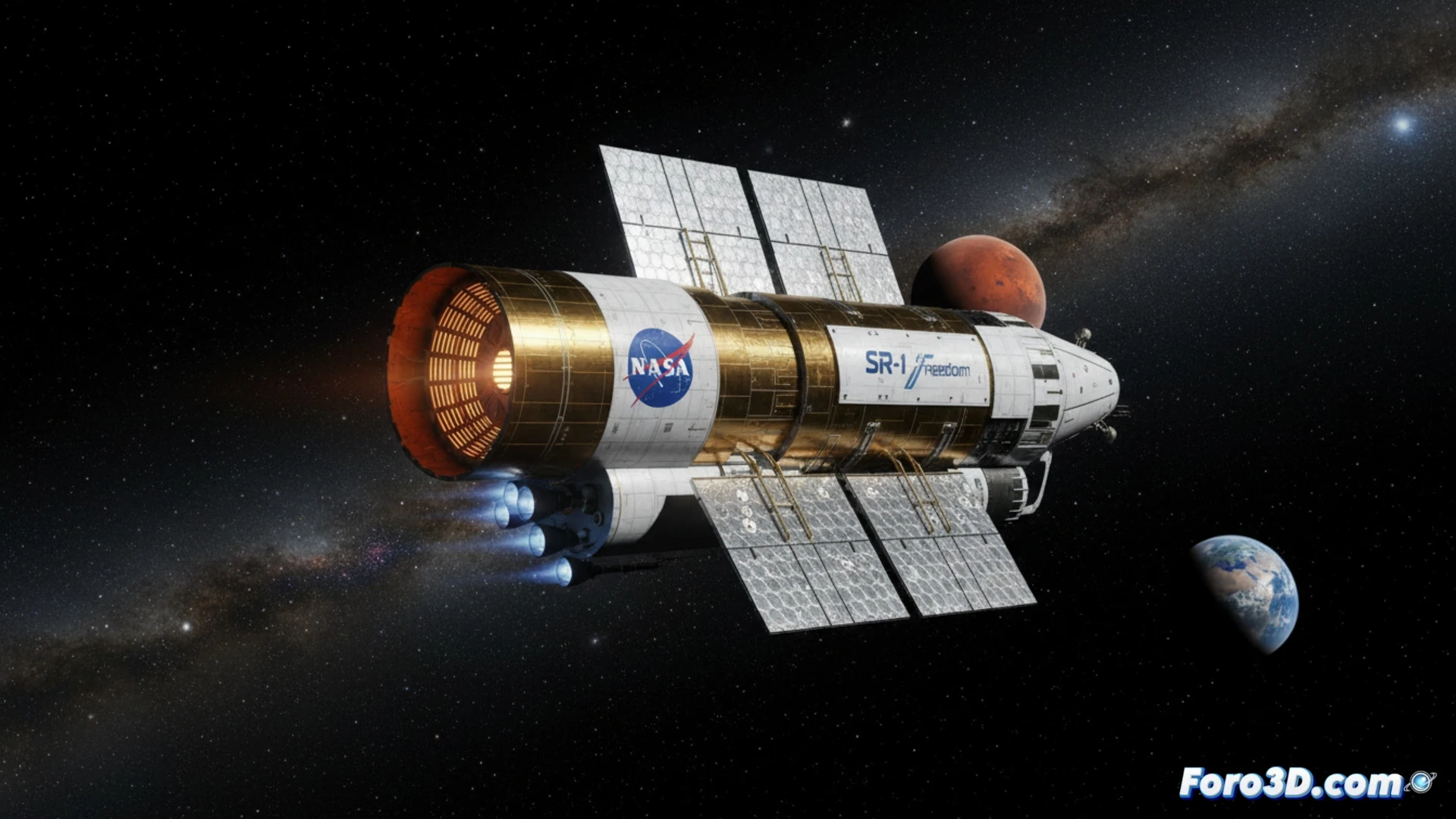
How the SR-1 Freedom reactor works in space 🚀
The SR-1 Freedom does not burn fuel, but instead uses nuclear fission to heat a gas in a closed loop. That gas, as it expands, drives a turbine connected to an electric generator. The resulting electricity not only moves the ion engines, but also powers the spacecraft's communications. The system is activated two days after launch to avoid risks during the initial flight phase. The entire process is designed to operate without interruption during the year-long journey to Mars.
A reactor in space: better than ordering coffee to your door ☕
NASA believes a nuclear reactor is the ideal solution to reach Mars. Of course, because nothing screams safety like having a fission source in a metal can traveling at thousands of kilometers per hour. If something goes wrong, at least the astronauts won't have to worry about running out of battery for their phones. And if the reactor fails, they can always ask for help from a satellite that also runs on nuclear power. All under control.