Dutch company MX3D has completed the EU-funded PIONEER project, validating that hybrid Wire Arc Additive Manufacturing (WAAM) is ready for large-scale civil engineering. The initiative focused on industrializing the automated design, manufacturing, and certification of structurally optimized hybrid steel components, with support from Imperial College London for validation under realistic loads.
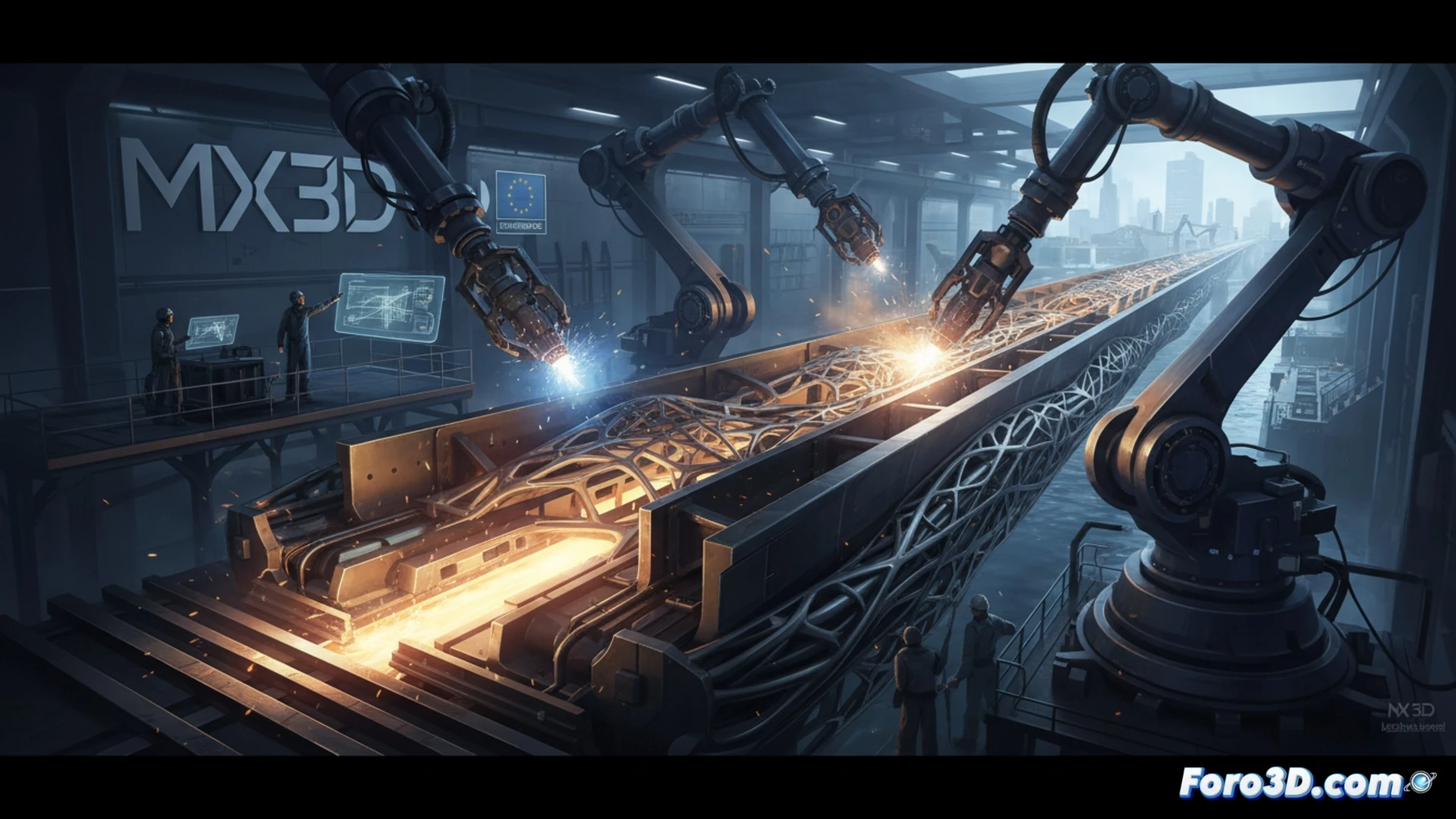
How hybrid WAAM manufacturing works for steel components 🏗️
The WAAM process deposits metal layer by layer using an electric arc, combined with subtractive manufacturing techniques to achieve dimensional precision. MX3D has developed a workflow that integrates generative design software, stress simulation, and online quality control. This allows for the creation of steel parts with complex geometries that reduce weight without sacrificing strength, eliminating the need for molds and minimizing material waste compared to traditional methods.
The bridge they printed and now want to make it bigger 🚧
After their famous printed bridge in Amsterdam turned out to be more of a tourist attraction than a structural revolution, MX3D is back with PIONEER. Now they promise their hybrid parts not only look good on Instagram but can also withstand the weight of a truck. The fact that Imperial College got involved suggests this time it's not just for show: perhaps civil engineers will stop seeing 3D printing as a toy for modern architects.