A team of scientists has enabled primates to control an avatar in a three-dimensional virtual environment using only their brain activity. The brain-computer interface, published in an academic journal, translates neuronal signals into precise movements within 3D space, without the monkeys needing to move a muscle. This breakthrough brings technology closer to new forms of human-machine interaction.
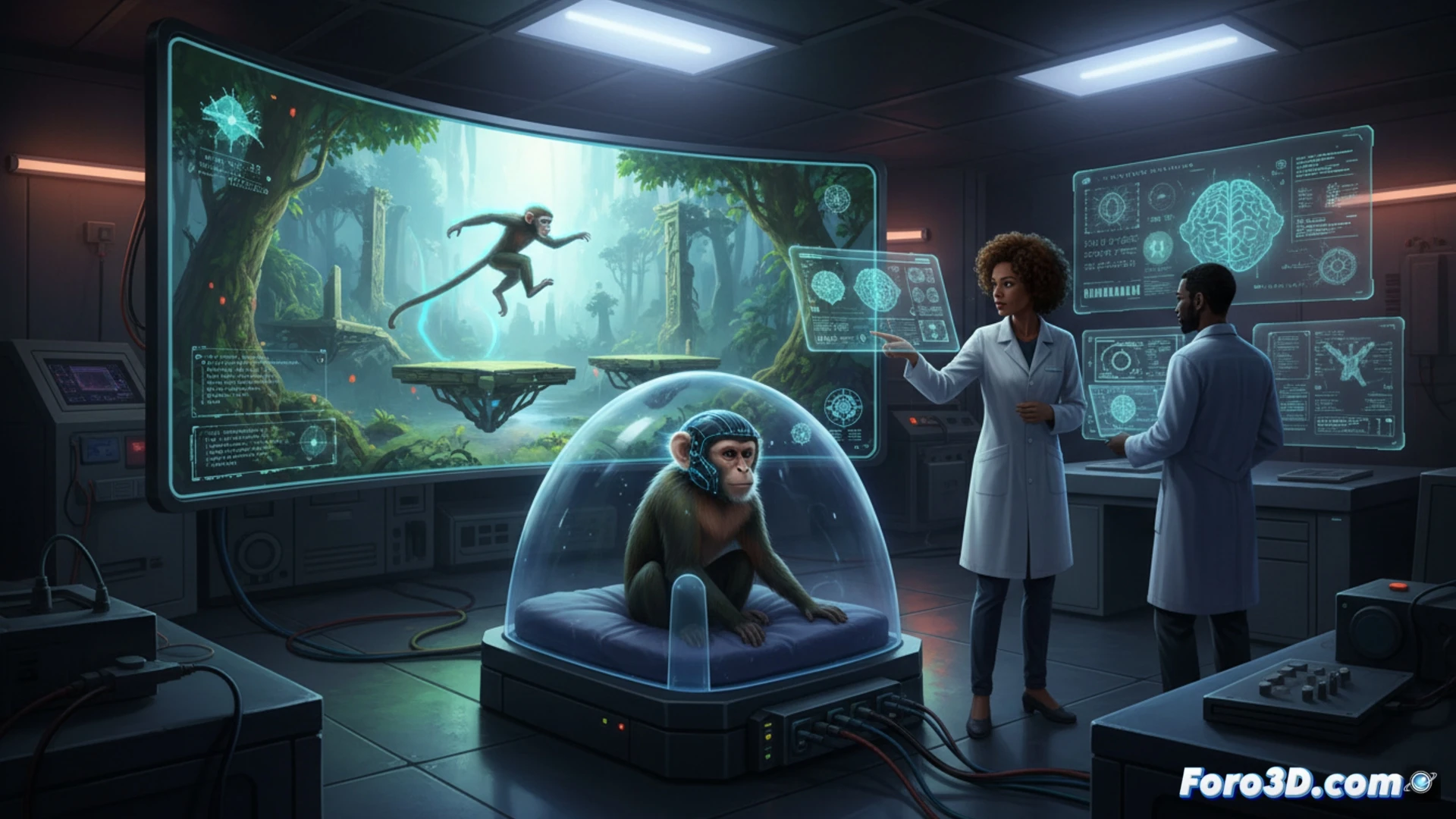
How the neural interface works 🧠
The system uses electrode arrays implanted in the motor cortex of the monkeys. These sensors capture the neuronal activity associated with the intention to move and send it to a decoding algorithm. The software translates those signals into commands for the avatar, allowing the primate to move and turn in the virtual world. The researchers observed that the monkeys learned to modulate their thinking to reach virtual targets with precision, showing real-time neuronal plasticity.
The day the monkeys left the joystick 🐒
While the monkeys roam virtual worlds without breaking a sweat, we humans keep losing the remote control between the sofa cushions. This breakthrough promises to help people with paralysis, but for now, primates are the only ones who can play video games with their minds. That said, if a monkey starts complaining that the avatar has low resolution, we'll know the technology has gone too far.