MIT researchers have created microscopic, soft structures controlled by a simple magnet. The team 3D-printed a lollipop-shaped gripper, smaller than a grain of sand, that closes like a Venus flytrap upon receiving a magnetic signal. The key was figuring out how to integrate iron oxide nanoparticles without ruining the printing process.
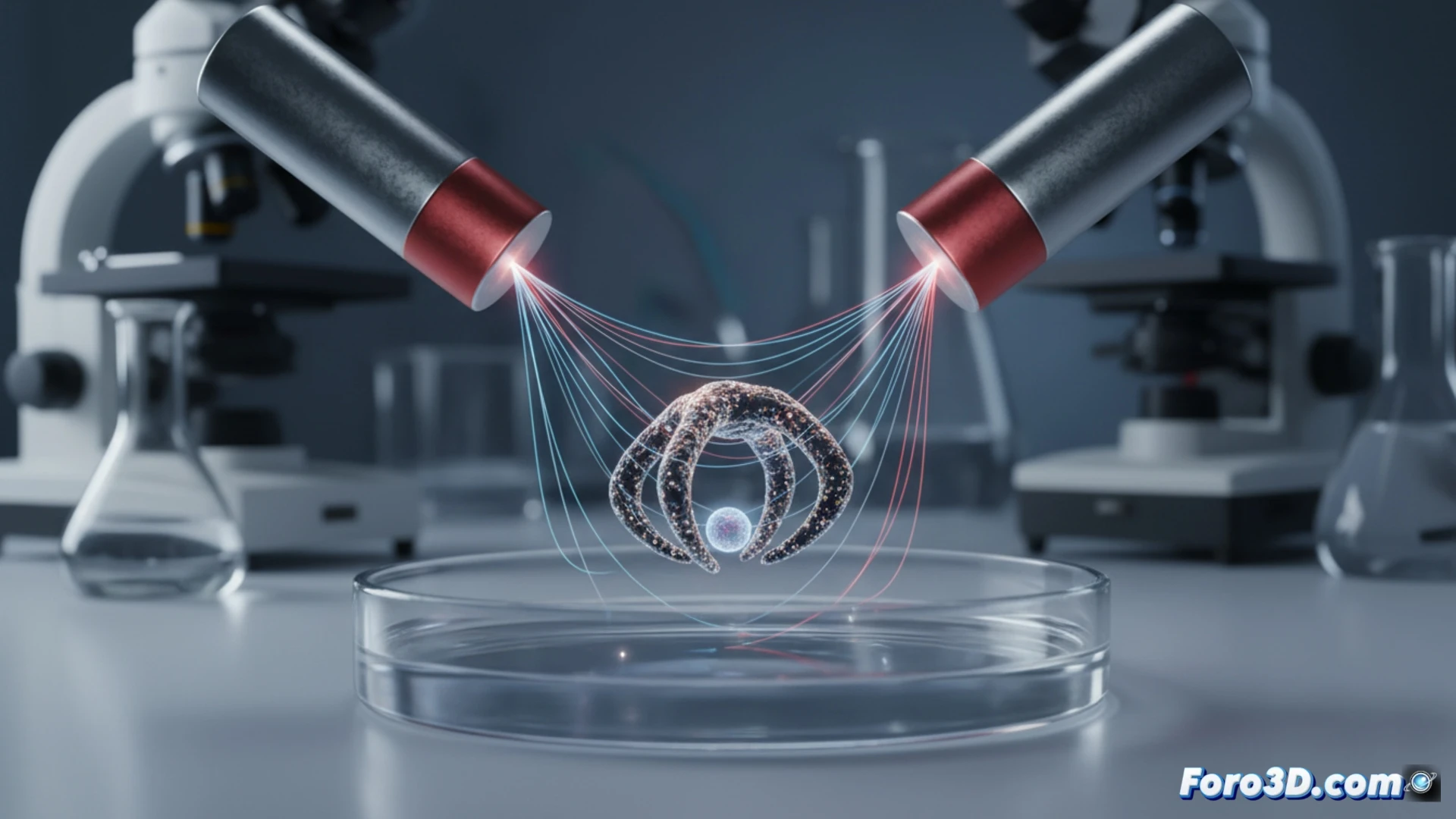
Two steps to overcome laser light scattering 🧲
The initial problem was that magnetic particles scatter laser light, preventing precise printing. The solution was a two-step process: first, print a gel microstructure using two-photon lithography; then, immerse it in a solution of iron ions and subsequently in a solution of hydroxide ions. This formed magnetic nanoparticles within the gel. By adjusting the laser power, they controlled the gel density and the amount of absorbed particles, assigning different degrees of magnetism to specific areas.
Venus flytrap for future robots 🤖
Now we just need some genius to decide to use this technology to create an army of microscopic grippers that steal crumbs from the table, or worse, for a distracted magnet to stick the gripper to the fridge, forcing us to search for it with a magnifying glass. Luckily, the researchers assure that control is precise. But we all know how these experiments end: at some point, someone will try to fish for a bacterium with a magnetic rod.