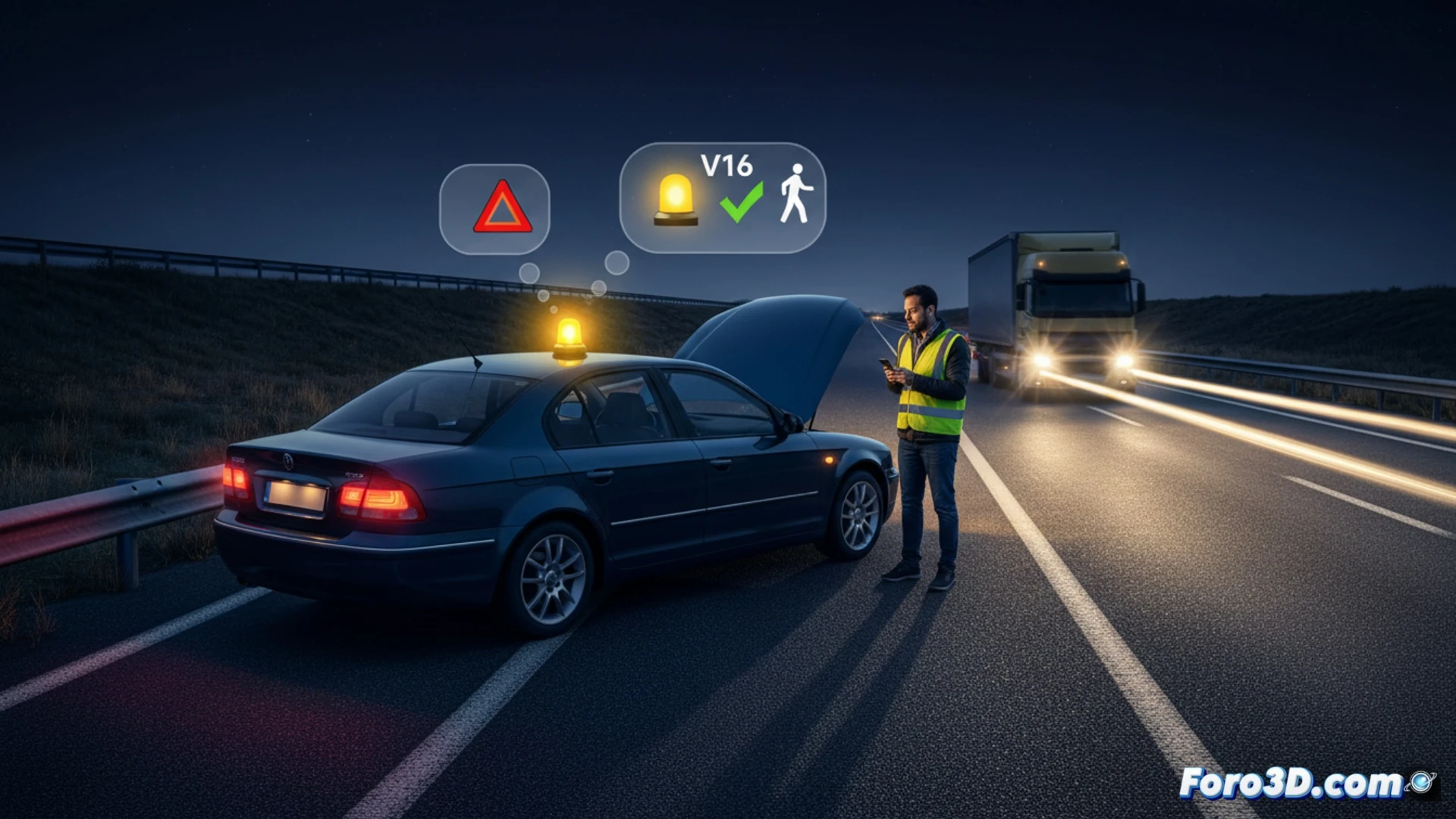
The V16 beacon arrived as the technological solution to avoid the risk of placing warning triangles. The DGT, with Pere Navarro, promoted it for allowing signaling without leaving the car. However, a problem is observed in its real-world use. Drivers activate the light, but then remain near the vehicle, replicating the danger it was meant to avoid. The fault lies not with the device, but with the action that follows.
A technical advance limited by the safety protocol 🚨
The technology of the V16 is clear: a magnetic or adhesive light-emitting device that emits a flashing light. Its development aimed to eliminate user exposure to traffic during the initial signaling. However, the critical safety phase, which is to leave the roadway immediately, depends exclusively on the driver. The complete protocol requires placing the beacon, activating the hazard lights, and taking refuge behind the safety barrier. The technology cannot force this last step.
Magic beacon, immortal driver 🧙♂️
It seems some think the V16 generates an impenetrable force field. They place it on the roof and then, as if they were in their living room, proceed to check the tire or make a phone call next to the roadway. The flashing light, supposedly, scares away other cars like a talisman. Reality is less forgiving: a distracted vehicle does not distinguish between a vintage triangle and a state-of-the-art beacon if there is a body in front of it.