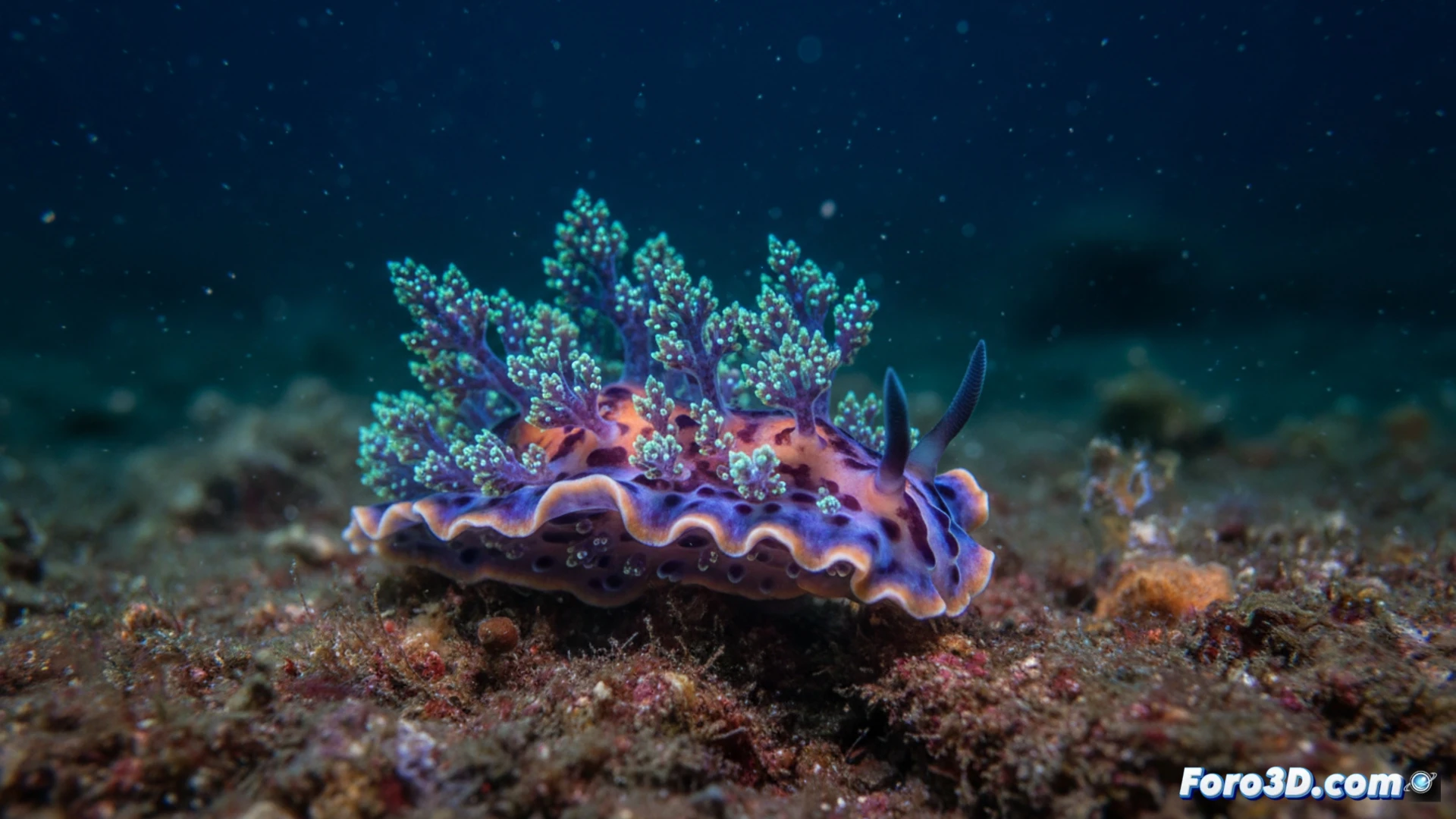
In the twilight depths of the Pacific, near Guam, marine biologists have documented a nudibranch of the genus Marionia that defies typical forms. Its body is covered in branched protuberances reminiscent of an underwater bonsai. This shell-less mollusk uses these structures to breathe and defend itself in an ecosystem where light is a distant memory.
How Biomimicry Imitates Its Tree-Like Gills 🌿
Materials engineers have closely observed the fractal structure of these protuberances. The branched surface maximizes gas exchange in low-oxygen waters, a principle already applied in designs for industrial filters and membranes for CO2 capture. Additionally, its rough texture repels microorganisms, suggesting applications in anti-fouling coatings for ship hulls or ocean sensors. Nature has been optimizing for millions of years what we are only beginning to copy.
The Sea Slug That Would Make a Bonsai Weep with Envy 🌊
While humans pay fortunes for a bonsai that takes decades to grow, this sea slug strolls along the ocean floor sporting a lushness any gardener would envy. That said, don't try to prune it: its branches are not leaves, but living tissue used for breathing. Also, if you touch it, it might release a substance that smells worse than your gym socks. Nature has a sense of humor, but not a good one.