An international team has achieved a detailed map of Karakorum, the ancient capital of the Mongol Empire, using a non-invasive technique. Using SQUID sensors, they have mapped underground structures, tracing streets and buildings without moving a single gram of earth. This approach preserves the site and offers a new vision of the urban planning of a historic center of power.
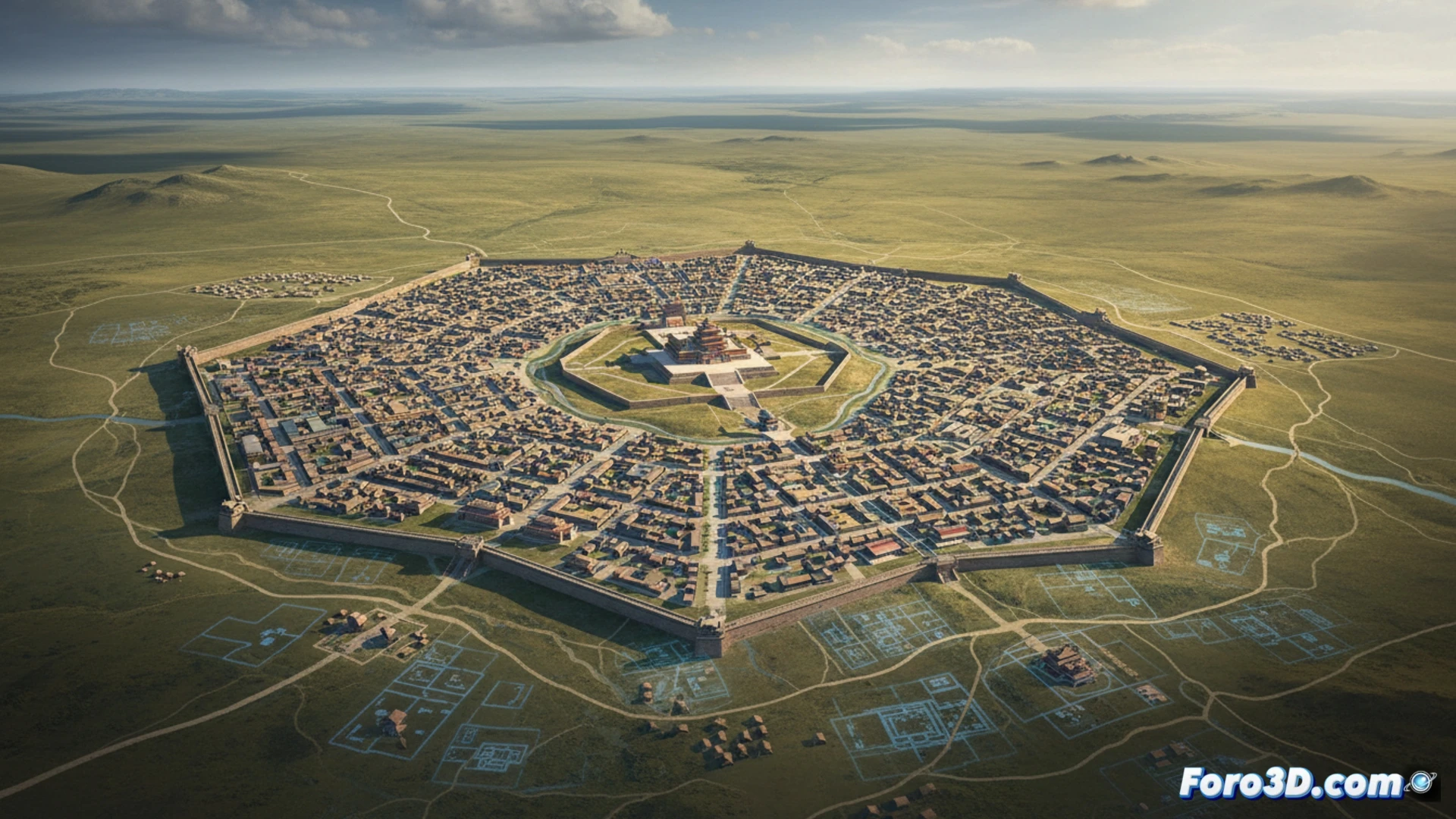
How High-Sensitivity Magnetometry Works 🧲
The key technology is a SQUID magnetometer, which measures minuscule variations in the Earth's magnetic field. Archaeological remains, such as kilns, hearths, or burned materials, possess a thermoremanent magnetization that locally alters that field. The sensor, mounted on a mobile system, records these anomalies with great precision. The data, processed afterwards, generates a map of the buried structures, differentiating between stone walls, areas of metallurgical activity, or ancient rubbish dumps.
Genghis Khan Would Approve of This Silent Espionage 🐎
It is curious that to unveil the secrets of the most expansive and feared empire, such a discreet method is used. While its armies conquered on horseback with a clamor, now some scientists pass silently with a device that captures magnetic whispers. Undoubtedly, it is a form of archaeological espionage that the Khan himself would have liked: obtaining all the information without the enemy, in this case the earth, even noticing. A technological incursion instead of a military one.