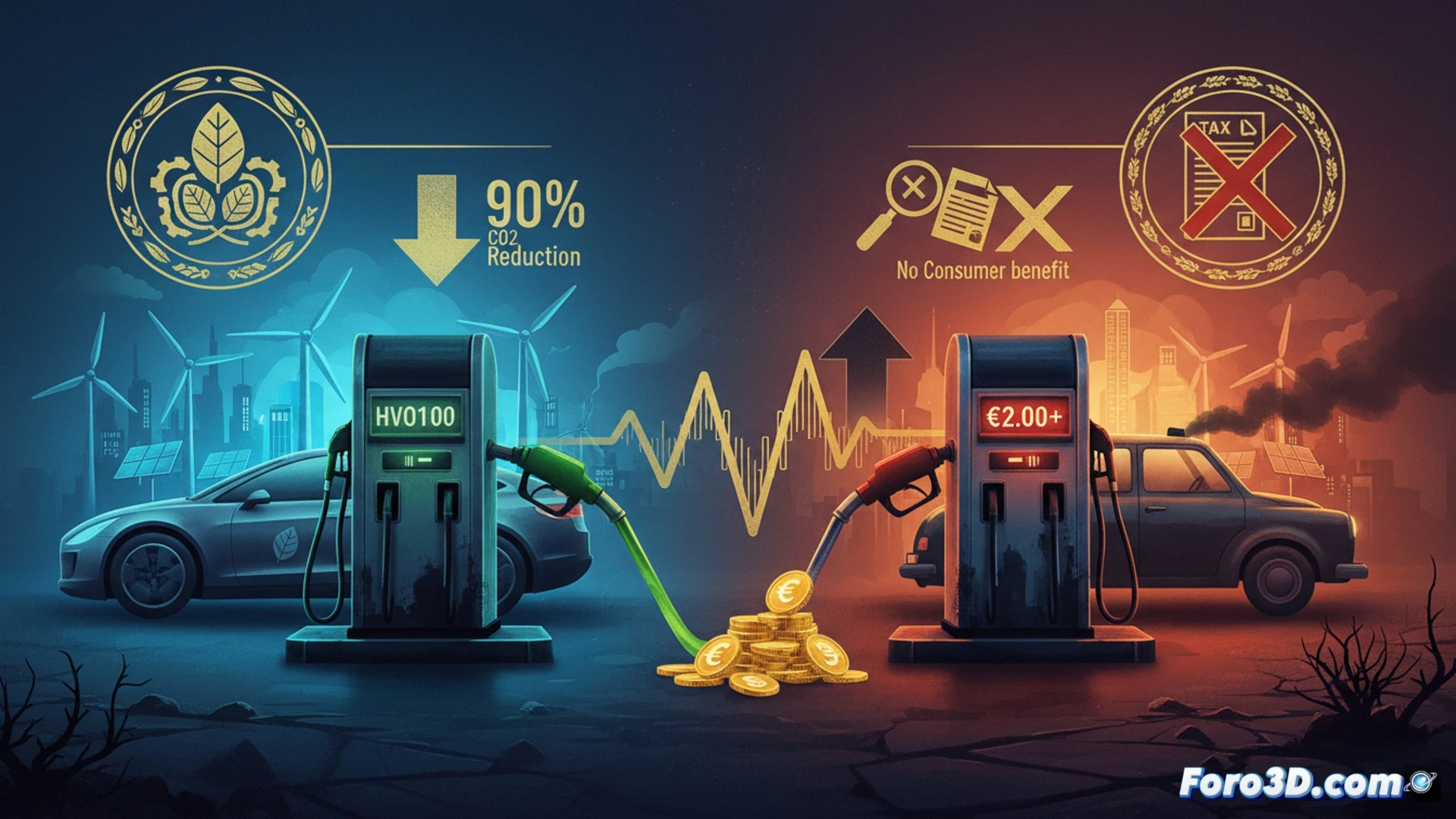
HVO100 is presented as a renewable diesel fuel, produced from used oils and organic waste, with an emission reduction close to 90%. However, its mass adoption clashes with a reality: its price at the pump exceeds that of conventional diesel, reaching 2 euros per liter. The paradox lies in the fact that its cost does not reflect its manufacturing process, but is instead indexed to the price of fossil diesel, adding an additional margin.
The paradox of a price indexed to oil 🤔
Technically, HVO100 is obtained through the hydrotreatment of fats and waste, a process that does not use petroleum. Despite this, its selling price is set based on the price of mineral diesel. A surcharge is added to this reference, covering the higher cost of scarce raw materials and the process itself. Tax advantages, such as the exemption from the CO₂ tax, are not deducted at the end, but are integrated into the margin structure, which explains why it is between 15% and 30% more expensive.
Paying for oil that contains no oil 😅
The situation has its comical side. You end up paying a supplement for a fuel that boasts of having no crude oil, but whose price dances to the tune of the fluctuations of the Brent barrel. It's like buying a sugar-free drink whose price goes up because sugar is expensive. The bonuses for being clean are pocketed by someone along the way, and the consumer pays for the green label... with a surcharge that smells suspiciously of the old economy.