The D.E.E.P project has achieved a milestone in additive manufacturing by printing a section of a marine propeller blade with nickel aluminum bronze. The WAAM technique promises lighter and more efficient parts for ships, integrating digital design and advanced certification. A consortium led by Enki Marine Ltd drives this transition towards smarter propulsion systems.
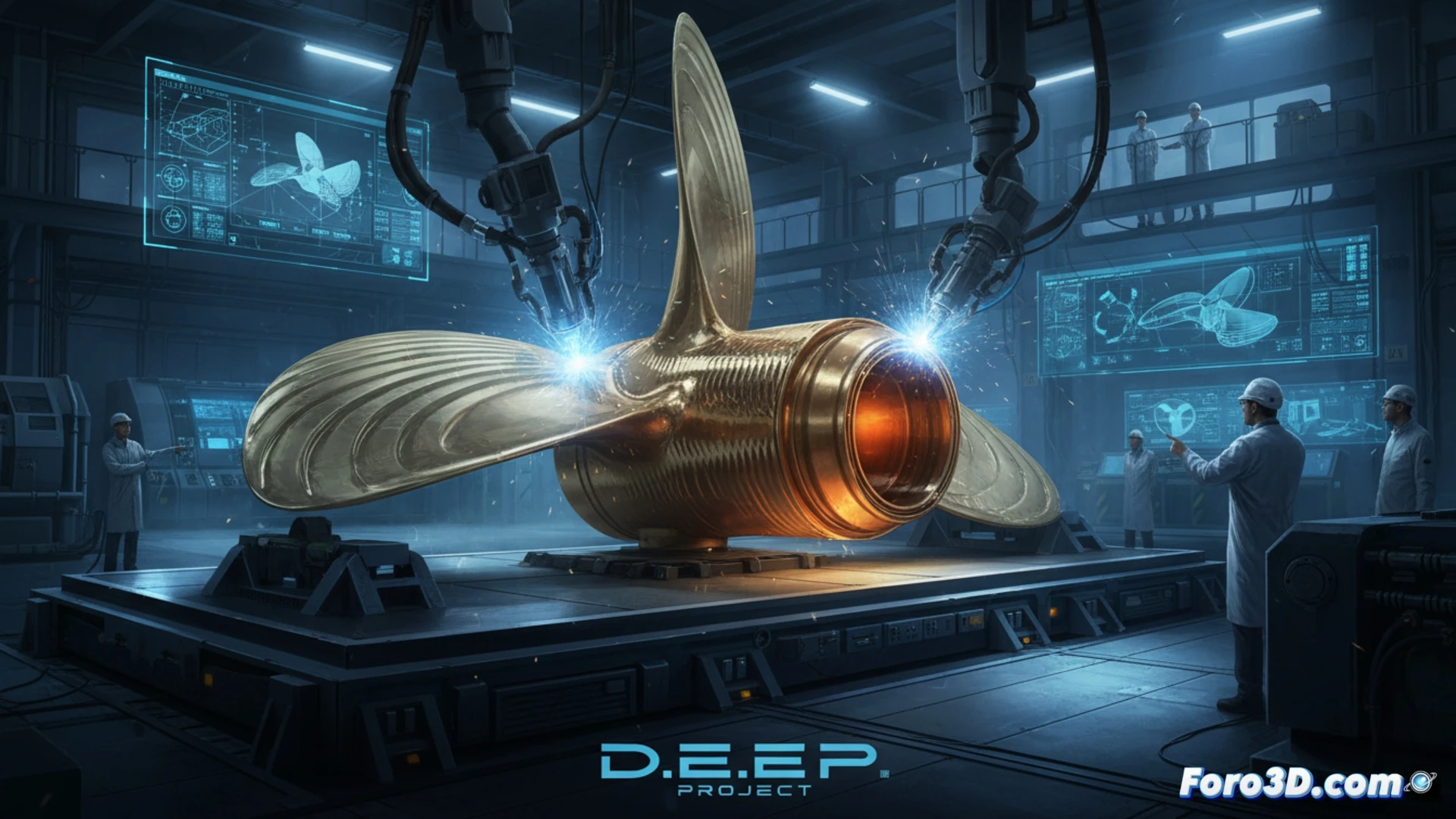
Nickel aluminum bronze under the wire arc 🛠️
Wire arc additive manufacturing (WAAM) deposits layers of nickel aluminum bronze to build complex propeller geometries. This method reduces material waste compared to traditional machining and allows for optimizing hydrodynamic profiles. The consortium, with TWI on welding and Authentise on digital workflows, validates each layer with non-destructive testing and CFD simulation, bringing on-demand production closer to the naval industry.
No more excuses: the propeller is printed, the ship sinks on its own ⚓
While engineers celebrate their printed blade, veteran sailors frown. They can no longer blame the port's boilermaker if the propeller fails; now they will blame the STL file. The good thing is, if the ship sinks, at least we'll know it was due to a slicer error and not a lack of bronze. Next time, they should also print a life preserver.