The Museo del Prado premieres an exhibition format focused on a single work, starting with The Year of Hunger in Madrid (1818) by José Aparicio. Miguel Falomir, the museum's director, seeks to invite viewers to reflect on details of art history that often go unnoticed. This large-scale canvas was a success during the reign of Ferdinand VII, but later fell into ostracism.
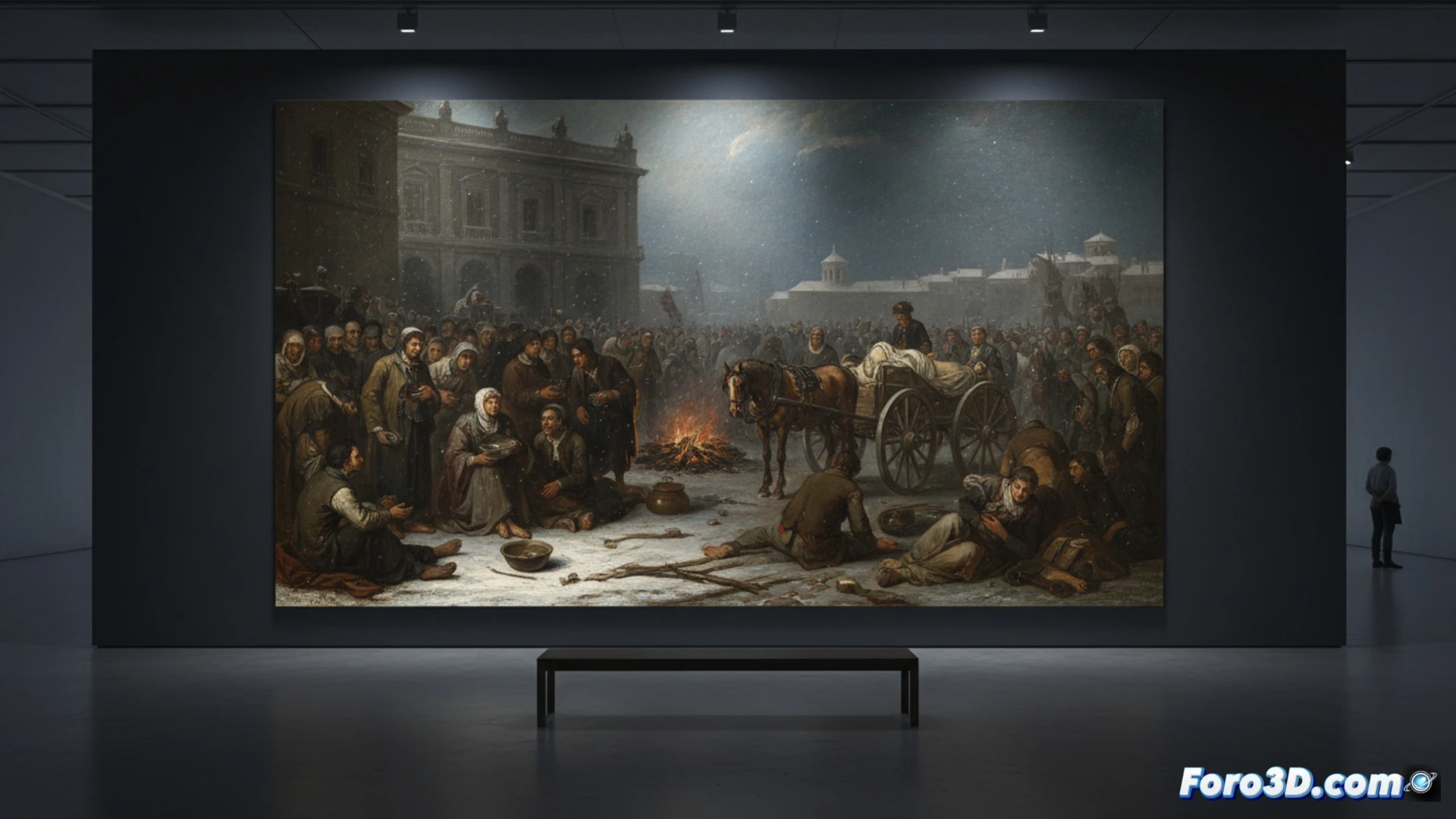
The technical challenge of restoring a 315 x 437 centimeter work 🛠️
The restoration of this painting required a detailed analysis of its textile support and paint layer. Technicians applied radiography and infrared reflectography to study the pentimenti and state of conservation. Historical repaints and an oxidized varnish that altered color perception were identified. Chromatic reintegration was carried out with reversible pigments, and the installation in the new exhibition space required a specific anchoring system for its weight and dimensions.
From art star to forgotten painting in storage 📦
Aparicio's work went from being the sensation of the moment to a dusty piece of furniture in the Prado's storage. All due to changes in taste and because, let's be honest, a painting about a famine is not exactly the decoration one wants in the living room. Now, with this new format, the museum gives it a second chance. Let's see if this time they don't relegate it to a corner for another two hundred years.