In the fifth season of Stranger Things, ILM faced the challenge of materializing a complex concept: a seemingly endless wall. This element, more than just a set piece, was a physical manifestation of the Upside Down. Its design needed to convey a sense of overwhelming scale and latent threat, serving as a key backdrop for the series' climax. 🧱
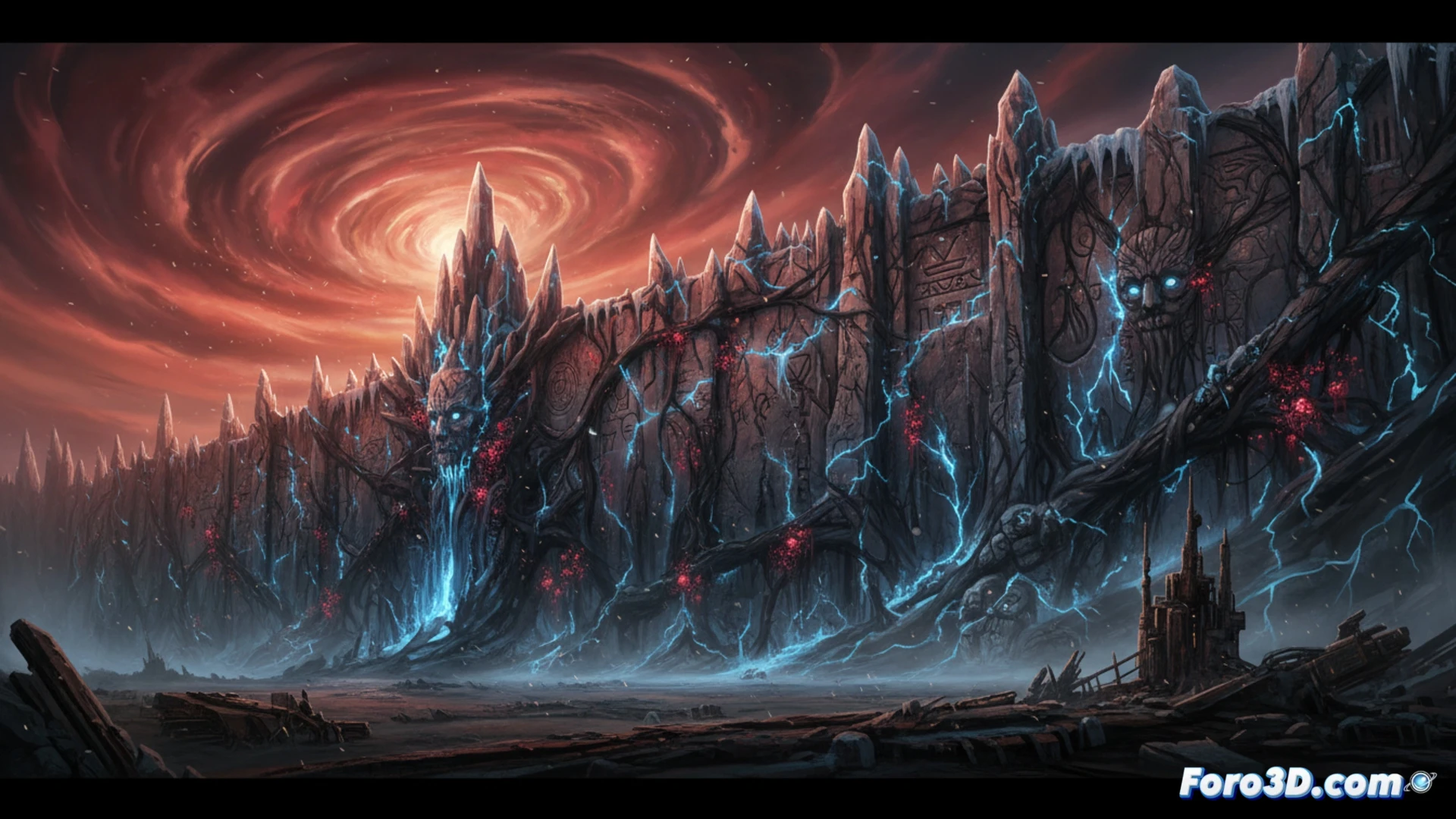
Projection Technique and Procedural Modeling for Scale 🎬
To achieve the illusion of infinity, the team avoided simple digital extension methods. They developed a high-resolution projection system onto a limited physical set. The wall's texture was generated procedurally, combining organic and geometric elements that repeated without a discernible pattern. This, combined with careful volumetric lighting work and suspended particles, created the depth and detail needed for the wall to appear believable in every shot.
When Your Wall Has More Layers Than a Teen Drama 😅
It's curious to think that a wall, normally an element to stop things, was here the center of so much technical effort. While the characters faced interdimensional horrors, the artists at ILM debated the exact degree of viscosity in the textures and the ideal density of the digital moss. In the end, they achieved a wall so elaborate it would probably require an instruction manual and a building permit. An achievement so viewers could feel claustrophobia in the most artistic way possible.