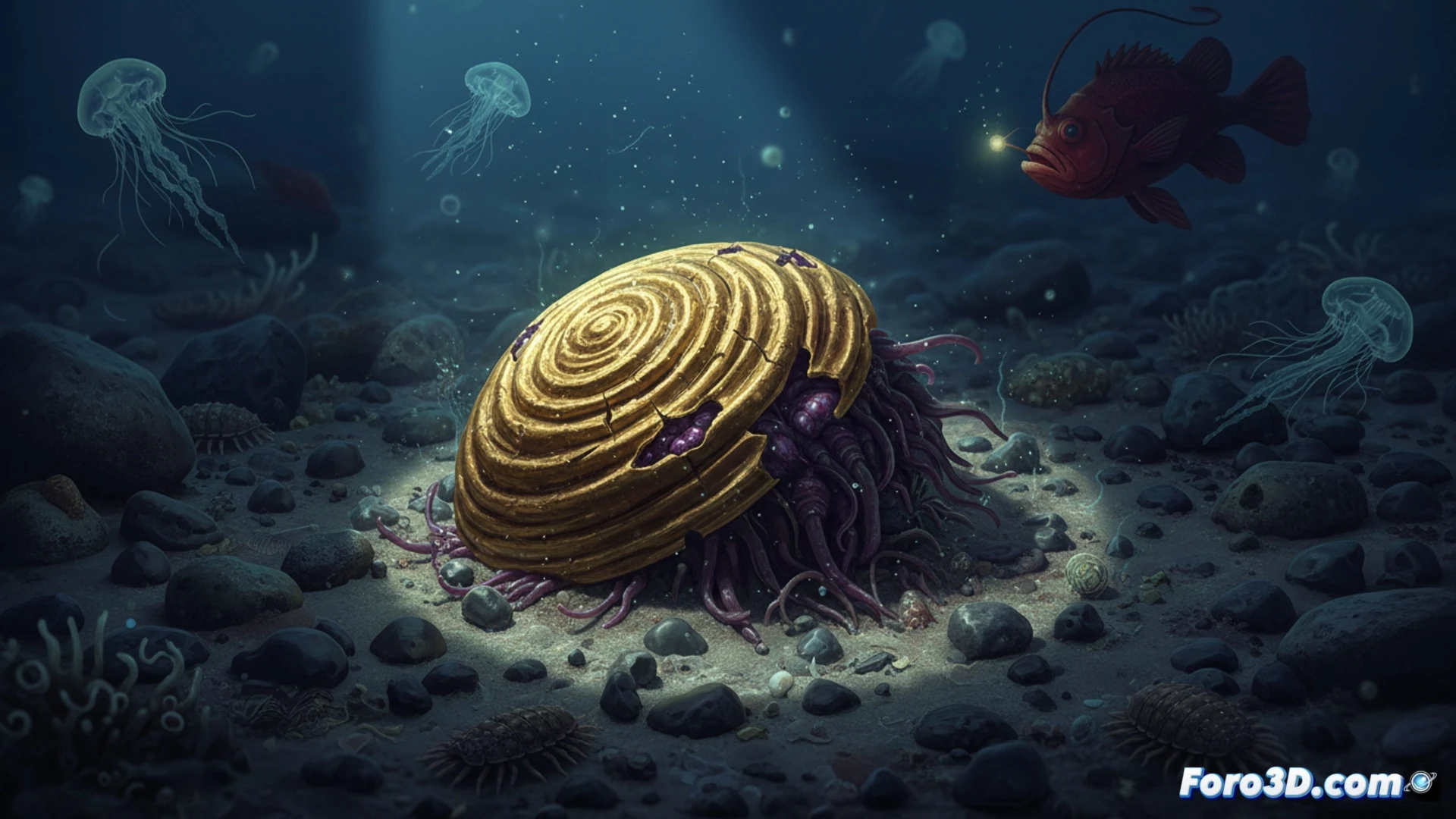
In August 2023, an expedition in the Gulf of Alaska found a golden hemisphere with a central hole at a depth of 3,200 meters. Dubbed the alien egg on social media, its origin remained a mystery for three years. Now, mitochondrial DNA has revealed its true nature.
Genetic analysis solved the oceanic enigma 🧬
The specimen was transferred to the Smithsonian National Museum of Natural History. There, its mitochondrial DNA was sequenced, ruling out that it was an egg, a sponge, or a bacterial biofilm. The analysis linked it to Relicanthus daphneae, a giant anemone from 2006 whose tentacles exceed two meters. The golden orb turned out to be a cuticular relic: the remains of the base that the anemone uses to anchor itself to rocks. When the animal dies or detaches, this fleshy, resistant structure is left behind. The hole was not a hatching mark, but a natural tear in the residual tissue.
From alien hype to the remains of a tenant 🐙
So the famous extraterrestrial egg was nothing more than the foot of a giant anemone. After months of speculation and intergalactic memes, science brings us back to reality: what seemed like a sign of intelligent life was the oceanic equivalent of an abandoned shoe sole. At least, the central hole will serve so that mystery fans can continue imagining that something came out of there.