Penguins are animals that evoke sympathy for their clumsy walk and formal appearance. However, anyone who has been near a colony knows that their smell is penetrating. A study by the University of Helsinki, conducted at the Argentine Marambio base in 2023, discovered that this stench has a direct effect on the atmosphere. The ammonia from the guano, when reacting with ocean compounds, generates particles that help form clouds.
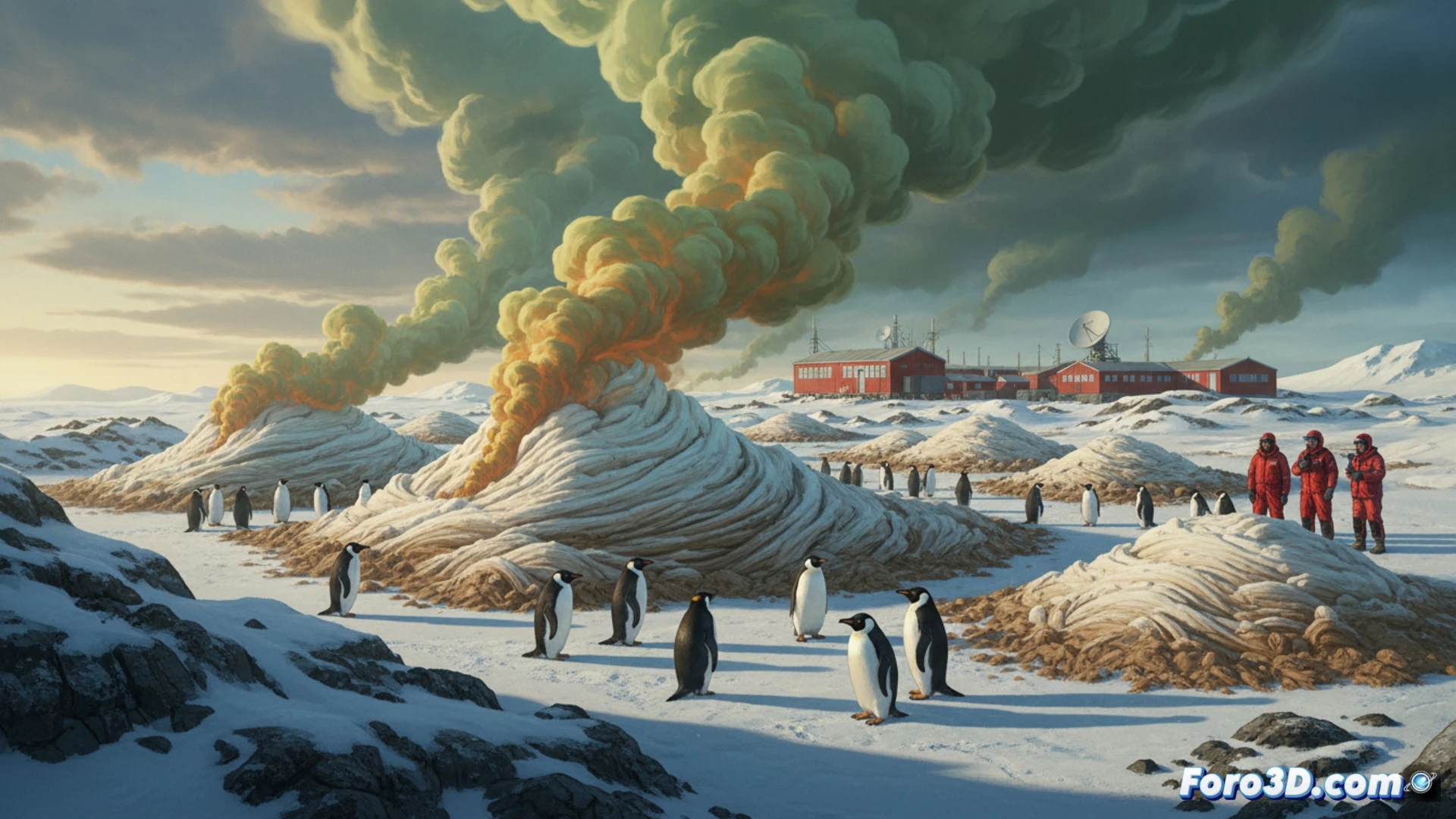
How penguin guano influences cloud formation 🌤️
The chemical process behind this phenomenon is clear. Penguin colonies produce large volumes of guano, rich in ammonia. This compound is released into the air and combines with sulfuric acid, generated by marine phytoplankton. The reaction produces ammonium sulfate aerosols. These particles act as condensation nuclei, around which water vapor gathers to form droplets. The result is an increase in cloud cover over Antarctic regions.
Clouds with the essence of a penguin colony 💨
Now we know that the smell of rotten fish and ammonia from penguin rookeries not only scares away tourists. It also generates clouds. If you ever complained about the cloudy weather in the south, now you know who to blame. Penguins, with all their grace, are up there making clouds out of poop. Perhaps the next challenge will be to measure the smell of the rain they produce. It wouldn't be surprising if even the water falls with a certain whiff.