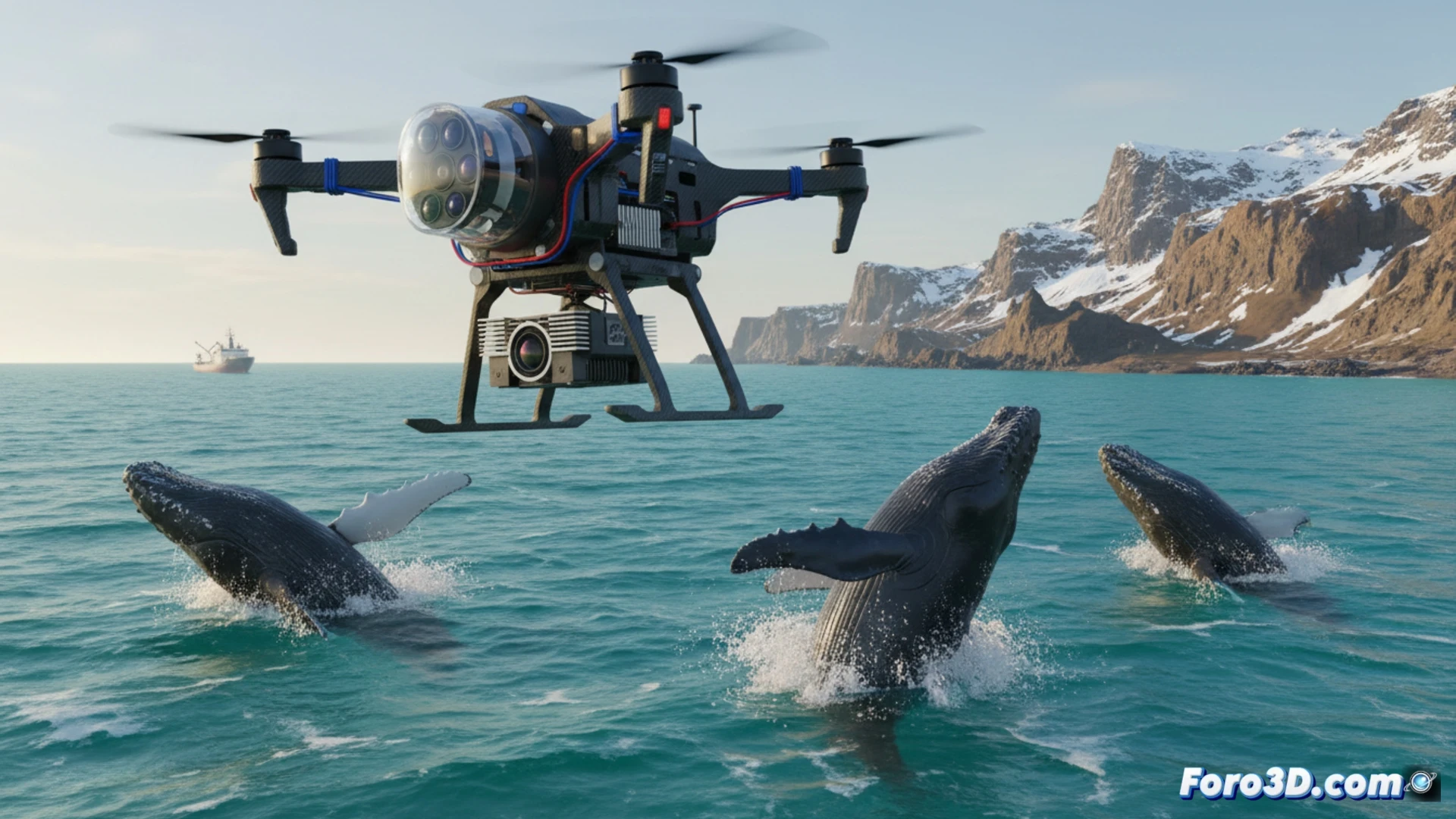
Born to measure humpback whales in the cold waters of Iceland, the lightweight WHASER sensor has left its Nordic origins behind. Developed by Tandem Ventures with Bambu Lab, this device has become a global tool. Researchers from the United States, South America, Europe, Africa, and Australia are already using it for their field studies, after validating biometric data from over 115 whales.
3D Printing as a Driver of Rapid Iteration 🖨️
The key to the WHASER lies in its manufacturing process. Tandem Ventures leveraged 3D printing to create prototypes and test designs quickly. This allowed the sensor to be adjusted to the conditions of each environment without long waiting times. The lightweight, adaptable system mounts on commercial drones, facilitating its deployment in scientific expeditions. The collaboration with Bambu Lab simplified local production in different regions.
The Drone That Started Spying on Whales and Now Travels More Than a Backpacker ✈️
What began as a technical whim to count whales in Iceland has become a globetrotter. The WHASER has visited more continents than many humans. Researchers use it for everything except serving coffee at polar stations. And all because someone thought: why not print a sensor instead of lugging around a ten-kilo contraption?