NASA's Curiosity rover has successfully applied an experimental method called thermochemolysis, managing to extract organic compounds that remained hidden in Martian soil. Among those detected are nitrogen-rich molecules, linked to DNA synthesis, and benzothiophene, associated with terrestrial biological processes. However, researchers warn that these findings do not confirm past life.
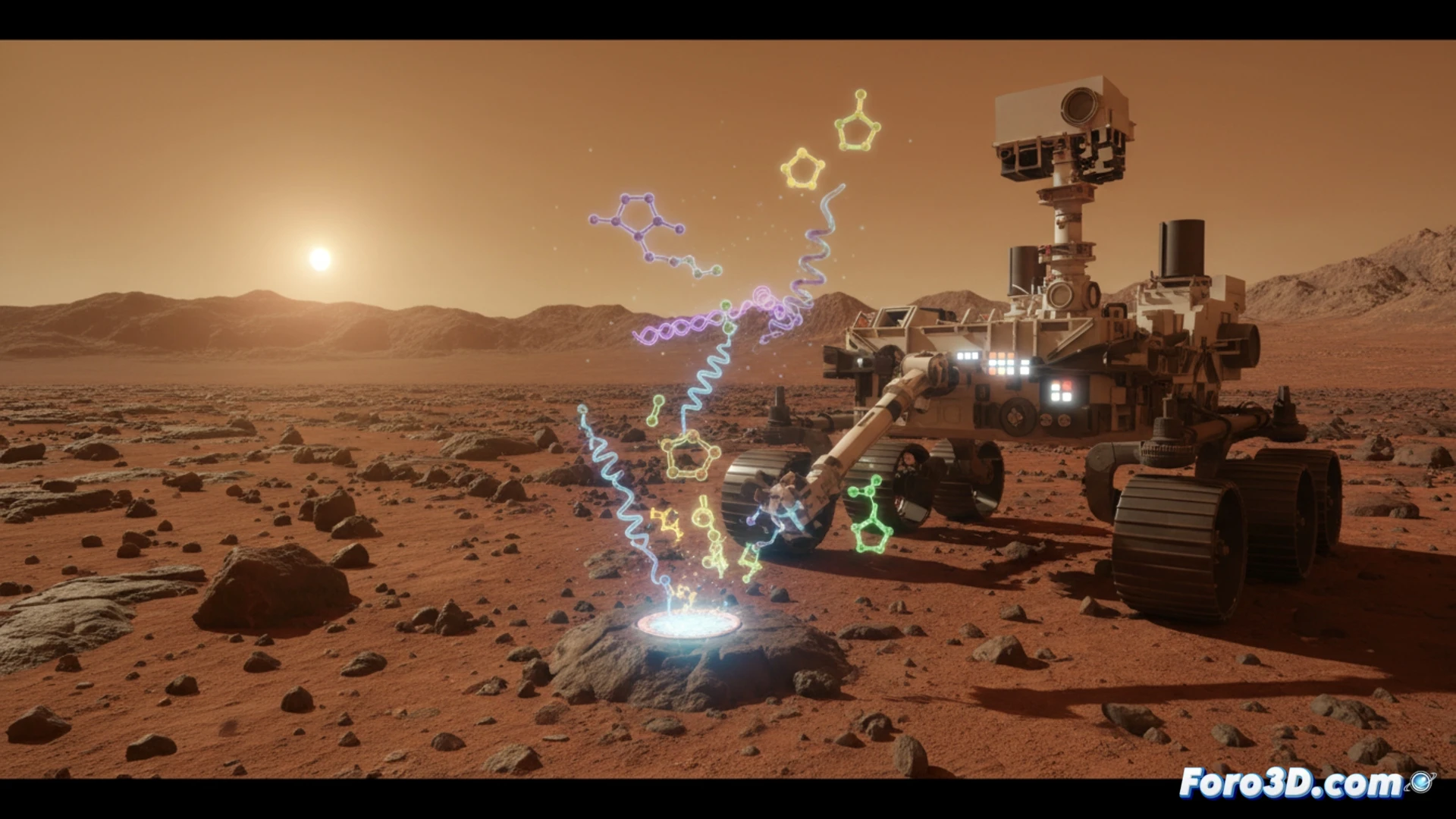
Thermochemolysis: how the hidden samples were extracted 🔬
The technique involves heating rock samples to temperatures above 600 degrees Celsius, releasing compounds trapped in clay minerals that other methods could not unlock. The analysis was performed with the SAM (Sample Analysis at Mars) instrument, which separates and identifies the resulting gases. The results show organic chains of up to ten carbons, stable under Martian conditions, although their origin could be geological or meteoritic.
Just in case, don't open the rover's window 🛸
The appearance of organic molecules on Mars does not mean there are little green Martians waving at us. Scientists recall that benzothiophene also forms in terrestrial volcanoes, and that organic nitrogen could come from meteorites. In other words, Curiosity might have found remnants of an interstellar pizza. Until a footprint shows up, we keep waiting.