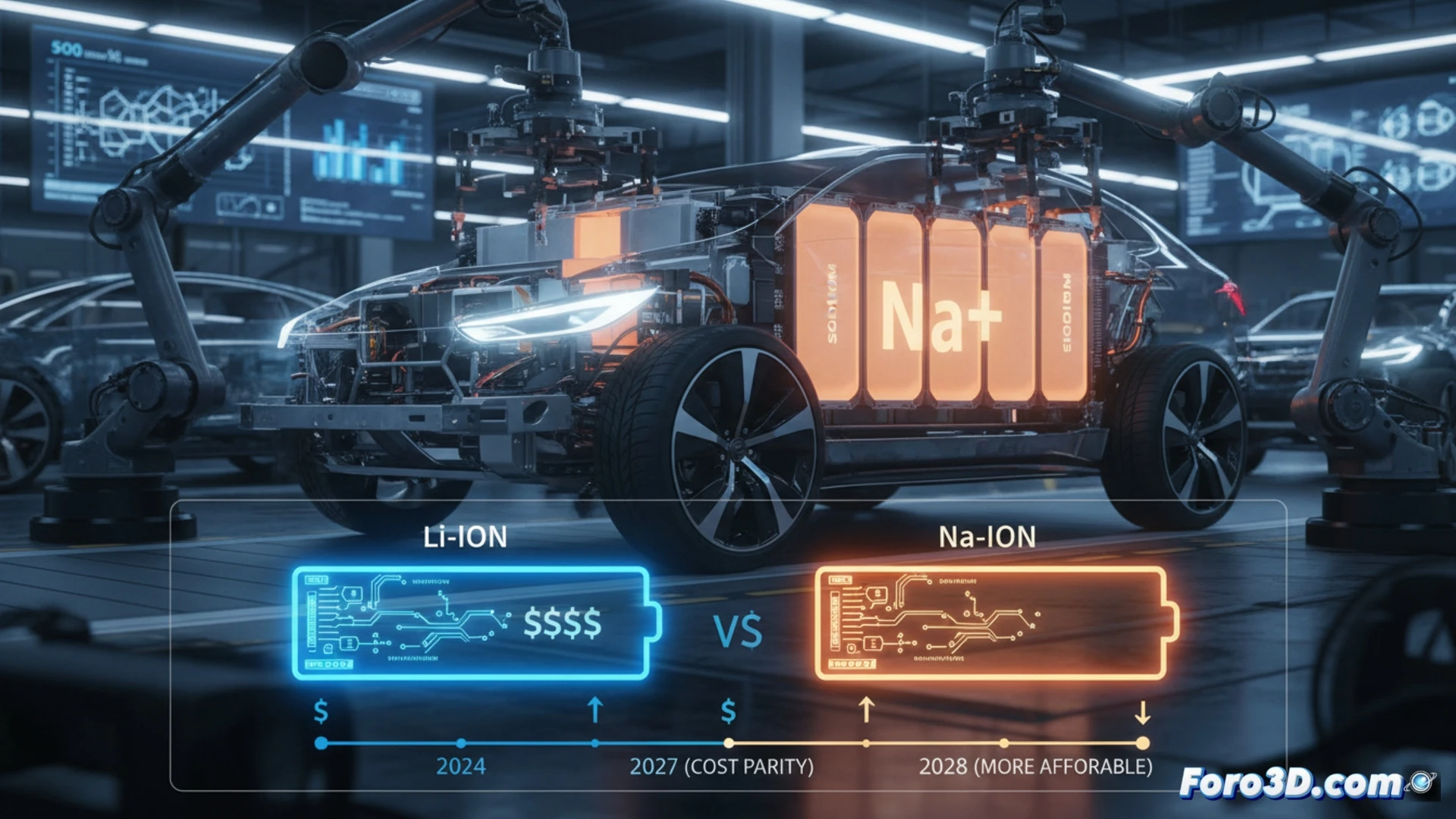
The dominance of lithium in electric car batteries could face a serious competitor. Sodium batteries, currently with a higher cost, are on track to significantly reduce their price. According to the Chinese firm HiNa Battery Technology, it is projected that by 2027 they will match the cost of lithium-ion batteries, and by 2028 they will be even more economical, boosting their application in the industry.
The Technology Behind the Cost Reduction 🔬
The key to future price competitiveness lies in the raw material. Sodium is abundant and more evenly distributed than lithium, which mitigates geopolitical and supply risks. Sodium cells operate on electrochemical principles similar to lithium ones, but their chemistry allows for the use of aluminum instead of copper for current collectors, an additional material saving that contributes to the projected cost decrease.
When Table Salt Beats White Gold 🧂
It's curious to think that the element we use to season our food could end up powering our cars. While lithium mines are strategic and contested, sodium is basically obtained from common salt. The future might depend on us, literally, not running out of salt. Perhaps soon market reports will be given not only by analysts but also by chefs.