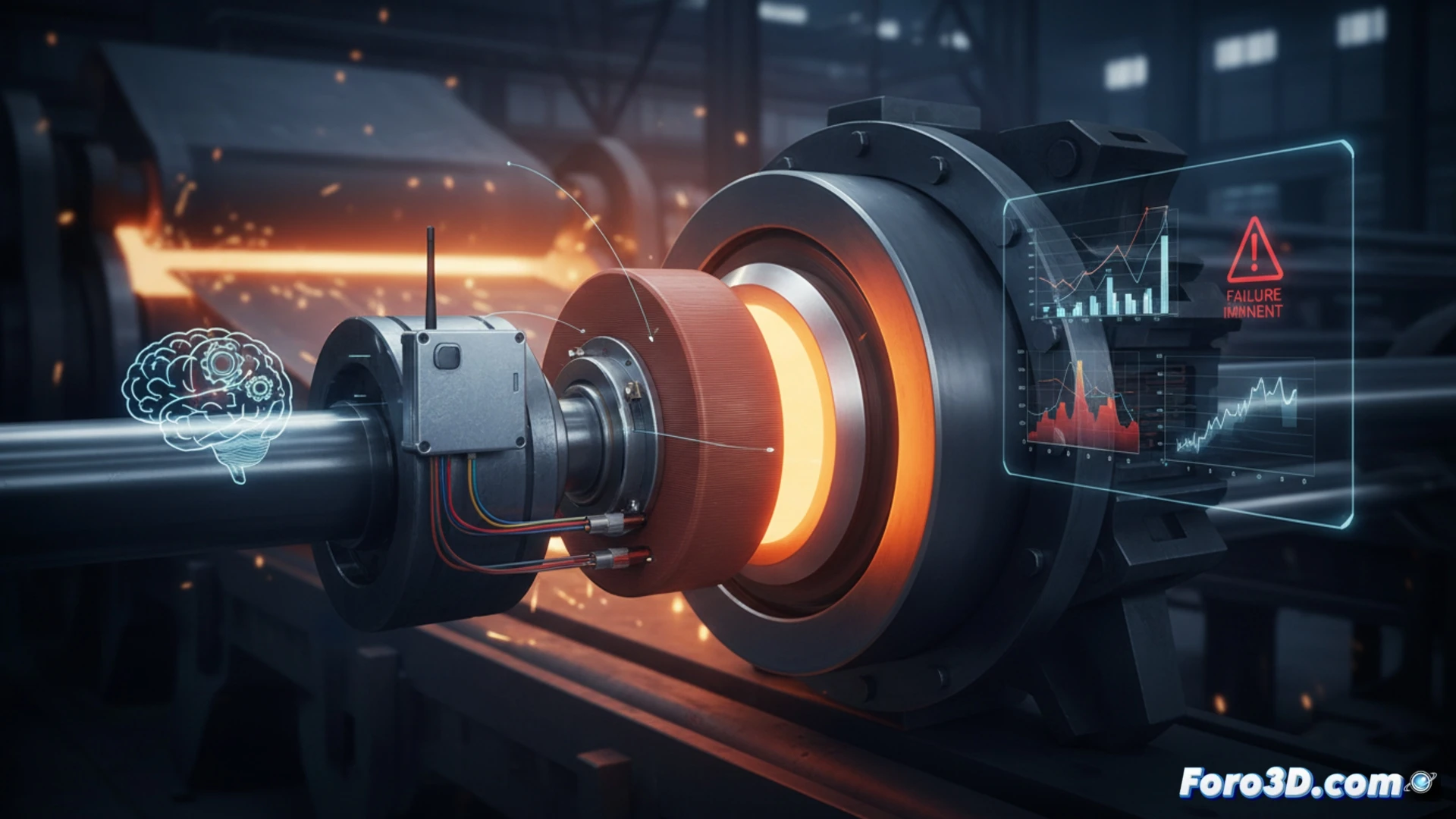
A consortium led by IREC, with the UOC and CELSA, has created a predictive system to prevent breakdowns in industrial machinery. The key is a solid oxide battery manufactured with 3D printing, capable of withstanding extreme temperatures and powering a low-consumption electronic unit with cellular connectivity. Installed on the shaft of a rolling mill, it captures vibration and temperature to anticipate failures.
Solid oxide that doesn't give in to heat 🔥
The solid-state battery, 3D printed, was designed to operate where conventional batteries fail: high-temperature and constant vibration environments. Its oxide chemistry provides superior thermal stability, powering an electronic unit that continuously records and sends data. The system was integrated into the shaft of CELSA's rolling mill, a critical point where detecting micro-vibrations or thermal spikes can prevent unplanned downtime and costly repairs.
The battery that doesn't complain about the industrial hell 😎
While CELSA technicians sweat buckets near the rolling mill, this solid oxide battery seems to be on vacation: it doesn't flinch at the infernal heat or the impacts. Made with a 3D printer, as if it were a plastic toy, but capable of withstanding what a normal mobile phone battery couldn't handle for even five minutes. Next thing, it'll ask for a coffee while monitoring the vibrations.