Australia has launched a project to reestablish domestic manufacturing of nickel-aluminum bronze, a strategic material. Using SPEE3D's high-speed additive manufacturing technology, in collaboration with universities and defense, they aim to secure the domestic supply. The goal is to increase industrial sovereignty and resilience in critical sectors, reducing external dependencies.
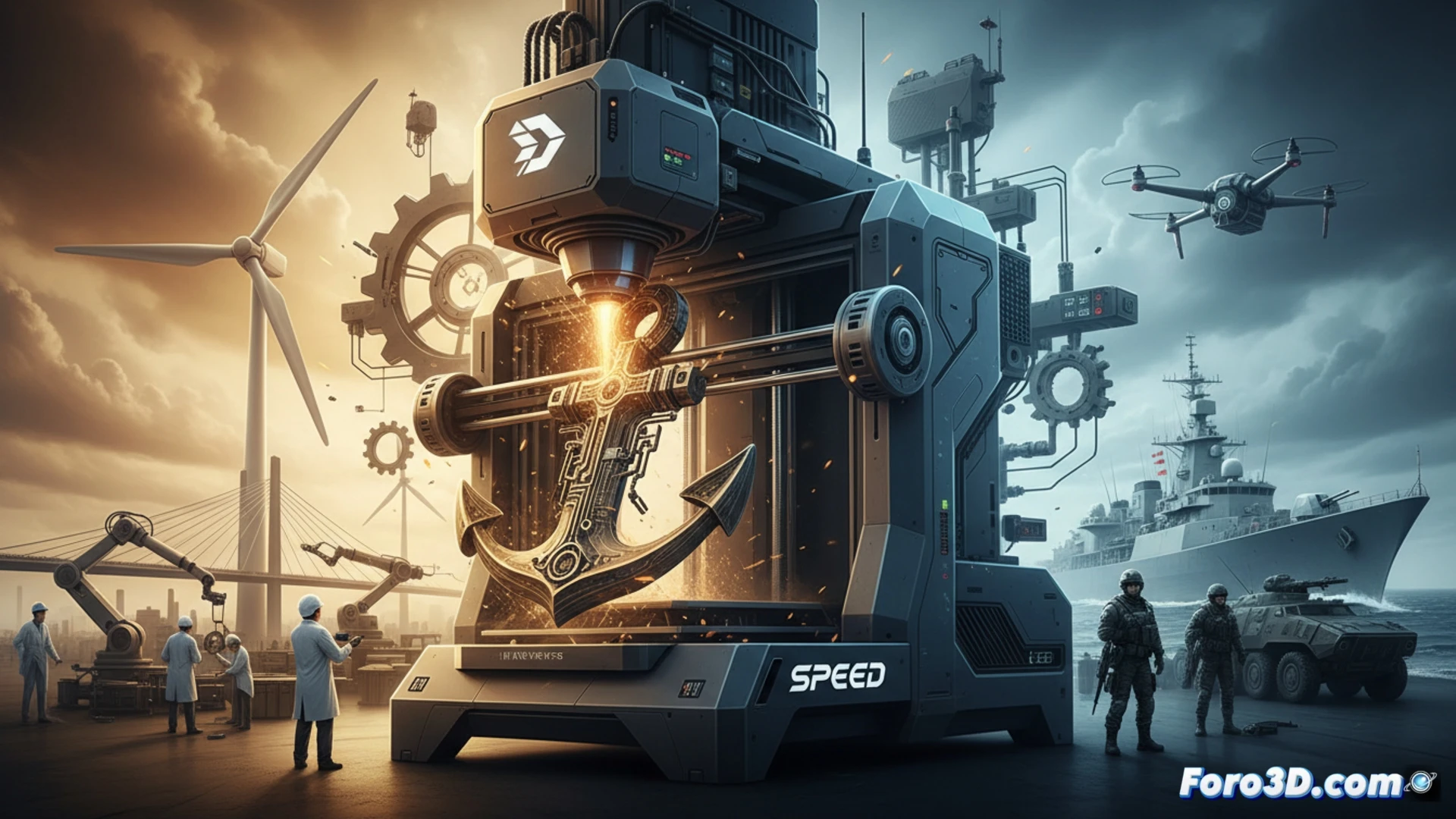
Cold Deposition Technology for a Complex Material 🔬
The project is based on SPEE3D's 3D printing technology, which uses a cold deposition process with kinetic energy. This technique allows processing difficult metal alloys, such as NAB bronze, at speeds notably higher than laser melting methods. The focus is on producing robust and corrosion-resistant components for marine and defense environments, validating parameters and mechanical properties.
Just in Case an Aircraft Carrier Breaks, We Print It in a Day ⚓
The initiative is practical, no doubt. Now, if a vital part on a ship wears out, instead of waiting months for a foreign supplier, it can be printed in a matter of hours. Of course, the development has a high cost and its immediate civilian use is limited. It seems the priority is to have an express repair workshop for the toughest material, in case things get rough at sea. An investment in resilience, with a taste of salt spray and gunpowder.