A year ago, on April 28, 2025, Spain and Portugal experienced a massive blackout. Frequency oscillations triggered a chain reaction that disconnected more than 2.5 GW in less than 90 seconds, leaving the entire country in darkness for days. Now, with over 26 million passenger cars in the fleet and an average age of 14.6 years, the uncomfortable question arises: what would have happened if most of those cars were electric?
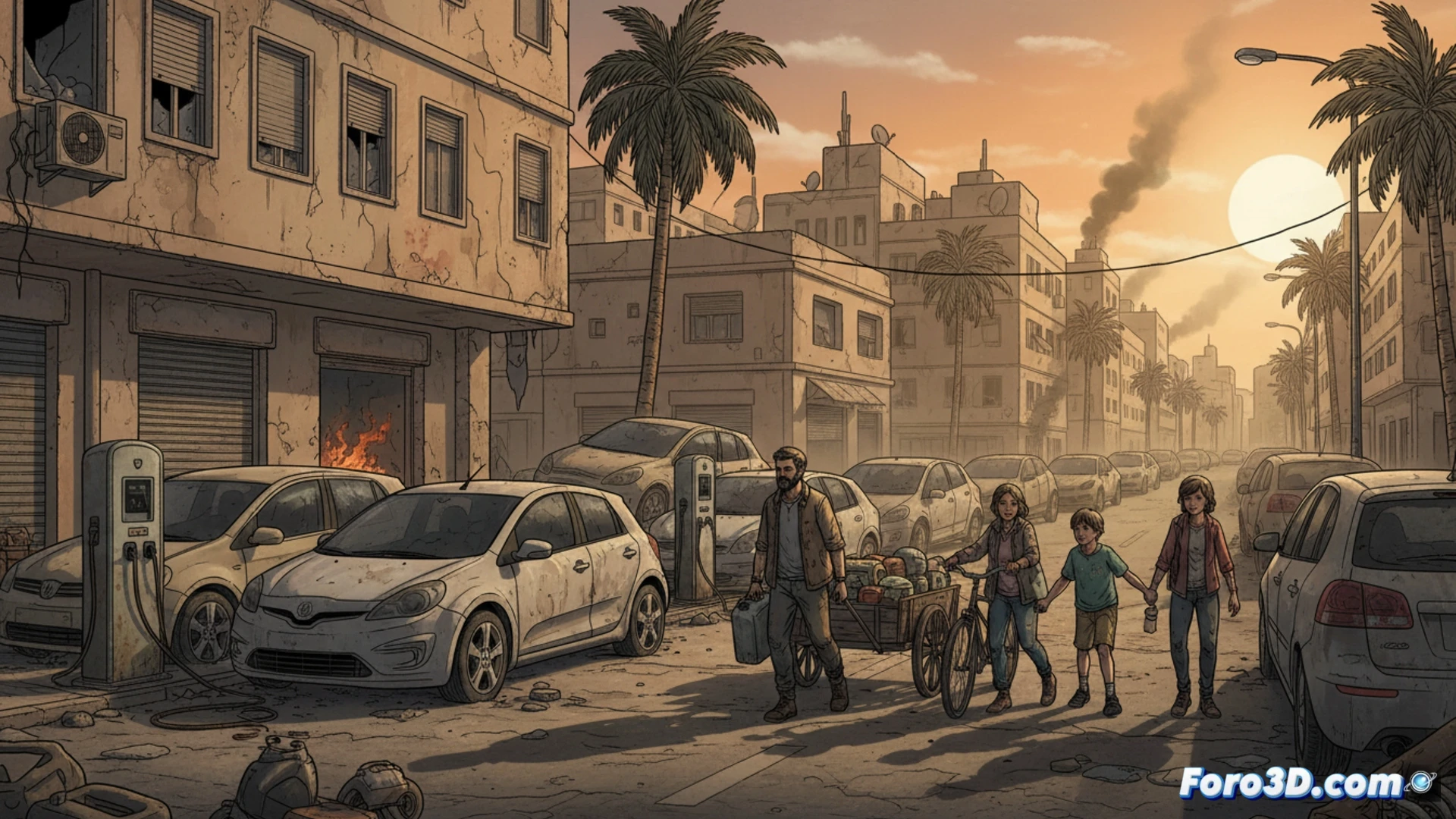
The fragility of a grid dependent on charging ⚡
If 50% of passenger cars were electric, the demand for simultaneous charging could skyrocket to over 30 GW during peak hours, according to technical estimates. The 2025 blackout showed that the grid could not withstand oscillations of 2.5 GW in 90 seconds. With millions of cars plugged in, any frequency instability could turn into a major collapse. The current infrastructure, designed for controlled peaks, is not prepared for a scenario where every home has an active charger.
The electric car: the best heater in the neighborhood 🔥
After the blackout, neighbors with combustion cars could at least stock up on gasoline in cans. Electric car owners, on the other hand, discovered that their vehicle was a 2-ton brick with wheels. Sure, it served as a portable heater if you sat inside with the battery at 5%. But without being able to go anywhere, because public chargers, without a grid, were as useful as an ashtray on a motorcycle.