The recent tram incident in San Fernando, fortunately without serious injuries, brings to light a crucial process following the event: the technical investigation. Beyond traditional reports, modern forensic documentation relies on 3D technologies to capture the scene with millimeter and unalterable precision. This methodology transforms an accident site into an interactive digital model, fundamental for objective analysis.
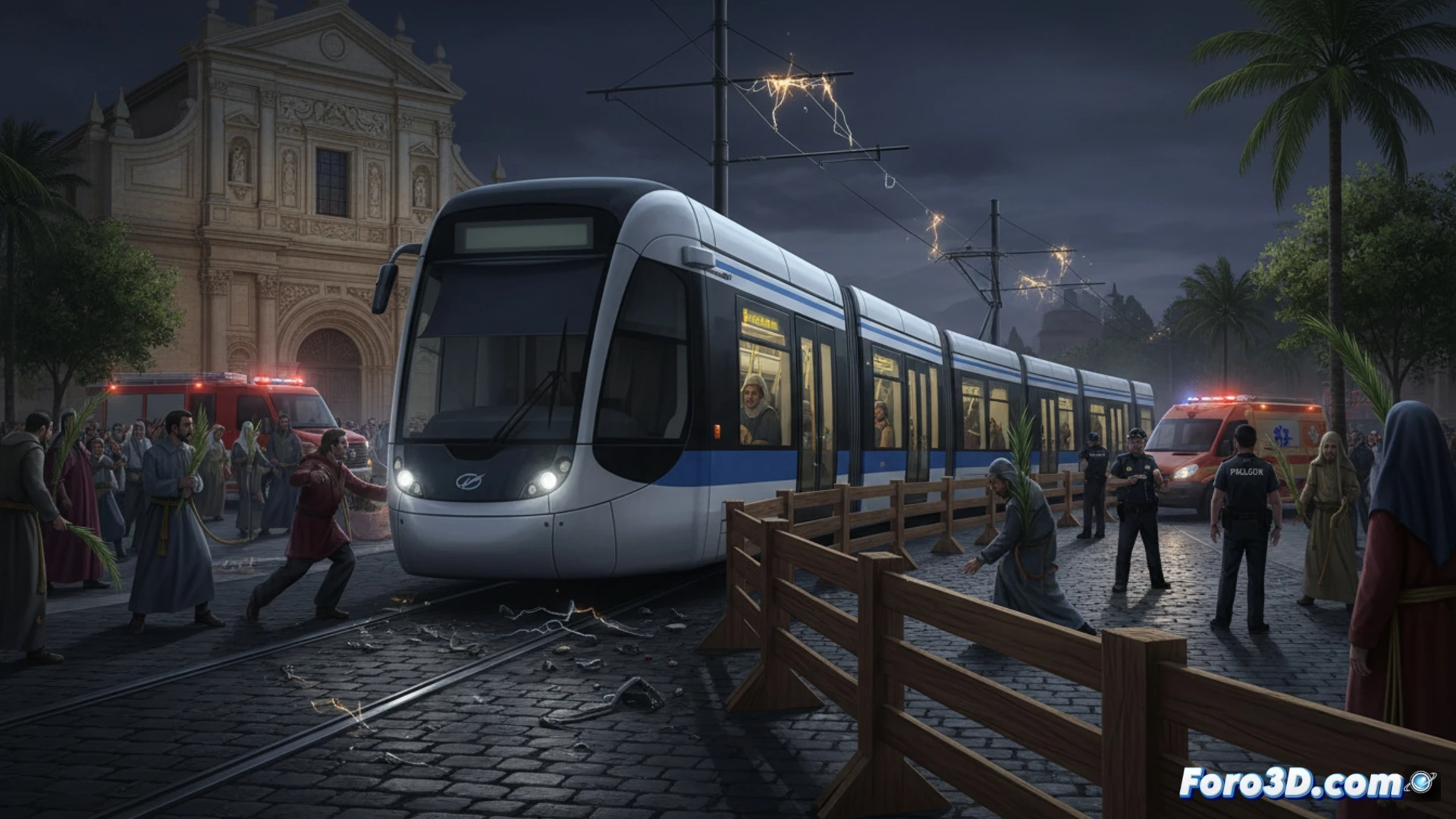
Photogrammetry and Laser Scanning: Preserving and Measuring the Scene 🔍
After securing the area, experts can deploy drones for aerial photogrammetry and terrestrial laser scanners. These devices capture millions of data points, generating a point cloud and an exact textured 3D model. This digital asset allows for precise measurement of braking distances, impact angles, and final vehicle positions. Furthermore, it permanently preserves the state of the scene, allowing investigators to return to it virtually at any point in the investigative process, something invaluable for cross-referencing testimonies and reconstructing sequences.
From Data to Cause: Simulation and Virtual Reconstruction 🧩
The 3D model is not just a static file. It becomes the base scenario for dynamic simulations. Investigators can input parameters such as speeds, trajectories, and reaction times to test hypotheses. In a case like San Fernando's, this would help determine if the maneuvering error was due to a human factor, a track condition, or a combination of elements. This ability to visualize and quantify what happened provides decisive technical clarity for authorities and for future prevention.
Would you combine scanning with photogrammetry?