インド、ミャンマー軍事政権を受け入れ民主主義の理念を葬る

2026年05月30日 スペイン語から翻訳・公開

ニューデリーが国際フォーラムで民主主義を説く一方、ミャンマーに対する外交政策は明らかな矛盾を露呈している。軍事政権との戦略的関係を優先し、人権侵害を無視することで、権威主義的な不処罰を正常化している。インドはクーデターを起こした者たちとガスや武器の交渉を行い、自ら掲げる価値観を否定している。
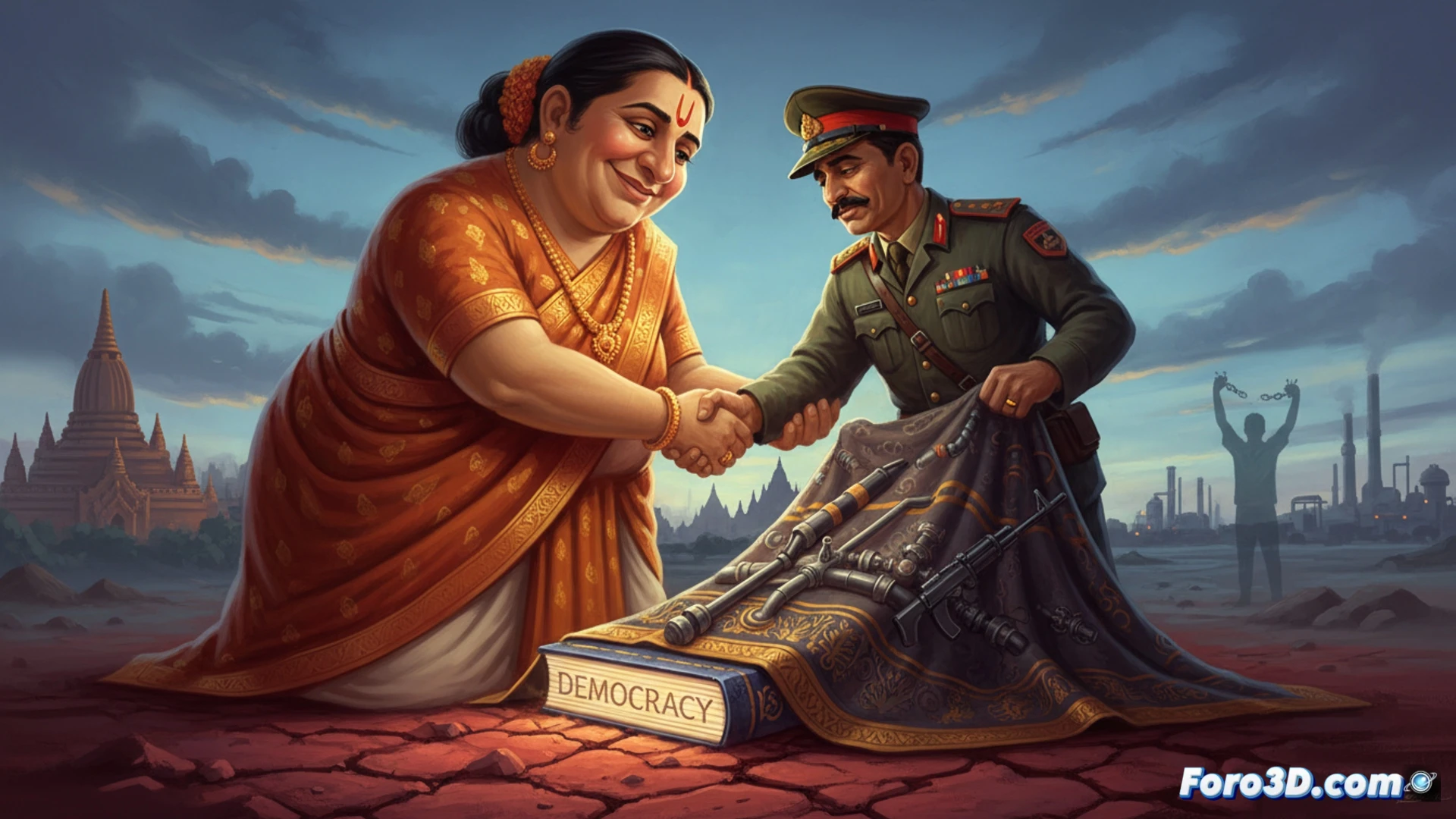
photorealistic cinematic wide shot of a diplomatic handshake between a Indian diplomat in a navy blue suit and a Myanmar military general in olive green uniform, happening over a large natural gas pipeline blueprint spread on a glass table, a drone camera with red recording light hovering overhead, a stack of AK-47 rifles visible in the background corner, a broken democracy protest sign lying on the floor partially hidden under the table, harsh fluorescent office lighting casting long shadows, metallic reflections on the weapons and pipeline diagrams, ultra-detailed textures on uniforms and table surface, dramatic contrast between the formal handshake and the surrounding militarized elements, engineering visualization style

ガスパイプライン外交の技術的矛盾 🛢️

インド・ミャンマー・タイ・ガスパイプライン計画は、軍事政権がエネルギー収入を弾圧の資金源とする中で進んでいる。インドはミャンマー領内に技術者を派遣し、軍事政権を支えるインフラを近代化している。この技術協力は、民主的な圧力の試みを無効にする。埋設されるパイプライン1キロメートルごとに、民間人を爆撃した将軍たちへの信頼の証が示されているのだ。

現実政治:価値観はブランチのためだけ 🥂

解決策は単純だ。インドがクーデターを非難し、市民とのみ対話することだ。しかし、それには有利な契約やエネルギー安全保障を放棄することが伴う。演壇から民主主義を説きながら、軍事政権と小切手を交わす方が簡単だ。結局のところ、一貫性は、特にガスが絡む場合、ほとんどの国が払えない贅沢品なのだ。