三次元印刷、電池用試作品からの脱却を目指す

2026年05月16日 スペイン語から翻訳・公開

Materials Science & Engineering Rの研究によると、3Dプリンティングはリチウム電池の大規模製造に適していることが示唆されています。鍵となるのは化学反応だけでなく、構造の印刷方法にもあります。材料とプロセスを制御すれば、3Dアーキテクチャが性能を左右する決定的な要素となります。
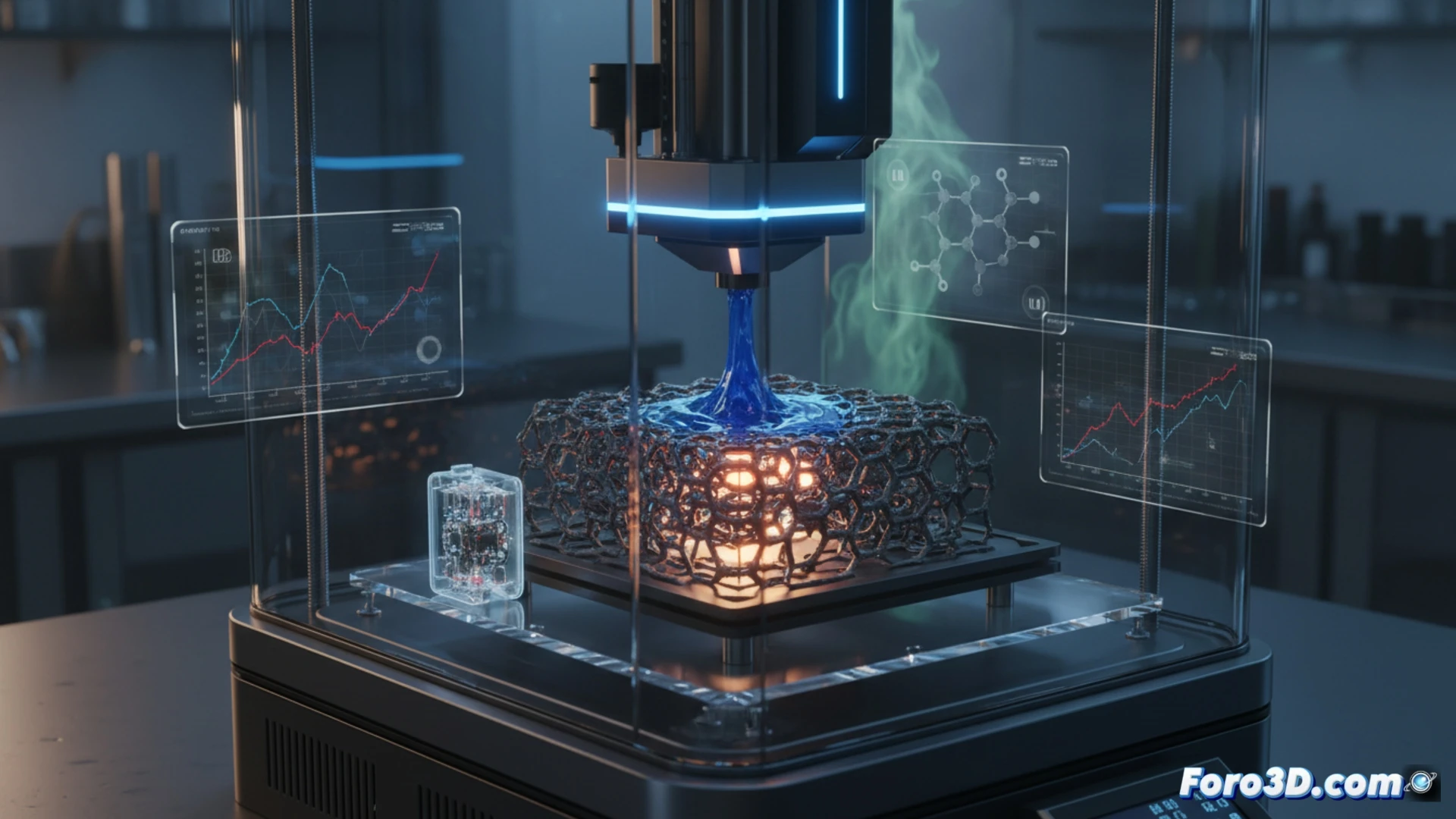
Industrial 3D printer nozzle depositing lithium paste onto a battery electrode, microscopic view showing porous 3D lattice architecture forming layer by layer, printer head moving in precise raster pattern, glowing orange thermal control sensors monitoring extrusion, carbon nanotubes visible as fine filaments reinforcing structure, photorealistic engineering visualization, metallic printer components with cool blue ambient lighting, high contrast shadows emphasizing depth, conductive graphene particles suspended in viscous electrolyte ink, cross-section revealing internal honeycomb channels for ion flow, cleanroom environment with minimal reflections, technical illustration style with hyperdetailed mechanical textures

未来のカソードを巡り、4つの技術が競い合う 🔋

この研究では、ダイレクトインクライティング、粉末床レーザー溶融、光重合、熱溶解積層法による実験結果を分析しています。各技術は、多孔性とエネルギー密度に対して独自の制御を提供します。重要なのは、印刷された形状によりイオン経路が短縮され、活性表面積が増加し、従来の製造方法の限界を克服できる点です。

充電器を印刷しながらスマホを充電 ⚡

2時間で切れないバッテリーの解決策は、リチウムの層をまるでカスタードクリームのように積層するプリンターにあるかもしれません。ただし、インクが濃くなりすぎると、陽極の代わりに高価な文鎮ができあがります。その魅力は魅惑的です。どんなガジェットにも収まるドーナツ型のバッテリー。その間も、私たちはまるで足かせのようなケーブルでスマホを充電し続けています。