Zero Sievert demonstrates how an accessible engine like GameMaker can sustain a deep survival experience. The game uses a limited visibility system that not only hides enemies but defines the player's constant tension. Combined with detailed pixel art in Aseprite, it achieves a post-apocalyptic atmosphere without the need for complex 3D graphics, offering valuable lessons for indie developers seeking visual impact with modest resources.
Fog of War Implementation and 2D Optimization 🎮
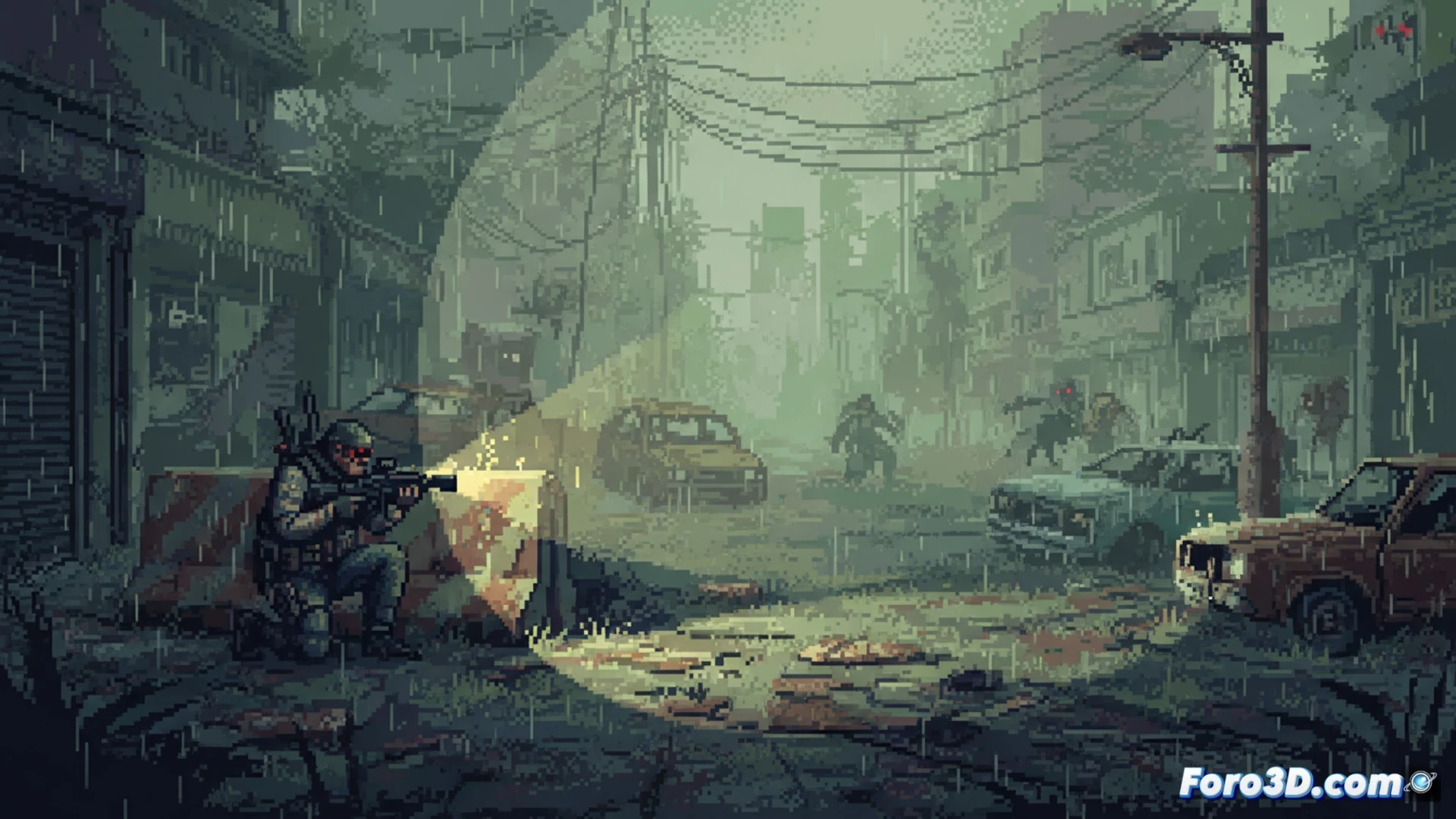
The core mechanic of Zero Sievert lies in its visibility system. In GameMaker, this is typically achieved through surfaces and pixel buffers that obscure unexplored areas. The trick is to not render objects outside the player's vision radius, drastically reducing CPU usage. For pixel art of weapons and equipment, Aseprite allows creating modular sprites: a barrel, a stock, and a magazine can be swapped without redrawing the entire weapon. This speeds up iteration and maintains visual consistency. The limited color palette, with muted tones and low saturation, reinforces the feeling of a devastated world. Key tip: use tilemap layers in GameMaker for the ground and static objects, and reserve dynamic objects only for interactive entities.
Creating Atmosphere with Limitations: Lessons for Indies 💡
Zero Sievert proves that detail does not require high resolution. Each enemy and object sprite tells a story through its silhouette and minimal animation. The fog of war not only hides but guides the game's pace: the player advances cautiously because the unknown is a threat. For developers, this means the mechanic must integrate with the visual narrative from the first sketch in Aseprite. Do not underestimate the power of a dark background and a pixelated flashlight; sometimes, what is not seen generates more fear than what is shown. Publishing on platforms like itch.io allows testing these ideas without large investments.
Do you think this asset needs optimization or can it be left as is for mobile?