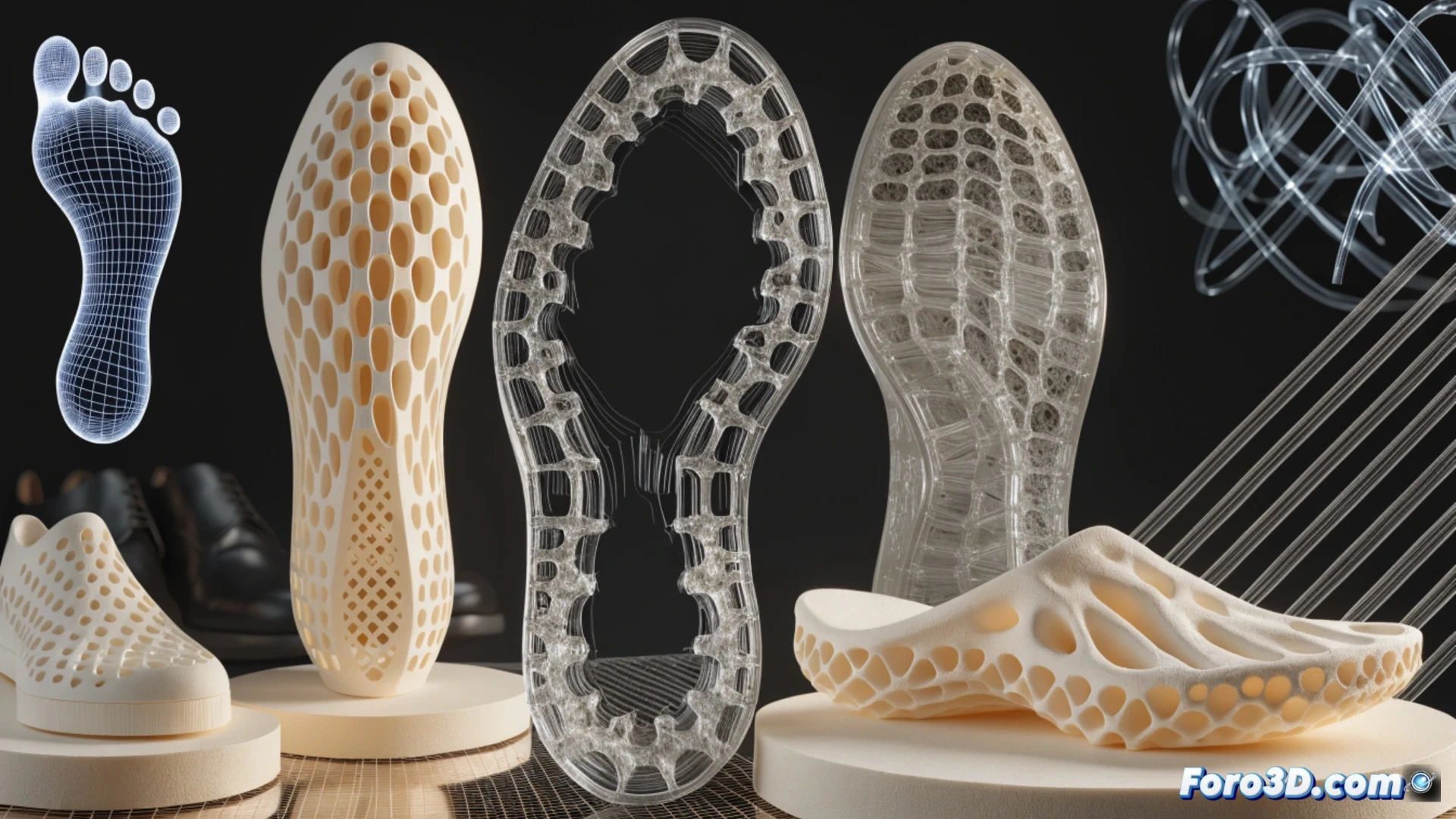
3D technology provides the artisan shoemaker with tools to digitize their work. It allows for creating custom lasts, repairing worn soles, or manufacturing anatomical insoles with millimeter precision. Material waste is reduced, and production times are shortened. A clear example is the fabrication of a custom last by scanning the client's foot with a sensor.
Scanner, modeling, and manufacturing: the technical trio 🔧
To start, a structured light 3D scanner (like the Einscan SE) is needed to capture the foot's geometry. Then, modeling software such as Blender or Rhino 3D allows adjusting the last or designing the sole. Finally, an FDM printer with flexible (TPU) or rigid (PLA) filament materializes the piece. Programs like Meshmixer help repair meshes, and Cura or PrusaSlicer prepare the file for printing. The workflow is simple: scan, model, and print.
The modern shoemaker: from hammer to mouse and cold coffee ☕
Before, the shoemaker hit the sole with a hammer; now, they hit the mouse against the desk when the software freezes. The advantage is that you no longer have to wait weeks for a factory last to arrive: you print it while having a coffee (which gets cold because the printer is slow). But beware, if the scanner fails, your client will have a shoe for a duck foot. Technology doesn't remove the craft, it just changes the type of headache.