Yuichiro Hayashi has become a recurring name among modern anime fans. With a visual style that prioritizes roughness and detail, this director took the reins of the final season of Attack on Titan and solidified his reputation. His approach combines muted color palettes with character designs faithful to the original drawings, creating an oppressive and realistic atmosphere that defines his most famous works: Dorohedoro, Kakegurui, and, of course, the titanic conclusion of Isayama's series.
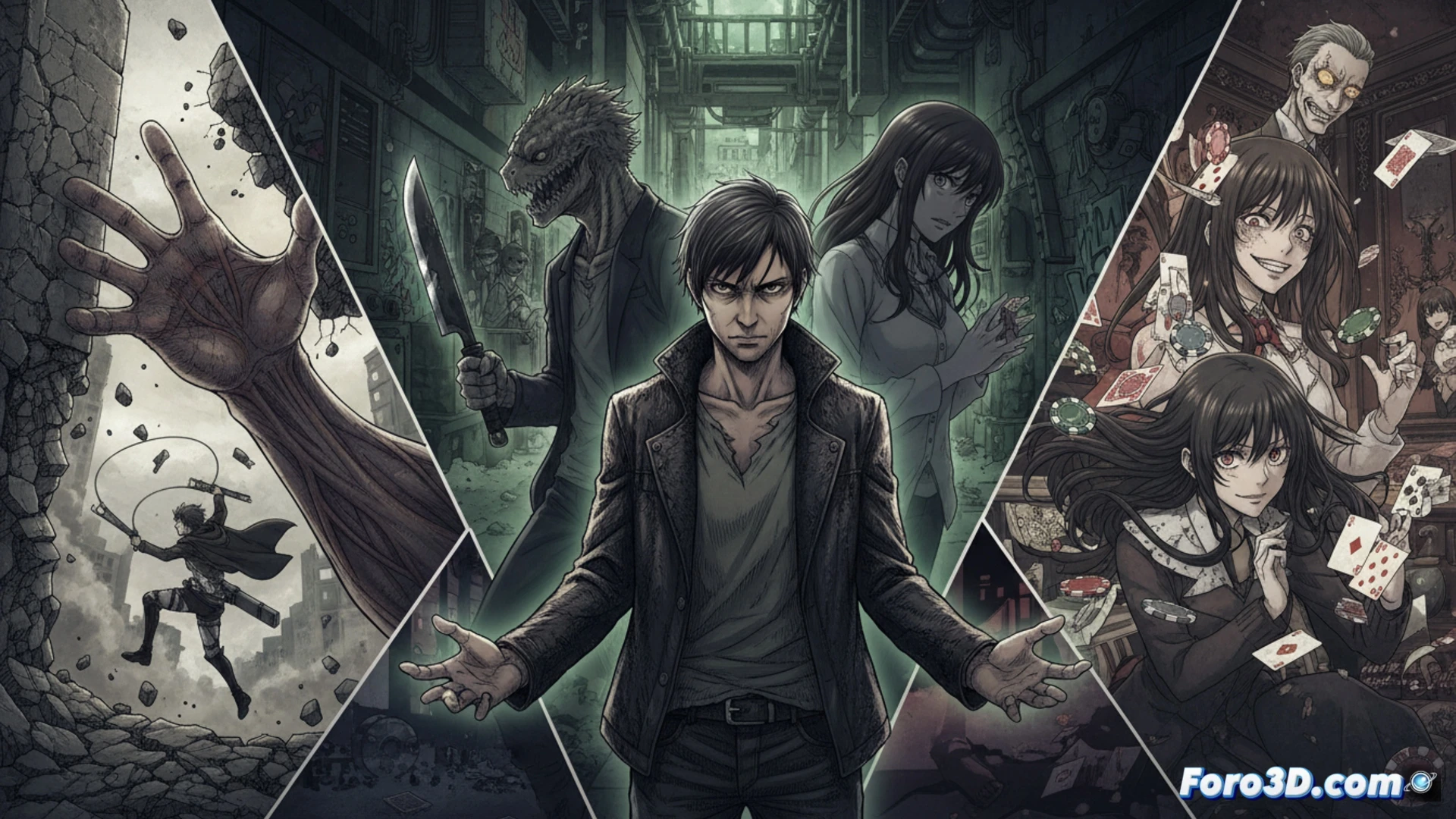
CGI and Dirty Textures: Hayashi's Technical Gamble 🎬
Hayashi is not afraid of CGI, but he uses it with a specific purpose: to reinforce the feeling of dirt and wear in every scene. In Dorohedoro, 3D is integrated with hand-drawn backgrounds to bring a grimy and chaotic world to life. In Attack on Titan, the Titans' movements benefit from assisted animation that maintains fluidity without losing the detail of the original strokes. His team prioritizes rough textures and hard shadows, ensuring every frame breathes contained violence. It's not a revolutionary technique, but it is effective in conveying the rawness of his stories.
The Master of Gray Palettes and Uncomfortable Shots 🎨
If there's one thing Hayashi is clear about, it's that cheerful colors are not his thing. His series seem pulled from a perpetual cloudy day, with characters who sweat, bleed, and crawl through settings that look like dumps. Even in Kakegurui, where everything should be shine and excess, he manages to make card games feel like a fight in a dark alley. So yeah, if you're looking for an anime to brighten your day, you'd better put on an episode of SpongeBob. Here, you come to suffer, to chew dirt, and to enjoy every poorly thrown punch.