Yoshiyuki Asai has built a solid career in Japanese animation by exploring a very specific niche: how supernatural powers disrupt the everyday lives of young people. Far from epic battles, his films focus on the human drama that arises when a teenager discovers they are not normal. With works like Charlotte or The Day I Became a God, Asai demonstrates that the extraordinary only serves to amplify ordinary problems such as loneliness or social pressure. His visual style, clean and direct, reinforces that intimacy without artifice.
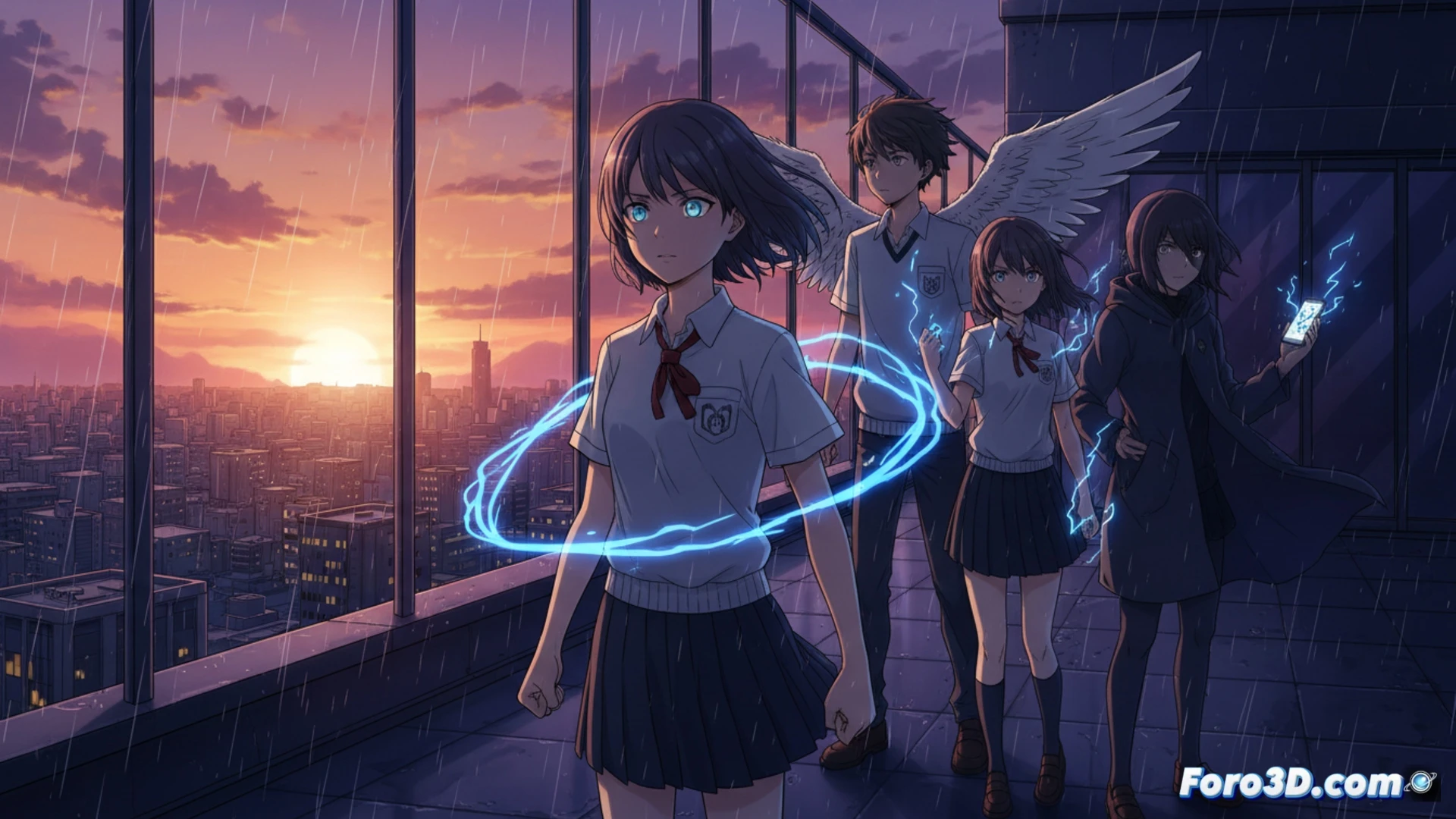
The technical engine of teenage drama with powers 🎬
Asai's direction relies on a measured use of animation to convey emotions without fanfare. In Charlotte, powers are represented with simple visual effects that do not overshadow the characters' facial expressions. The narrative rhythm is key: it alternates everyday scenes with supernatural outbursts to maintain dramatic tension. In Fate/Apocrypha, he managed a massive cast without losing sight of personal conflicts. His technical approach prioritizes silences and close-ups over spectacular effects, seeking to make the viewer feel the weight of each young person's decisions.
When your superpowers only give you high school problems 🎒
Watching Asai's protagonists is like attending a forced self-discovery class: you have powers, but also exams, friends who don't understand you, and parents who are clueless. In The Day I Became a God, the cosmic drama is reduced to a girl who predicts the end of the world but can't stop her sandwich from being stolen at recess. Asai reminds us that no matter how special you are, there will always be someone asking you to take out the trash. The teenage superhero, in the end, is still a teenager.