When Shinji Takamatsu left Gintama, few expected his replacement, Yoichi Fujita, to take the series to an even greater level of madness. Fujita didn't just maintain the absurd humor; he twisted it until he broke the fourth wall and turned it into a surreal minefield. His artistic vision, based on transgression and grotesque satire, culminated in Mr. Osomatsu, a phenomenon that proved sextuplets can be as chaotic as they are profitable.
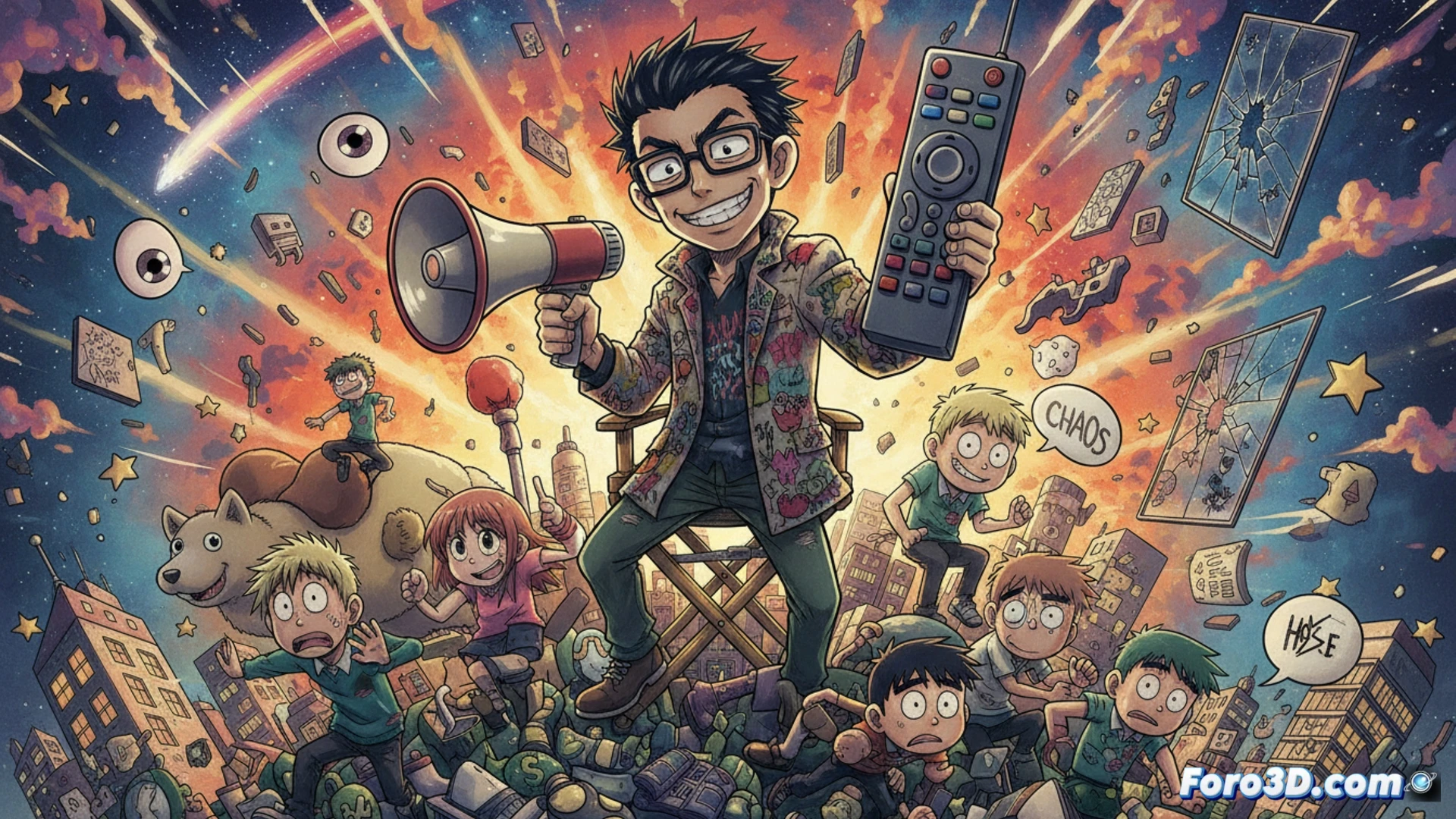
From storyboard to pixel: how Fujita optimized visual chaos 🎨
Fujita applied a technical direction based on abrupt cuts and changes in rhythm to disorient the viewer. In Gintama', he deliberately used limited animation to emphasize visual gags, while in ClassicaLoid he mixed CGI with traditional 2D without hesitation. His method: plan each scene with storyboards that prioritize comedic reaction over fluidity. This allowed for the production of weekly episodes without losing the satirical edge, albeit at the cost of some frames that look like animated doodles. The key was timing: knowing when a silence or a static background could be more effective than any explosion.
Mr. Osomatsu or how to sell merchandise of six identical slackers 💸
Fujita proved you don't need a coherent plot to dominate sales. Mr. Osomatsu is basically six brothers who don't work, insult each other, and survive on references to 80s series. And it worked. Because when the animation is deliberately shoddy and the jokes are politically incorrect, the audience applauds. Fujita understood that the real business isn't in the story, but in selling you a mug with the face of one of the twins whose name you can't even remember.