The Xreal Air 2 Ultra marks a turning point in augmented reality applied to the professional sector. Made of titanium and integrating dual spatial sensors with 6DoF tracking, these glasses promise precise interaction between digital objects and the physical environment. Their lightweight design and focus on portability position them as a viable alternative to bulkier headsets, opening the door to implementations in environments where mobility and ergonomics are critical.
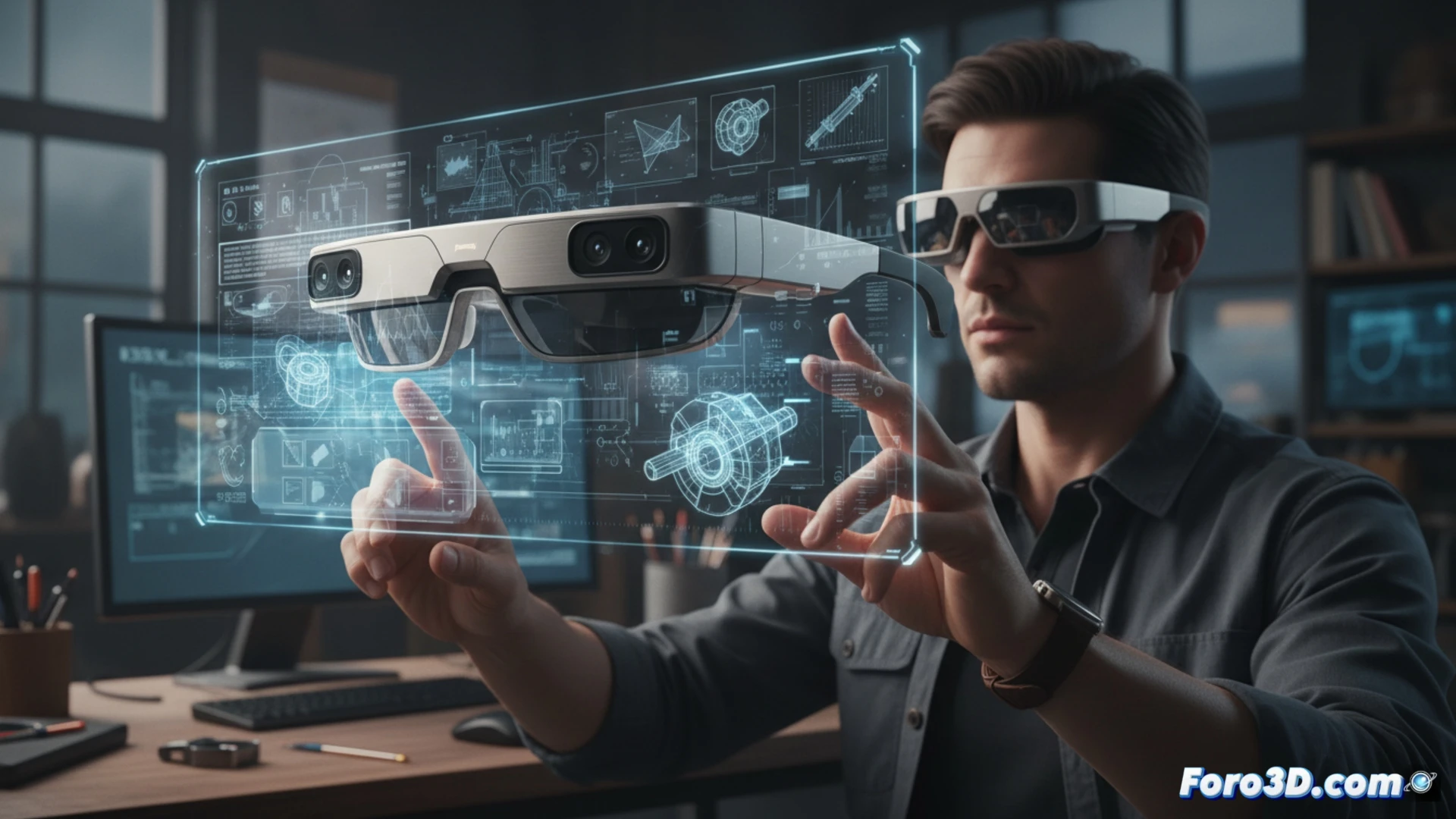
Technical Breakdown: Spatial Sensors and 6DoF Tracking 🛠️
The technical core of the Xreal Air 2 Ultra lies in its dual spatial sensor system. These sensors, combined with six degrees of freedom (6DoF) tracking, allow virtual objects to remain anchored to specific points in real space, reacting to the user's head movements without noticeable latency. The titanium housing not only provides durability but also reduces the device's overall weight, a determining factor for prolonged use sessions in tasks such as industrial maintenance or architectural visualization. This setup eliminates the need for external controllers for basic navigation, prioritizing hands-free interaction.
Professional Applications and the Cost of Portability 💼
Compared to competitors like Microsoft HoloLens or Magic Leap, the Xreal Air 2 Ultra stands out for its lower weight and significantly reduced cost. In practice, this makes them ideal tools for immersive training, where a worker can receive instructions overlaid on real machinery, or in e-commerce, allowing customers to visualize furniture at real scale in their homes. However, the trade-off lies in a potentially more limited field of view, forcing developers to optimize applications for focused anchoring experiences rather than fully immersive environments.
Could the use of titanium in the Xreal Air 2 Ultra, beyond durability, solve electromagnetic interference or thermal dissipation issues for 6DoF tracking in demanding industrial environments?
(PS: AR applied to maintenance lets you see where the fault is... before the machine explodes.)