Wolf Children, by Mamoru Hosoda, is not just a story about wolf children. It is an honest portrait of motherhood and the passage of time. The film follows Hana, a mother raising her two children, Yuki and Ame, as they face the challenges of growing up between two worlds. Each season brings physical and emotional changes, showing how the family evolves without losing its essence.
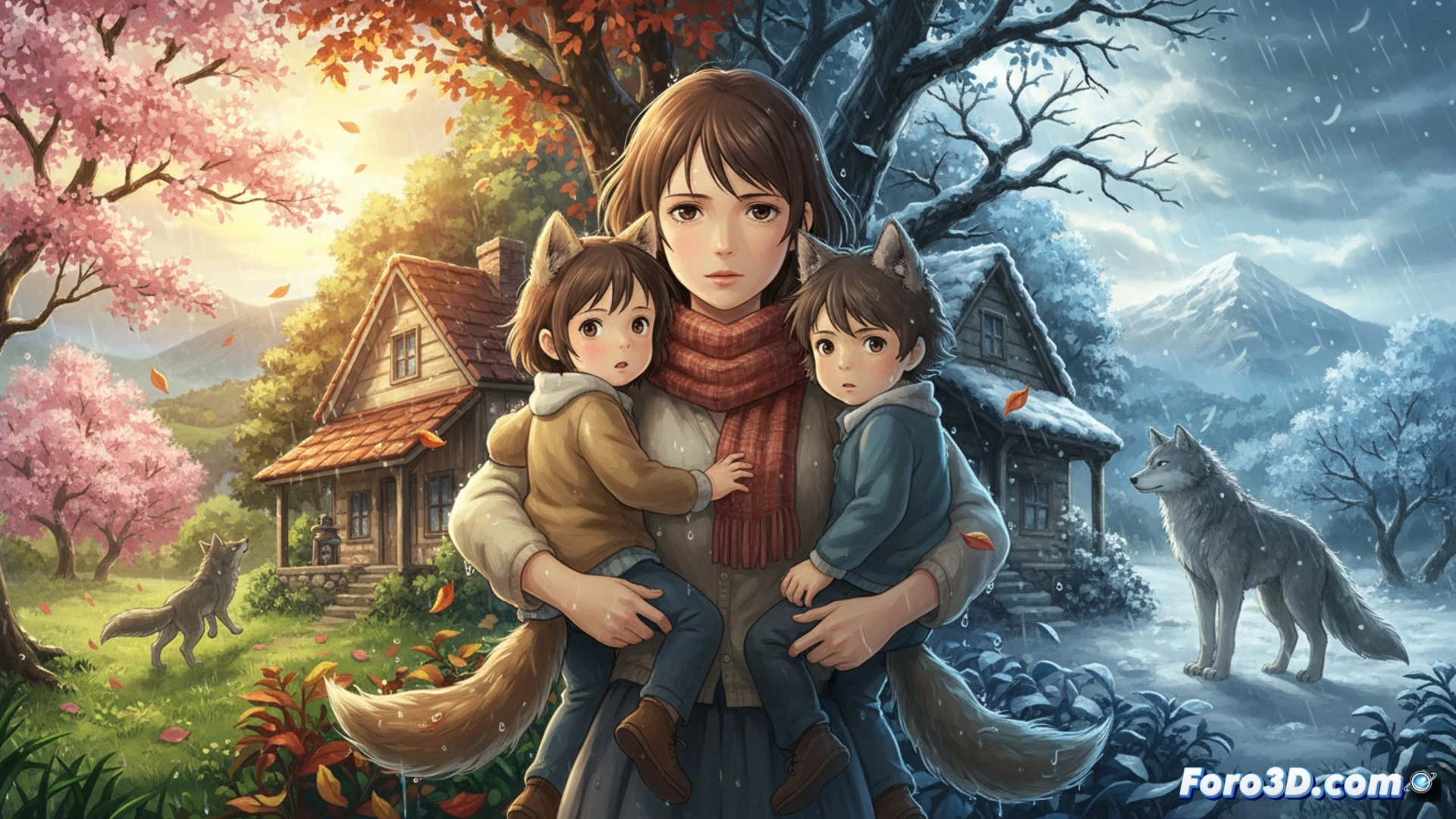
Fluid animation and temporal narrative in Wolf Children 🌟
Hosoda uses traditional animation techniques with visual transitions that mark the passage of time. The changing seasons are not decorative: they symbolize the characters' growth. The detailed backgrounds and use of natural light reinforce the sense of realism. Masakatsu Takagi's music accompanies without overwhelming, leaving room for silence. The narrative structure avoids abrupt jumps; each scene builds a clear timeline. The sound design captures the human and animal duality, with subtle growls and footsteps that weigh differently depending on the form. Everything is calculated so that the viewer feels the passage of years without the need for explanatory dialogue.
How not to fail at raising wolf cubs at home 🐺
If you think raising a human teenager is hard, try raising one who howls at the full moon. Hana not only deals with homework and tantrums, but also with her son Ame preferring to hunt rabbits over studying math. And while she tries to be a model mother, Yuki secretly puts on makeup and dreams of going to school without anyone noticing her ears. The moral is clear: it doesn't matter if your child is a wolf, human, or a mix; in the end, they all want to run off to the forest or the mall.