The Withings ScanWatch Nova arrives on the market as a luxury hybrid that merges the aesthetics of a premium dive watch with clinically graded medical sensors. For the 3D modeling and rendering professional, this device is not just an accessory; it is a physiological monitoring tool that promises to combat the risks of eye strain and physical stress during long hours in front of the workstation.
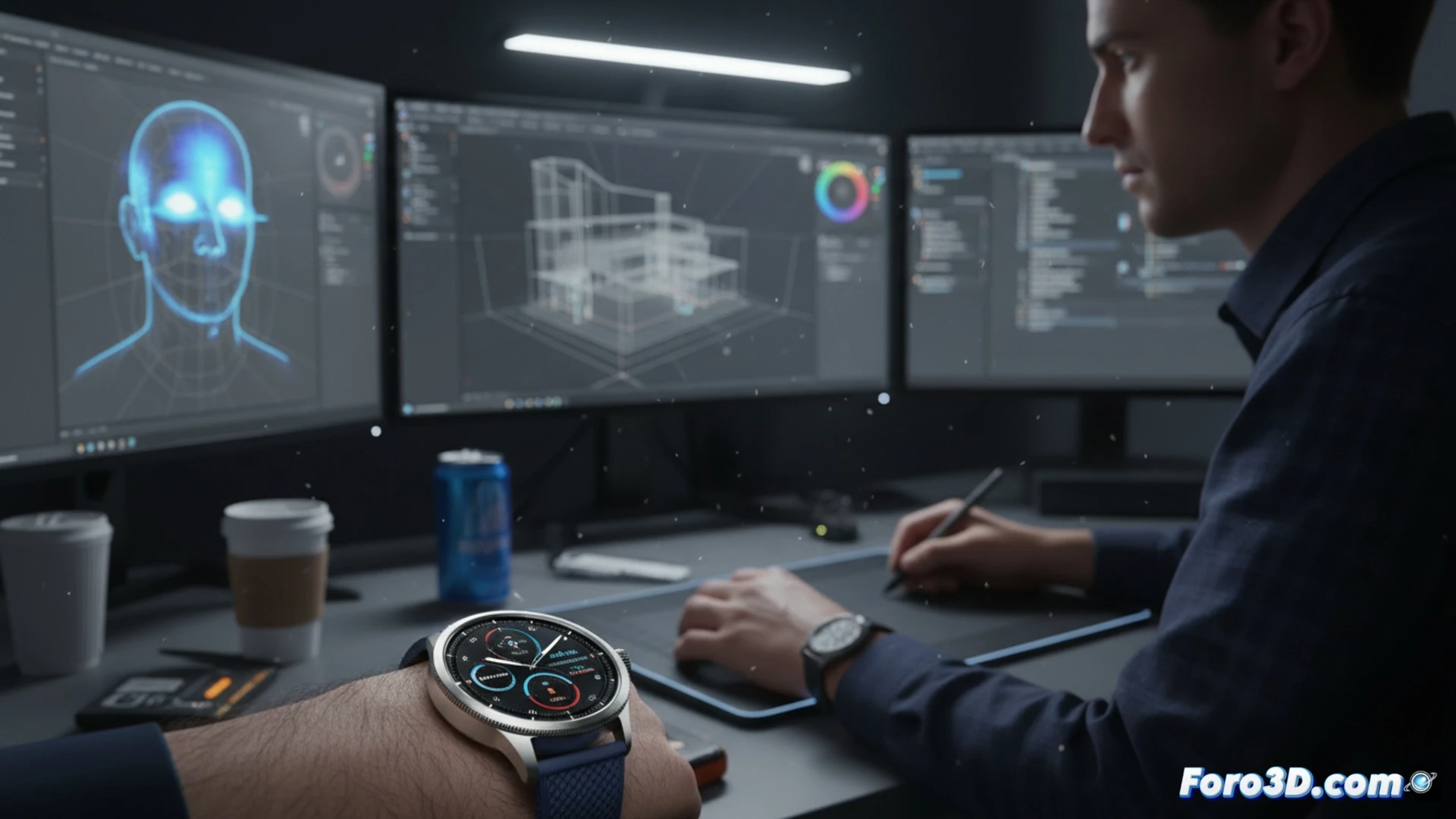
Internal architecture and sensors: A clinical embedded system 🩺
Under its analog dial, the ScanWatch Nova integrates a proprietary Withings hybrid biometric system. Its core is the HealthSense OS, software optimized to manage readings from ECG, blood oxygen (SpO2), and skin temperature sensors without sacrificing battery life. From a 3D hardware perspective, this embedded system is relevant for its energy efficiency and real-time signal processing capability. Unlike generic wearables, its sensors are calibrated to provide accurate data over extended periods, allowing the professional to rigorously track their heart rate variability and oxygen levels, key indicators of stress and accumulated fatigue.
Active prevention in intensive workflows ⏰
For a 3D artist, eye and postural health are critical assets. The ScanWatch Nova, with its secondary OLED display and haptic alerts, can notify the user when their heart rate indicates a stress spike or when body temperature suggests overexertion. While other wearables focus on sports fitness, this watch is designed for passive, constant monitoring. Its clinical accuracy makes it an ally for active breaks scheduled by real data, not timers, helping to prevent burnout that affects render quality and creativity.
How can a smartwatch like the Withings ScanWatch Nova optimize stress management and breaks during long rendering or 3D modeling sessions to improve work performance?
(PS: remember that a powerful GPU won't make you a better modeler, but at least you'll render your mistakes faster)