Weta FX has published several demonstration videos of its internal tools on its website. Among them, Pahi, its water simulation system, and Loki, its multiphysics framework, stand out. These clips offer a direct look at the technical arsenal used in films like the Avatar sequels, showing how digital magic is built with code and well-tuned processes.
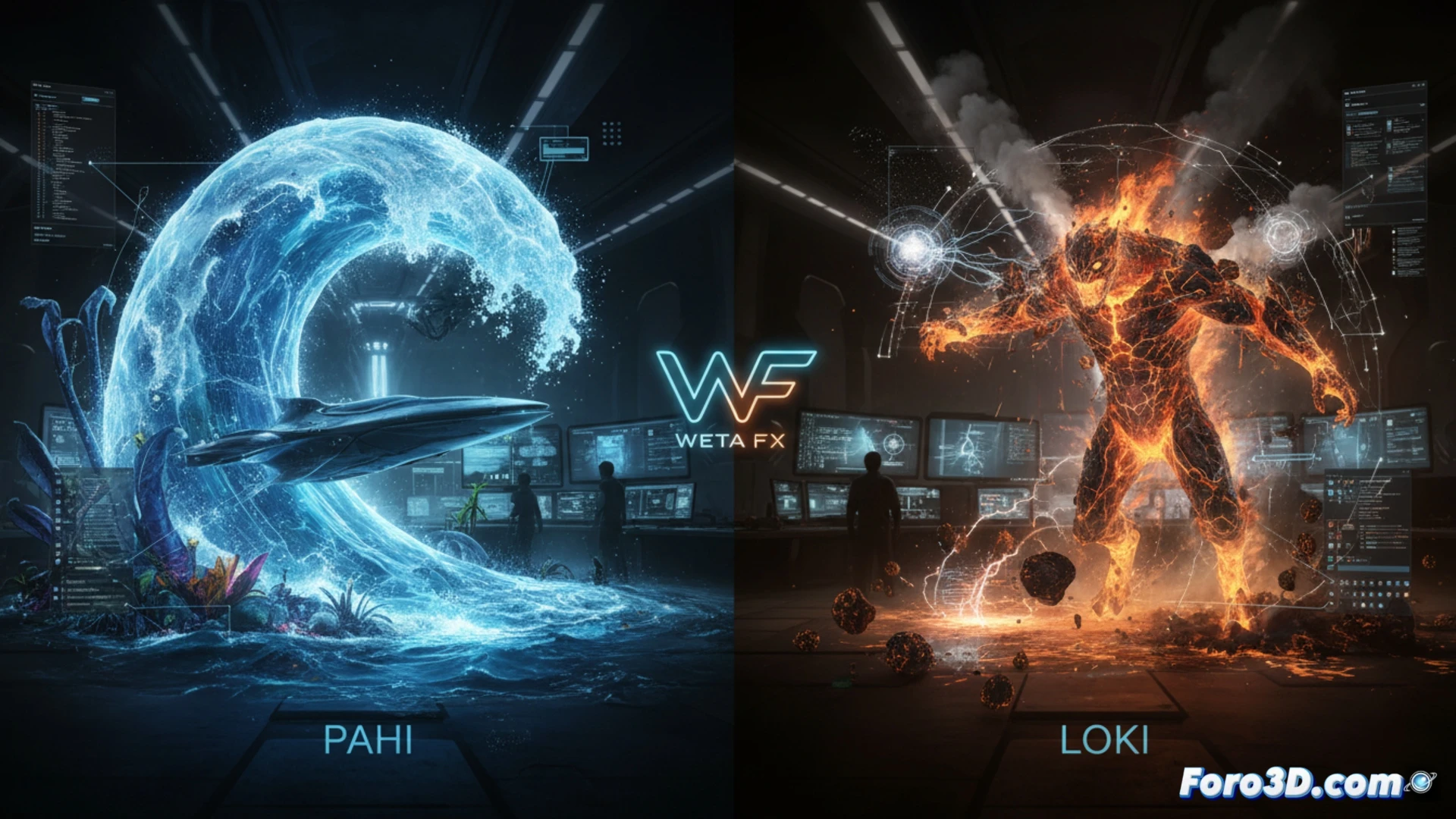
Loki and Pahi: the hidden engine of complex simulations 🛠️
The videos show Loki coupling simulations of liquids, gases, hair, and cloth in a single environment. This allows realistic interactions between elements, such as wet cloth deforming in the wind or hair affected by a water current. Meanwhile, Pahi focuses on fluid dynamics, calculating waves and splashes with precision. Both tools are modular and integrate into the studio's pipelines, optimizing workflow without relying on commercial solutions.
How to justify your morning coffee with fluid physics ☕
Watching these videos gives a strange feeling: on one hand, you understand why Avatar took years to make; on the other, you realize that your attempt to simulate a water droplet at home with Blender will probably end up as a melting cube. But not everything is frustration. At least, now you know that if your PC smokes while simulating hair, you can blame Loki and not your lack of patience.