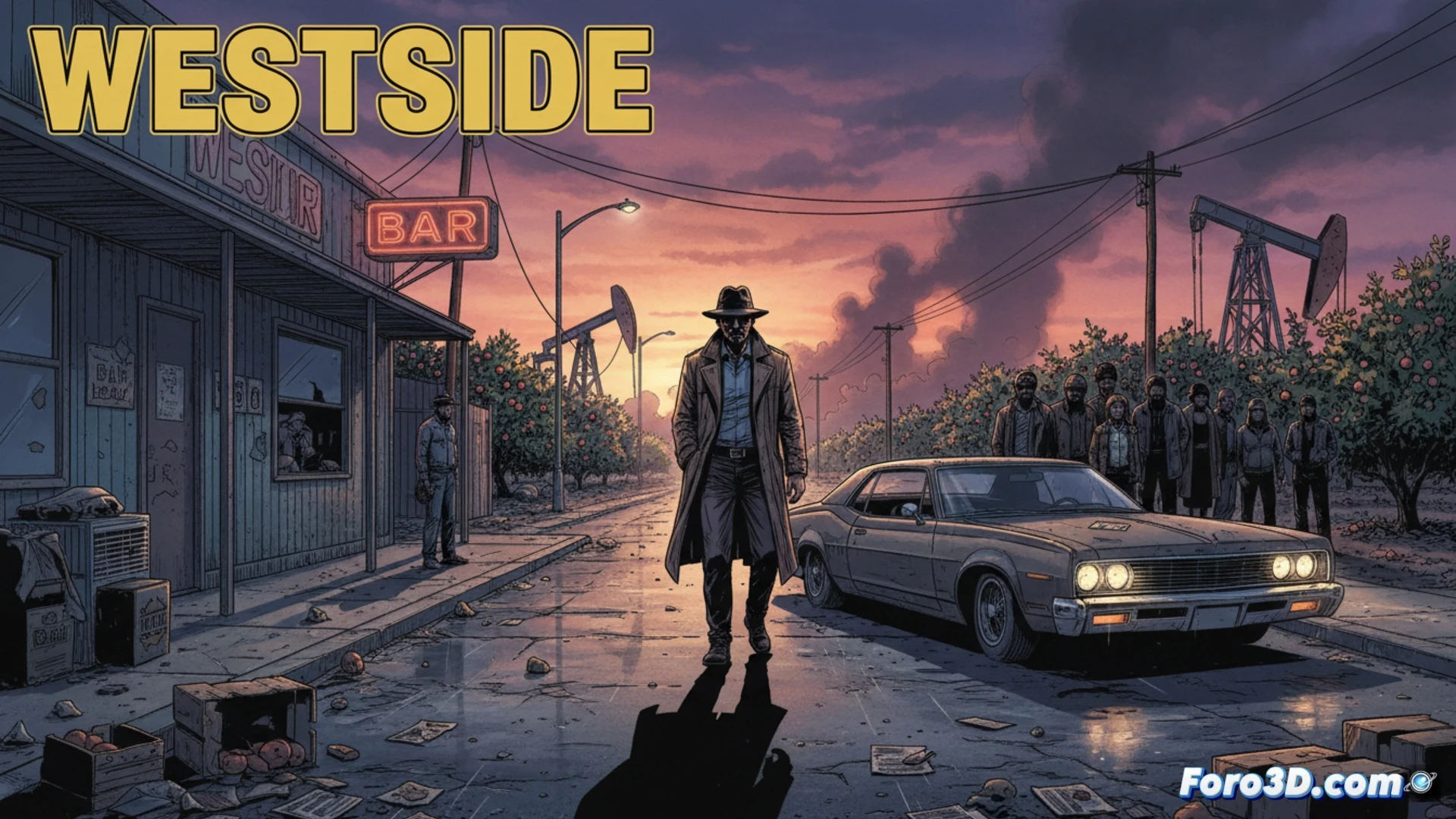
Justin Giampaoli and Dave Law bring crime drama to California's Central Valley, a nearly invisible setting in comics. Westside explores racism, systemic violence, and identity through a noir plot that intertwines local history and social critique, offering a raw look at a region forgotten by grand narratives.
How Graphic Narrative Builds Effective Gritty Realism 🎨
Law uses dense ink drawing and stark chiaroscuro to reflect the Valley's oppressive atmosphere. Giampaoli structures the plot with time jumps that reveal the root of racial and economic conflicts. The result is a comic that doesn't idealize: it shows dusty streets, everyday tensions, and a system that fails everyone, without empty stylistic concessions.
The Central Valley: Where Even Noir Has to Compete with Dust 🌾
While Los Angeles boasts its sunsets and neon lights, Westside reminds you that crime also smells like fertilizer and hot asphalt. Its characters have no time for philosophical monologues; they're too busy surviving a place where even suspense takes breaks to shoo away flies. A noir with a taste of the countryside.