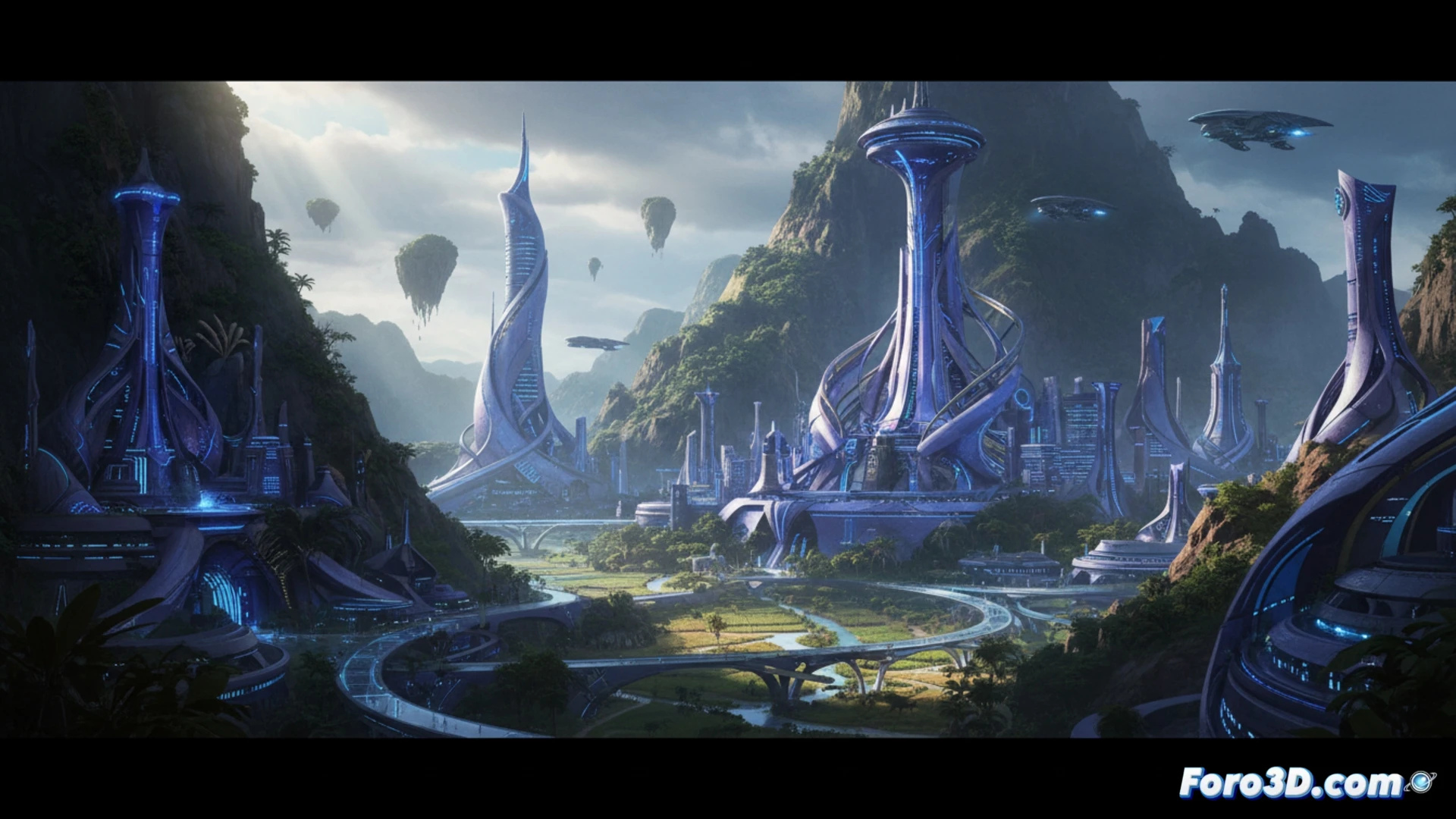
Cliffhanger Games faces the technical challenge of bringing Wakanda to life in Marvel’s Black Panther, a triple-A project running on Unreal Engine 5. The key to realism lies in the fusion of organic architecture with technological futurism. To achieve this, the studio combines ZBrush for high-resolution modeling of tribal structures and photogrammetry to capture the texture of natural African environments, creating an authentic and detailed visual foundation.
Ray tracing and vibranium simulation 🎮
The treatment of vibranium, the central fictional metal of the narrative, requires a specific rendering approach. The team implements real-time ray tracing to calculate light reflections and refractions on metallic surfaces. Unlike conventional metals, vibranium requires a light behavior that absorbs and disperses energy in a unique way. In Unreal Engine 5, this is achieved by adjusting roughness and conductivity parameters in high dynamic range materials, allowing the metal to appear alive and react dynamically to the environment.
The value of technical authenticity 🛠️
Beyond the visual spectacle, this combination of tools demonstrates a maturity in the development pipeline. The use of ZBrush to sculpt organic details and photogrammetry to digitize rocks, trees, and soil ensures that the world of Wakanda does not feel generic. The result is a setting that respects the cultural heritage shown in the comic and film, raising the standard of immersion in superhero video games through credible physical simulation and refined technical art.
As a developer, what specific photogrammetry and ZBrush workflow did you use to make Wakanda's vibranium reflect light realistically in Unreal Engine 5 without losing the artistic essence of the comic?
(PS: game jams are like weddings: everyone is happy, no one sleeps, and you end up crying)