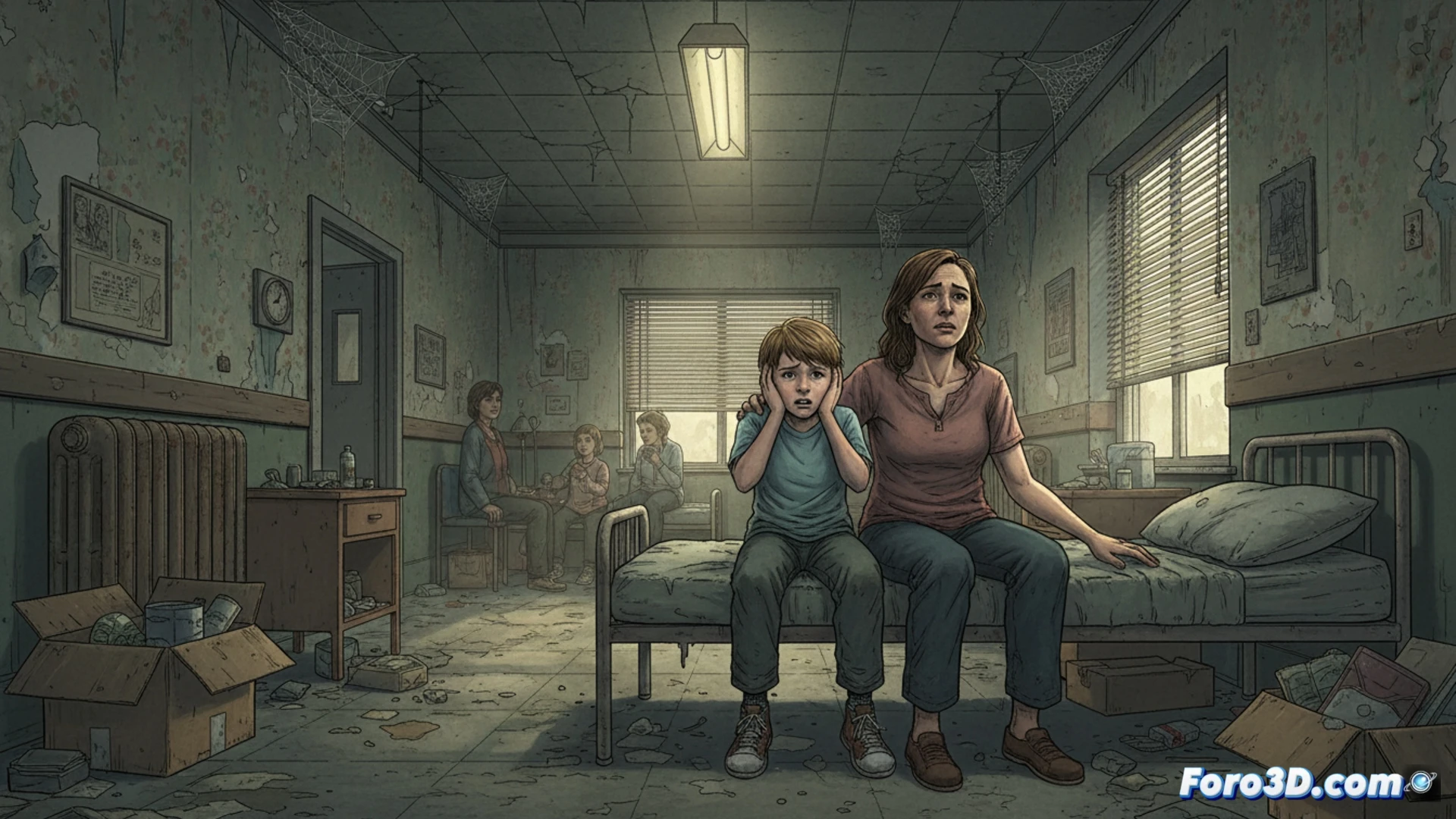
A mother recounts how a former nursing home, used as temporary housing, worsened her autistic son's symptoms. The unsanitary environment caused constant fear and health problems for the child. A recent study notes that thousands of neurodivergent children are left out of housing policies, highlighting a lack of coordination between social and health services.
Failed diagnosis: the algorithm against mold 🏚️
While technology advances in mental health apps and environmental sensors, public systems do not integrate basic data on children's housing. A child with autism can benefit from predictable environments with noise and humidity control, but resource allocation algorithms ignore these variables. The result is that innovation stays on the phone, while families live in spaces that trigger sensory crises.
A nursing home as a housing solution 😤
Because nothing says family support like moving a child with autism to a place where elderly people used to die. The smell of cheap disinfectant and the dark hallways are the ideal environment for a child to develop new phobias. If the goal was to save money, they have succeeded: they have cut back on health, housing, and common sense, all in the same building.