The banking sector hides a paradox: a low physical risk environment, but with a high incidence of psychological and ergonomic pathologies. Stress from meeting targets, visual fatigue, and the risk of violence are constant. 3D financial visualization offers an innovative tool to model these hazards, allowing institutions to simulate mental workload scenarios and design safer workspaces before damage occurs.
3D Simulation of Stress from Targets and Visual Fatigue 🎯
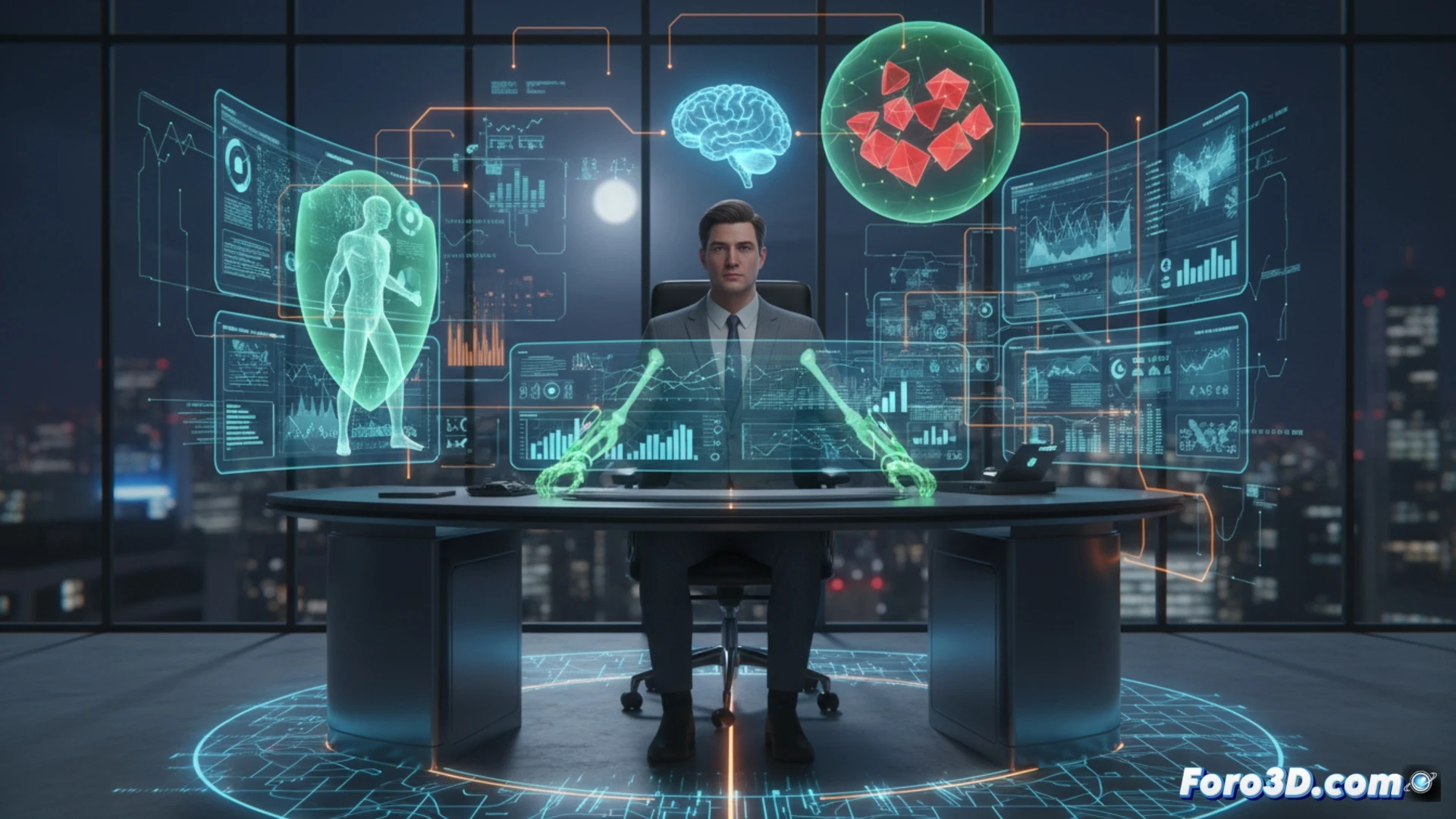
Interactive 3D dashboards allow representing commercial pressure as a volumetric data cloud. By overlaying variables such as number of clients per hour, sales goals, and active breaks, a three-dimensional heat map is generated that identifies anxiety peaks. Furthermore, digital twins of the banking workstation facilitate ergonomic analysis: distances to the screen, lighting, and forced postures are modeled to calculate the visual fatigue index and predict musculoskeletal disorders. This spatial representation converts abstract risks into tangible geometries for prevention departments.
Reactive Prevention through the Banking Digital Twin 🛡️
Beyond static analysis, 3D simulation allows recreating situations of workplace violence, such as robberies or verbal aggression. By modeling furniture layout and escape routes, safety protocols are optimized without exposing employees to real-life drills. Visualizing post-traumatic stress as a dynamic variable in space helps design active breaks and job rotations, transforming risk prevention into an immersive and quantifiable process.
How would you visualize risk and profitability in the same three-dimensional space?