The work of a scientist, despite its focus on discovery and innovation, involves constant exposure to physical and psychosocial hazards. From handling toxic compounds and radiation sources to chronic stress from the pressure to produce results, the laboratory environment is a high-risk ecosystem. 3D scientific visualization offers a revolutionary tool for mapping these hazards, transforming abstract data into immersive experiences that improve prevention and occupational safety.
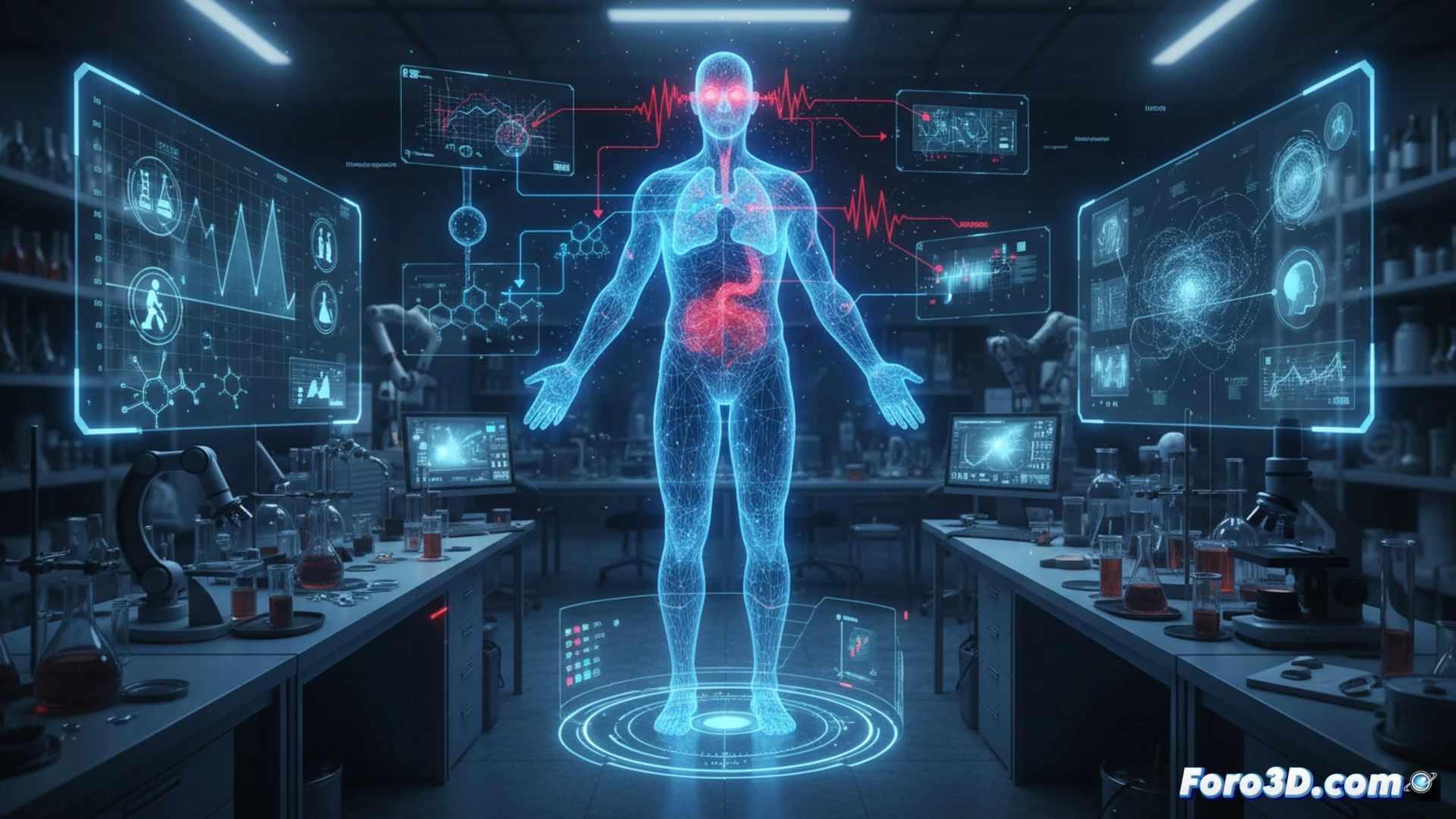
Technical Architecture of the Risk Infographic 🧪
The technical proposal consists of developing an interactive 3D infographic that models a generic laboratory, subdivided into specific risk modules. The chemical agents zone would include volumetric models of vapors and spills, along with dynamic fume hoods. The radiation module would show sealed sources with semi-transparency and particle attenuation. For postural fatigue, biomechanical skeletons would be animated to contrast forced postures (poorly adjusted microscope) with ergonomically correct ones. Visual fatigue graphs would be overlaid as heat maps on equipment screens, while mental stress indicators would be represented by environmental pressure waves that change color according to the simulated workload.
Towards an Immersive Prevention Culture 🧠
The true innovation of this approach lies not only in aesthetics, but in the ability to generate empathy and situational awareness. By allowing the user to navigate a virtual laboratory in first person, vulnerabilities that a safety manual could never convey are exposed. Visualizing the dispersion of a biological aerosol or feeling the strain of an incorrect posture through an avatar modifies the researcher's behavior. This tool does not replace formal training, but rather enhances it, turning risk prevention into a tangible and memorable experience for the scientific community.
How could a 3D visualization system anticipate in real time the dispersion of a chemical contaminant in a laboratory to prevent personnel exposure before the incident occurs
(PS: fluid physics for simulating the ocean is like the sea: unpredictable and you always run out of RAM)