The trade of tanning, essential in the leather industry, exposes workers to a cocktail of hazards ranging from chromium salts and corrosive acids to biological agents present in raw hides. This analysis proposes a methodology for visualizing epidemiological data to model exposure routes in 3D, allowing the identification of toxic accumulation patterns and predicting the incidence of occupational diseases such as dermatitis or chronic respiratory conditions.
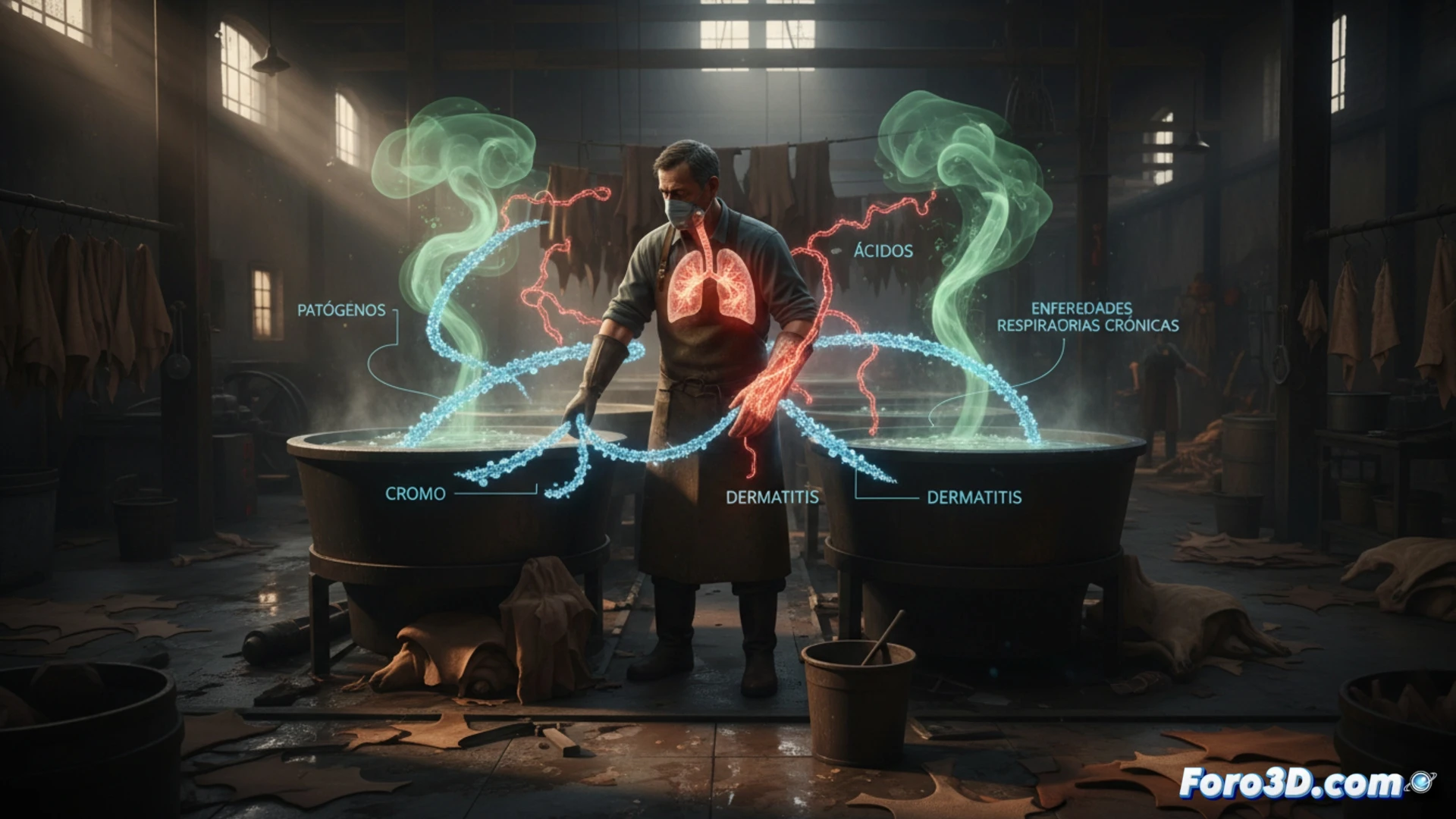
3D Modeling of Chemical and Biological Agent Dispersion 🧪
Using computational fluid dynamics (CFD) simulations, it is possible to recreate in a three-dimensional environment how solvent vapors and lime particles move through the workshop. The model allows generating risk heat maps by area, highlighting critical points such as tanning vats or fleshing tables. Additionally, biomonitoring data can be integrated to visualize the accumulation of chromium in the body over time, correlating each workshop area with specific pathologies. This tool facilitates the identification of pollution sources and optimizes the placement of localized ventilation systems.
Visual Prevention for Occupational Public Health 🛡️
The graphical representation of occupational risks in tanneries is not only a technical exercise but also an awareness tool. By visualizing in 3D how wet floors increase the risk of falls or how cuts from knives can lead to infections, abstract data is transformed into tangible warnings. This approach, aligned with visual epidemiology, allows public health officials to design more effective prevention campaigns, reducing the incidence of occupational diseases in one of the oldest and most dangerous trades.
How could a 3D model of the human respiratory system simulate the accumulation of hexavalent chromium particles in a tanner's lungs to predict cancer risk over years of exposure?
(PS: modeling health data is like going on a diet: you start with energy and end up giving up)