The stockbroker operates in a high-pressure environment where market volatility and millisecond decision-making generate extreme stress, severe eye strain from multiple screens, and forced sedentary behavior. These factors, combined with long hours, trigger anxiety, burnout, and an elevated cardiovascular risk. We analyze how 3D financial visualization can be the key tool to mitigate these occupational hazards.
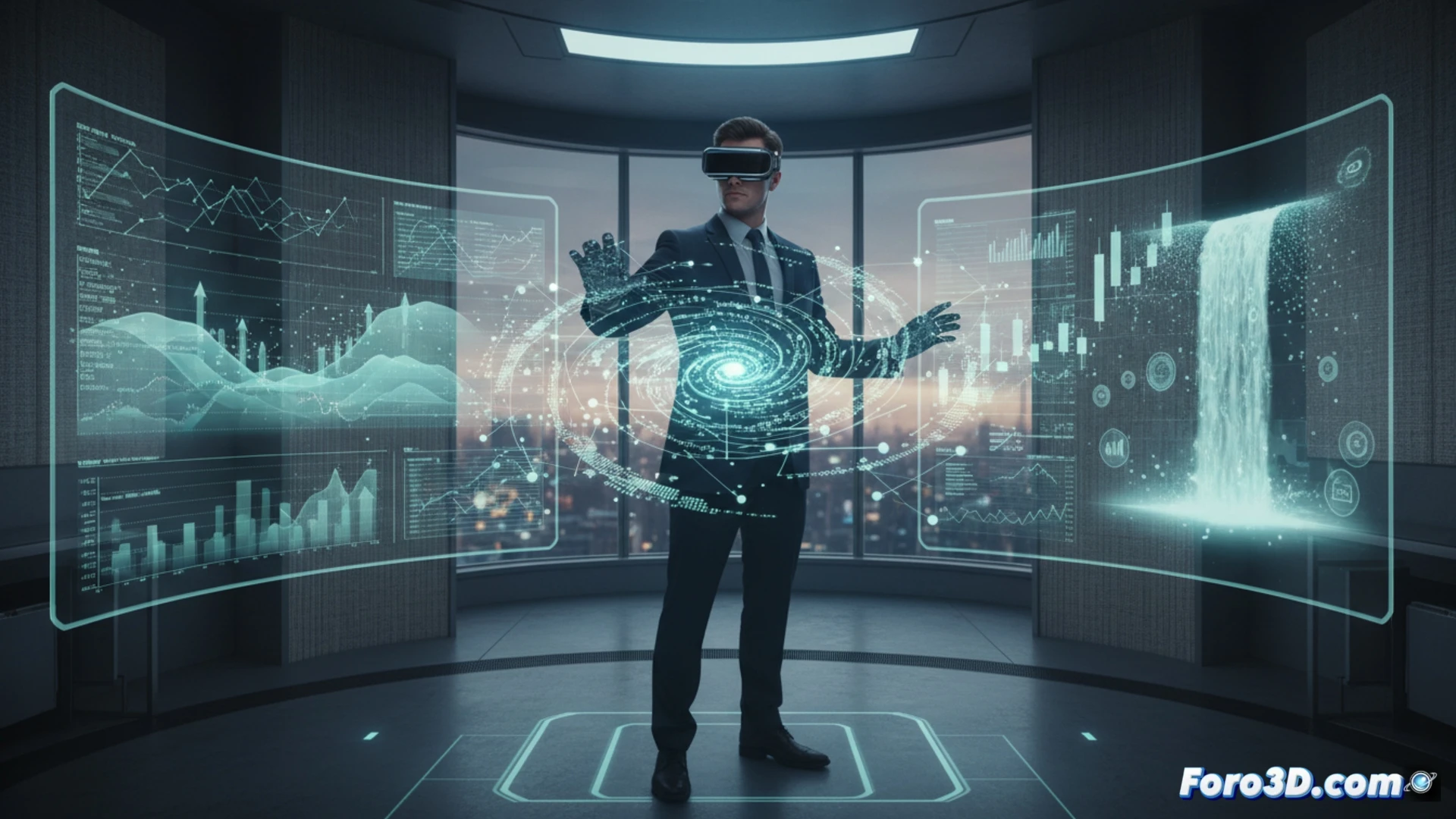
Cognitive ergonomics and reduction of visual load through 3D dashboards 🧠
Traders spend hours in front of flat 2D monitor arrays, causing eye fatigue and forced postures that lead to musculoskeletal disorders. Implementing interactive 3D dashboards allows grouping complex data into a single volumetric space, reducing the need to move the head and eyes between multiple screens. By representing capital flows, volatility, and trends as three-dimensional objects, cognitive ergonomics is optimized, decreasing visual strain and the stress associated with information overload.
Immersive simulation as an antidote to stock market anxiety 🧘
The constant pressure to make the right investment creates a permanent state of alertness that accelerates heart rate and raises cortisol. Investment simulations in 3D environments allow testing high-risk strategies without real financial consequences, training the brain to handle volatility with greater calm. By practicing decision-making under pressure in a controlled virtual space, the broker reduces anticipatory anxiety and the risk of burnout, improving their mental health and real-world performance.
How 3D visualization can transform market data into intuitive spatial patterns that reduce the trader's cognitive overload, thereby decreasing the risk of burnout
(PS: modeling a bank deposit in 3D is easy; the hard part is making it grow like in the simulation)