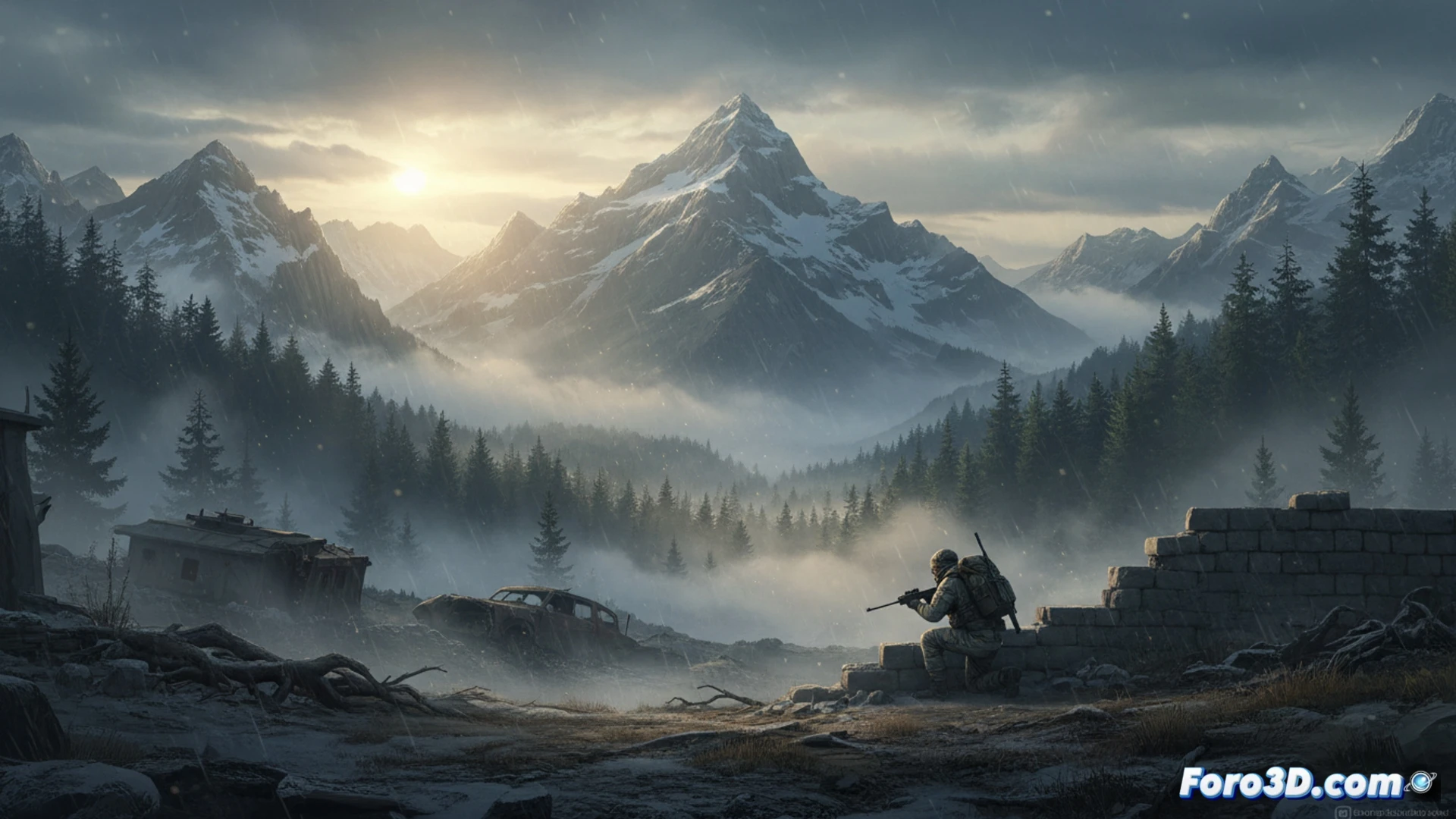
The launch of Vigor on PC in 2024 marks a milestone for developers seeking to understand the fusion between art and real-time technology. This looter shooter, set in a post-apocalyptic Norway, uses Unreal Engine 4 to deliver highly realistic natural landscapes. The secret to its visual impact lies in the implementation of volumetric fog and dynamic weather systems that transform each match into a unique visual experience, while directly affecting gameplay and player visibility.
Technical Pipeline: From Maya to Unreal Engine 4 for Nordic Scenes 🎨
To achieve that hyper-realistic finish, the development team used Maya as their primary modeling tool. Organic assets, such as conifer trees, rock formations, and snowy terrains, were sculpted with high polygon density in Maya and then retopologized to optimize performance on PC. The technical key was exporting normal and roughness maps directly to the engine, allowing Unreal Engine 4 to handle global illumination with Lumen (simulated) and dynamic shadows. Volumetric fog was implemented using the engine's exponential fog system, adjusting density in real-time based on weather conditions, which forced developers to use variable performance profiles to avoid frame drops on mid-range hardware.
Lessons for Indies: Dynamic Weather as a Game Mechanic ⚙️
Vigor demonstrates that weather effects are not merely decorative; they are a core mechanic. Reduced visibility due to fog or rain forces players to change their combat and exploration strategy. For indie developers looking to replicate this system, I recommend starting with the Material Parameter Collection blueprint in Unreal Engine 4. There, you can define global variables like FogDensity or RainIntensity that modify materials and particles without needing complex code. Additionally, using the Timeline system in blueprints allows for smooth transitions between weather states, avoiding abrupt changes that break immersion. Optimizing these effects with particle LODs and variable render distance is crucial for maintaining stable 60 FPS on PC.
How does Vigor on PC optimize the performance of its realistic landscapes with volumetric fog in Unreal Engine 4 without sacrificing visual immersion?
(PS: a game developer is someone who spends 1000 hours making a game that people complete in 2)