A team of researchers has developed an ultra-thin material capable of guiding mechanical vibrations along specific paths. This breakthrough allows parasitic movements, such as the rattling of a train or the hum of an engine, to be transformed into usable electricity. It also opens the door to processing information without the need for electrical current. For the average person, this could mean devices that work without batteries or that recharge batteries with the simple sway of the environment.
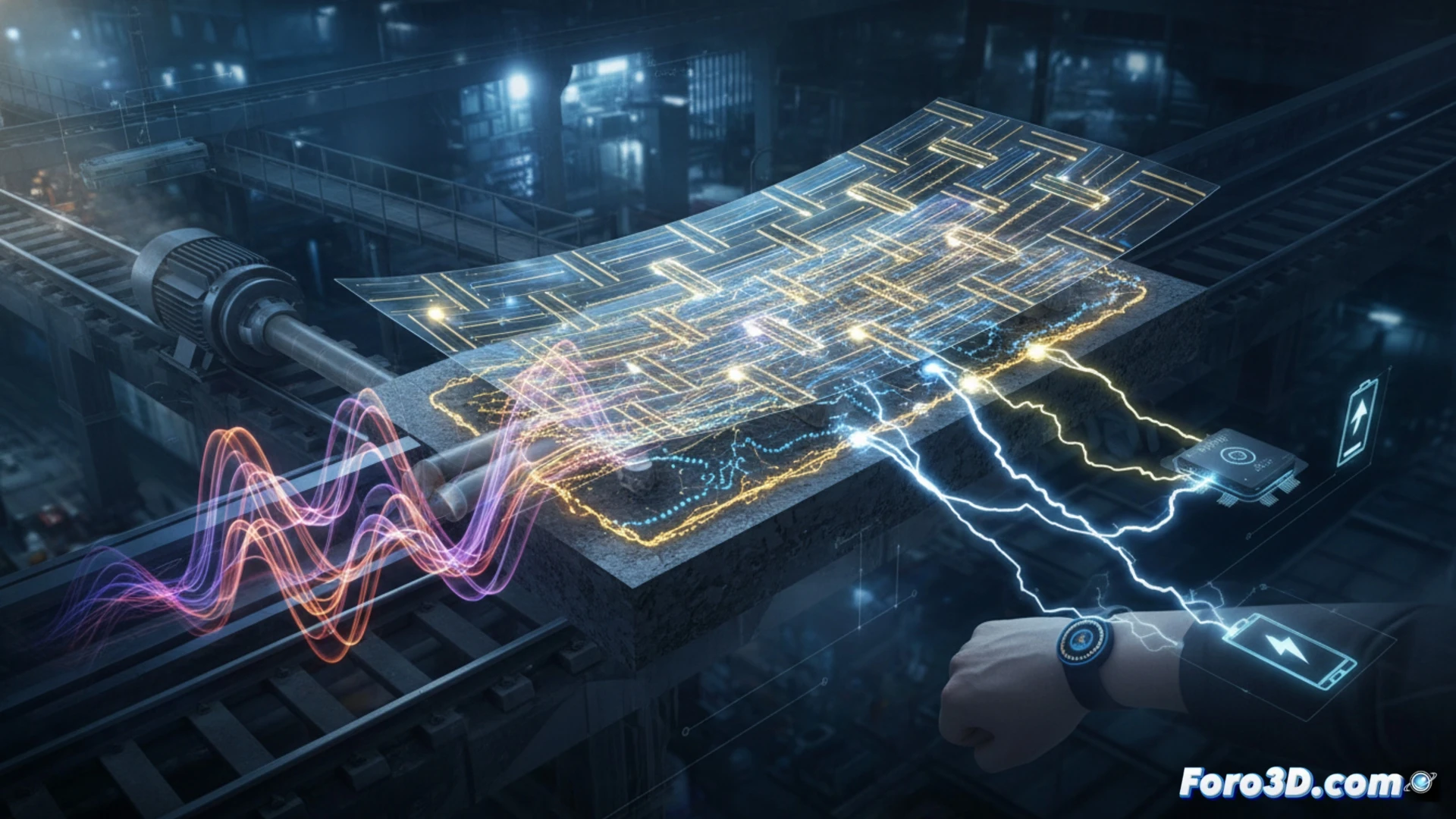
How the metamaterial that tames mechanical waves works 🧬
The material, designed on a microscopic scale, acts as a highway for vibrations. Through an internal structure of repeating patterns, it channels mechanical waves toward specific points, preventing them from dispersing. This allows, on one hand, for efficient energy harvesting to power sensors or small circuits. On the other hand, it makes it possible to create mechanical logic circuits that process data without electricity, using only the frequency and direction of the vibrations. A step toward low-energy consumption systems.
Goodbye to noisy neighbors: now their footsteps will charge your phone 🔋
Imagine that the stomp of the neighbor on the fifth floor, the one who walks as if wearing lead shoes, not only wakes you up at 7 in the morning but also recharges your phone's battery. With this material, everyday noises and vibrations could become a source of energy. Of course, for now it won't solve your neighbor still being a loudmouth, but at least their lack of tact will serve something useful. That said, don't expect to charge your electric car just from their late-night antics.