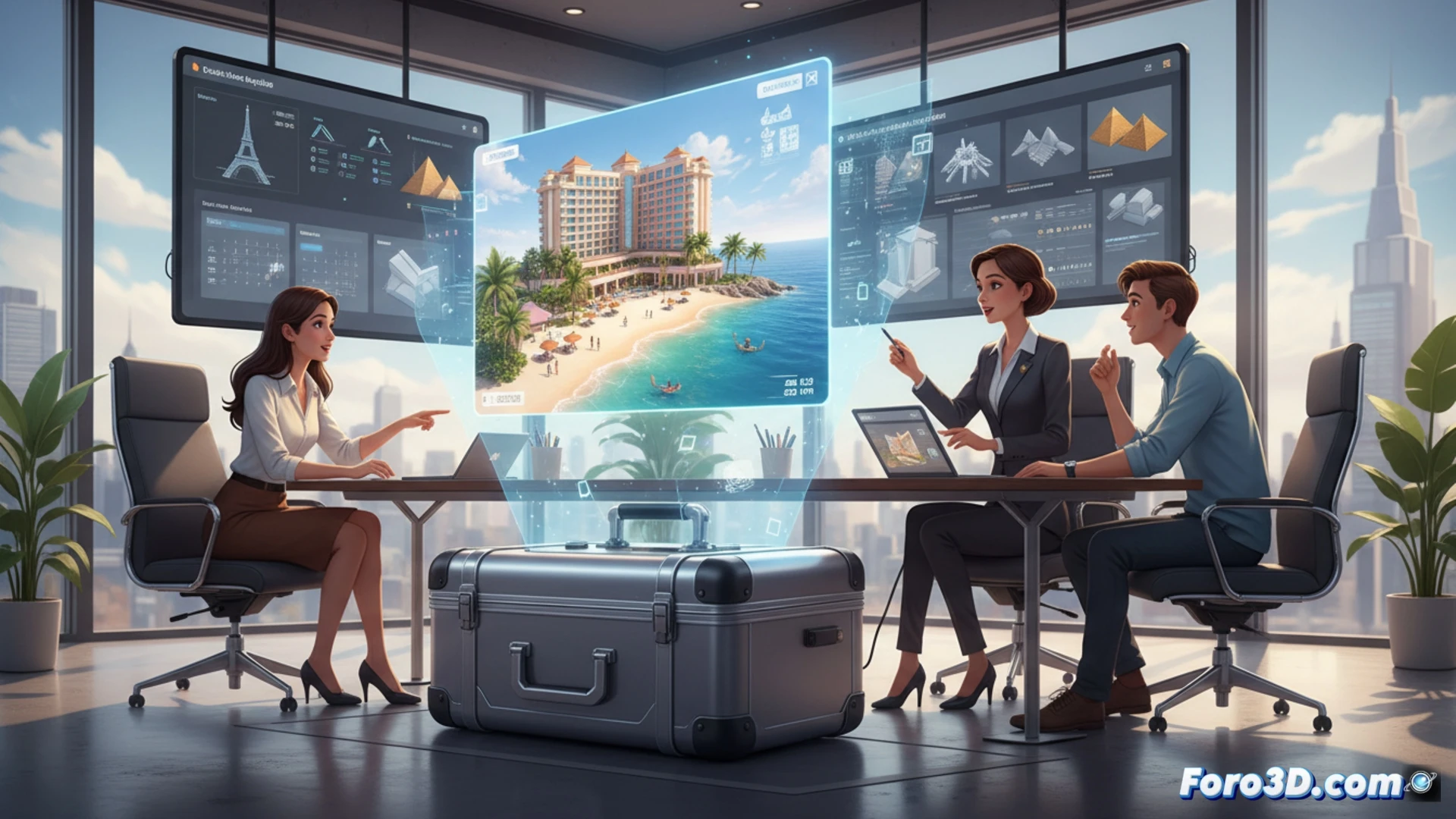
The profession of a travel agent has changed. It is no longer enough to sell a brochure and a ticket. 3D technology allows the client to see the hotel, the room, or the view from the window before buying. A clear example: a client is undecided between two resorts. With an interactive 3D model, they can walk through the hallways, see the pool, and decide without surprises. Necessary programs: SketchUp for modeling spaces, Blender for realistic renderings, and Matterport for 3D scans of real properties.
3D Modeling to Sell Destinations Without Deception 🏗️
The technical process starts with capturing data from the location. If the hotel exists, Matterport is used with a 360 camera to create a digital twin. If it is a new project, it is modeled in SketchUp from the blueprints. Then it is exported to Blender to add textures, lighting, and furniture. The result is uploaded to a platform like Sketchfab or integrated into the agent's website with WebGL. The client moves the mouse and walks through the lobby without leaving home. This reduces returns and complaints about fake photos.
Goodbye to the Hotel Photo with an Instagram Filter 📸
Because we have all seen that brochure where the room looks like a palace and upon arrival it is a closet with a bed. 3D technology does not lie: if the bathroom has leaks, Matterport captures them. The agent can no longer say the beach is a stone's throw away when the model shows it is three kilometers. Of course, now the client will ask you to model the perfect lounge chair before signing. The profession becomes more honest, but also more similar to a video game designer than a ticket seller.