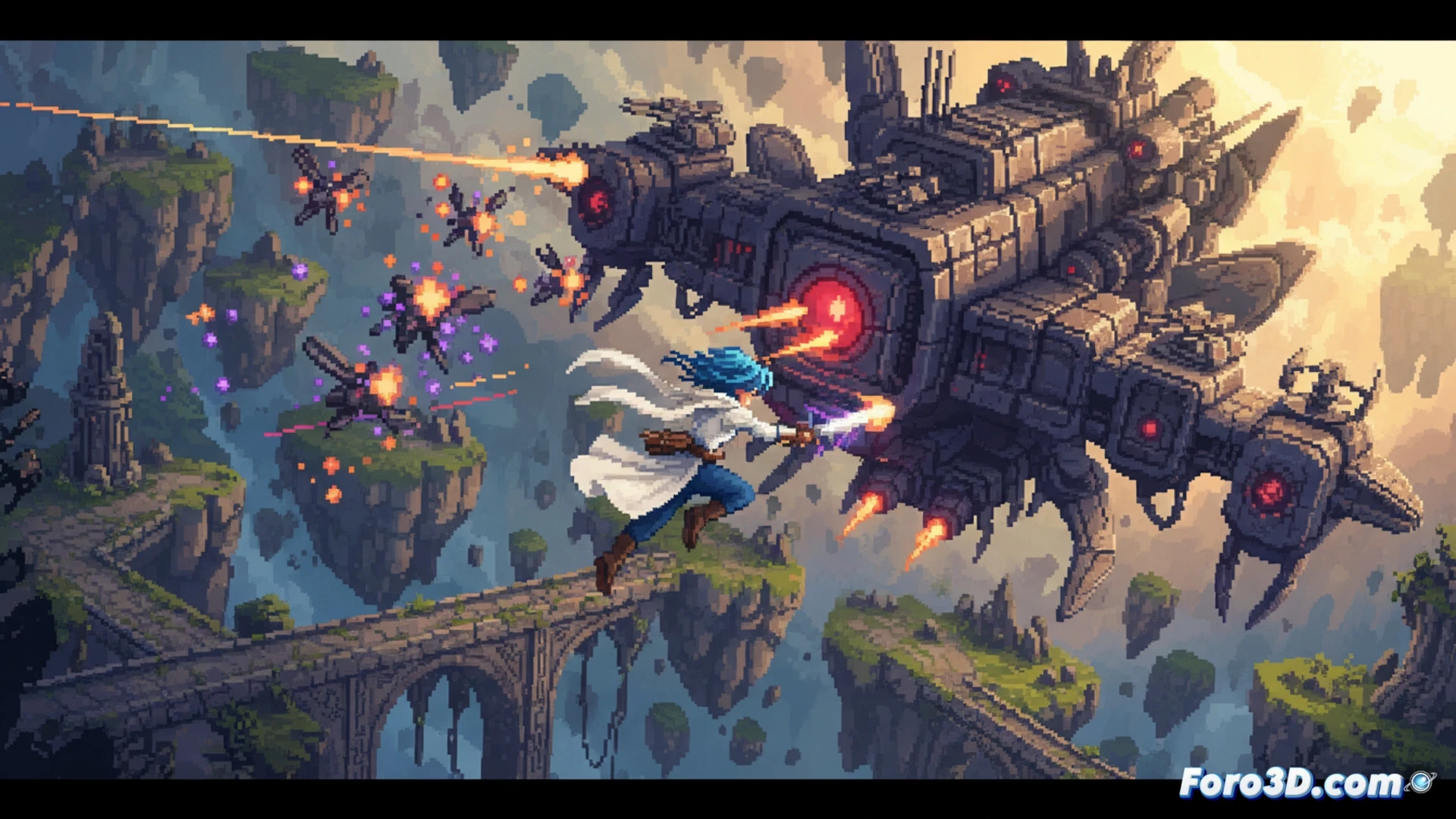
Vernal Edge is a clear example of how the GameMaker engine, combined with the precision of Aseprite, can bring an action game to life with a striking visual style. Its vibrant pixel art is not just aesthetic; it is a functional tool for aerial combat. The developers managed to make every hit and every jump feel fluid thanks to careful sprite planning and particle effects, demonstrating that real-time performance is not at odds with visual richness.
Animation Techniques and Real-Time Impact Effects 🎮
To achieve the intensity of aerial combat, the Vernal Edge team employed key techniques in Aseprite and GameMaker. In Aseprite, sprites were designed with a minimum of 8 frames per action to ensure smooth transitions, prioritizing clear silhouettes so the player never loses sight of the character. Impact effects were built with saturated color particles (whites and yellows for hits) rendered on a separate layer within GameMaker. To optimize performance, the number of active particles was limited to 30 per second, using an object pool system instead of dynamic instances. This prevents lag spikes even during combat against multiple enemies.
Lessons for Indie Developers 💡
If you are looking for a similar result, prioritize the modularity of your sprites. In Aseprite, separate character elements (body, weapons, effects) into layers to facilitate interpolation animation in GameMaker. Also, do not underestimate the power of temporary hitboxes: in Vernal Edge, attack animations activate a damage box only for 3 specific frames, reducing unnecessary calculations. Finally, use limited color palettes (maximum 16 colors per sprite) to maintain visual consistency and loading speed, a trick that allows the engine to process more elements on screen without sacrificing the retro aesthetic.
As a developer looking to optimize aerial combat in GameMaker, what specific physics and collision control techniques did Vernal Edge apply to ensure precise response without sacrificing performance in scenarios with multiple enemies?
(PS: a game developer is someone who spends 1000 hours making a game that people complete in 2)