Summer brings long days, heat, and the tradition of lying in the sun. But it also leaves an indelible mark: the map of stripes that the canvas hammock engraves on the back. This mark, more persistent than the tan, becomes the physical memory of beach naps. A pattern that divides the skin between sun and shade, lasting for days after returning home.
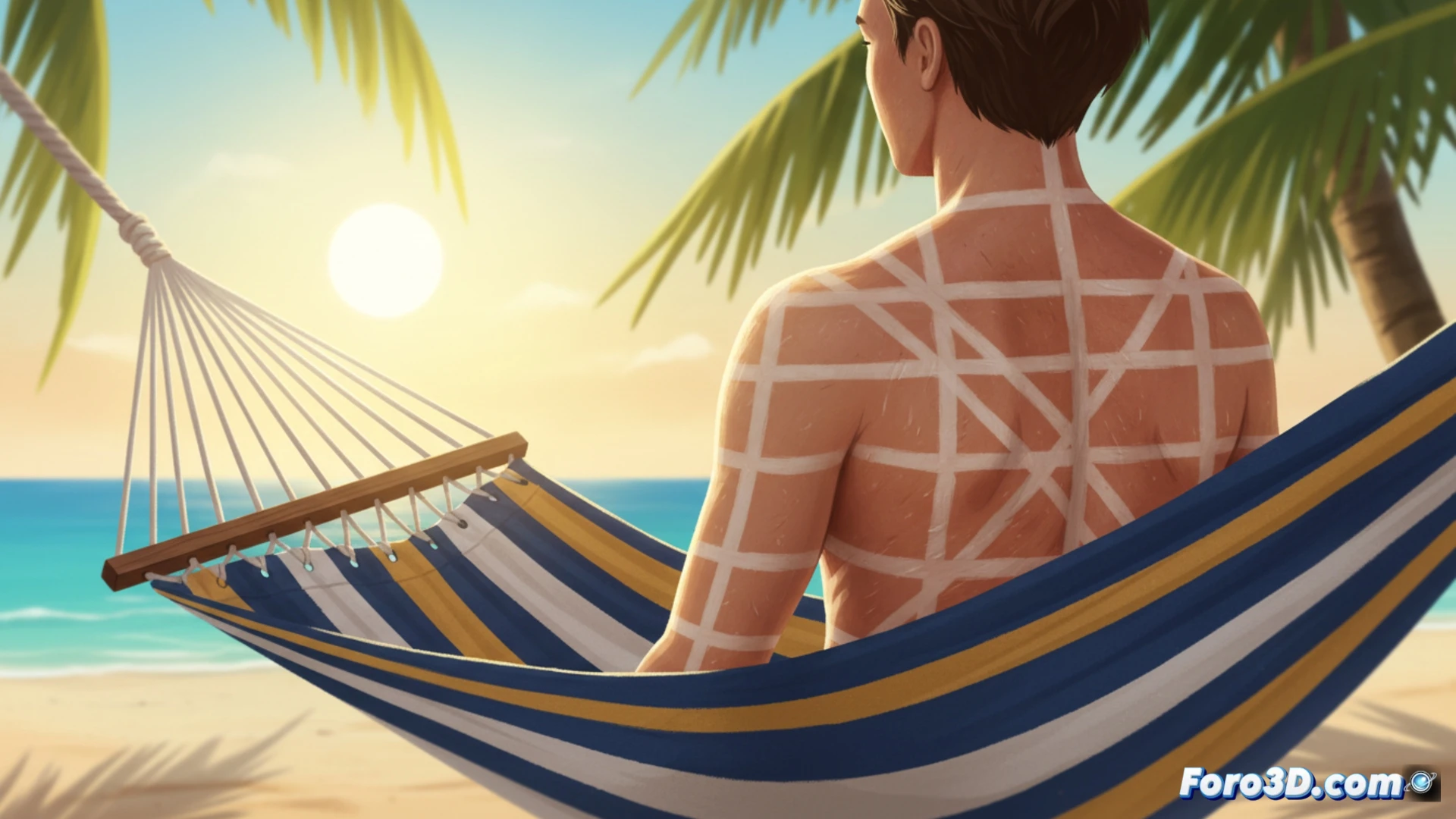
The stripe pattern as textile technology 🌞
Canvas hammocks function as a selective masking system. The fabric's weave, when taut, creates contact zones that block UV radiation while the empty spaces let it through. This generates a differential exposure pattern on the skin. The duration of the mark depends on exposure time and base pigmentation. There is no algorithm or app to calculate it, only the physics of the fabric and the sun. It is a rudimentary but effective shade design.
The temporary tattoo nobody asked for 🏖️
If there were an app to remove hammock marks, it would have more downloads than any social media filter. But no, you have to wait for the skin to peel. Meanwhile, you look like a road map with sunburned tolls. And the worst part: the pattern is never perfect. There is always a crooked stripe that makes you look like a poorly scanned barcode. The hammock always wins.